Cleaning and maintenance
EN
bora.com 105
u
Remove stubborn residues of plastic, aluminium foil,
sugar or sweet dishes from the hot cooking zone
immediately using a glass ceramic scraper to prevent
burning.
When the cooktop extractor is in use the air
inlet nozzle must be fitted so that no small or
light objects such as fabric or paper cleaning
cloths can be sucked in.
7.4
Cleaning the cooktop
extractor
u
Clean the surfaces of the extraction system using a
soft, damp cloth, detergent or a mild window
cleaning agent.
u
Soften dried on dirt using a damp cloth (do not
scrape it off!).
7.4.1
Cleaning the air inlet nozzle
and stainless steel grease
filter
The air inlet nozzle and stainless steel grease
filter absorb the greasy particles from cooking
vapours.
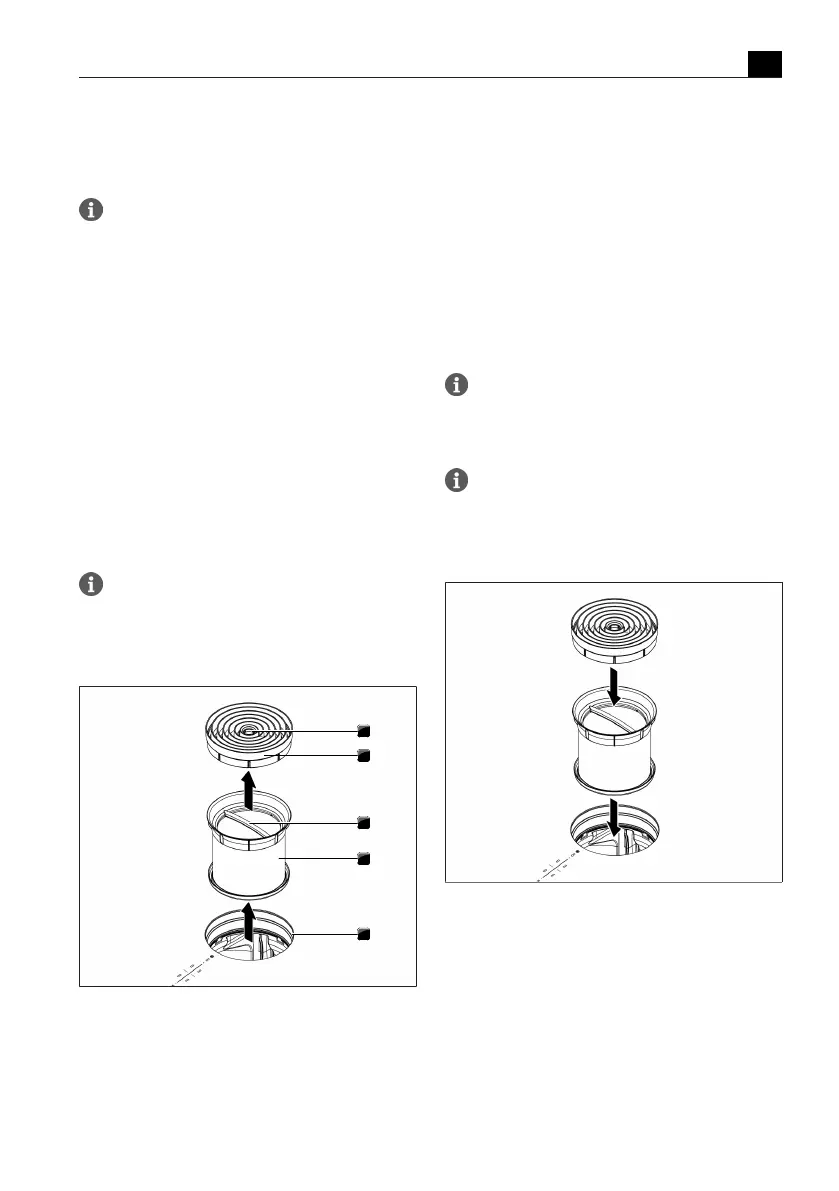
Removing the components
Fig.7.1
Removing the components
[1] Access opening
[2] Air inlet nozzle
[3] Handle
[4] Stainless steel grease filter
[5] Inlet opening
Manual cleaning
u
Use a cleaner and degreaser in one.
u
Rinse the components with hot water.
u
Clean the components with a soft brush.
u
Rinse the components well after cleaning.
Cleaning in the dishwasher
u
Remove coarse food residues from the components.
u
Place the components in the dishwasher.
u
No water should be able to gather in the
components.
u
Rinse the components with a rinsing program at a
maximum temperature of 65°C.
To prevent water from dripping into the
appliance, it is recommended to shake the
components well after cleaning and dry with a
towel if necessary.
If the stainless steel grease filter can no longer
be fully cleaned, it must be replaced (Warranty,
technical service, spare parts, accessories).
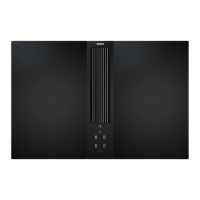
Fitting the components
Fig.7.2
Fitting the components
7.4.2
Removing liquids from the
appliance
Any liquids that flow into the appliance through the inlet
opening are caught by the stainless steel grease filter
(up to 150 ml) and in the air guiding housing.
Do the following:
u
Remove the air inlet nozzle and stainless steel grease
filter.
u
Empty the stainless steel grease filter.



 To Next Page