Page 75
Glossary
Glossary
Glossary
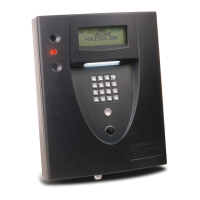
Access Device (RF Receiver, Card Reader or Keypad) - A device that reads transmitter, card or
entry codes, allowing the system to allow or reject entry based on the code’s validity.
Access Codes - Codes that enable visitors and residents to enter a building through a controlled
area. Access codes include directory codes, entry codes, cards and transmitters. An access code is
associated with a specific access device. Directory codes are associated with the unit; entry codes
with the unit keypad; cards with card readers; and transmitters with radio frequency (RF) receivers.
Alarms - The unit may be configured to trigger an alarm (e.g., Activate a siren and/or a warning
light, etc.) when an alarm condition occurs. These conditions include a door held open too long, a
door forced open, or keypad errors that exceed the maximum allowed.
Anti-Passback - The Anti-Passback feature prevents unauthorized use of entry codes card and
transmitters. When anti-passback is enabled, an access code will be temporarily disabled after each
use, thereby prohibiting people from "passing back" their access code, card or transmitter to
unauthorized people.
Button Number - Refers to the number assigned to each button on a multi-button transmitter. Up
to 4 buttons per remote.
Call Forwarding - The unit can be programmed to "forward" a visitor call to another location when
residents are away. This feature also allows you to grant access to a visitor from a remote location.
Call Forward Control Setting - When enabled, allows the unit to use Call Forwarding with
schedules.
Call Waiting (NPB / Single Family Residence) - If the resident’s phone is in use when the visitor
presses the "Call" key, they will hear 2 short tones to signal that a visitor is attempting to call. They
may simply switch over to the call from the visitor, let him/her in, and go back to the original call.
This feature is only available for a single-family residence or a manager’s phone sharing a phone
with the unit.
Card Type - 26-Bit Standard or 30-bit Sentex.
Credential- A card, PIN or Biometric transmitter.
Direct Commands (NPB / Single Family Residence) - You may send a direct command from your
residence phone to activate one of four relays (i.e., to open a door). This feature is only available
for a single-family residence or a manager’s phone sharing a phone line with the unit.
Directory Code - Unique 1-4 digit codes that dial a corresponding telephone number in the
building. The unit will dial the phone number assigned to the code.
Do Not Disturb (DnD) - The unit has the ability to block visitor calls during specific times. Using
schedules, the feature activates and deactivates automatically.
DnD Control Setting - When enabled the unit will enforce DnD schedule, if disabled the unit will
ignore DnD schedule.
DTMF phone - Dual Tone Multi-Frequency (Touch-Tone Phone).
Entry Card - A resident presents an entry card to a card reader to gain entry into a controlled area.
A card’s PIN, or "Personal Identification Number", is a part of the encoded information that makes a
card unique.
Entry Code - Programmable, numeric codes (3-9 digits in length) that allow entry or exit through a
gate/door. Residents enter their assigned entry code onto the unit’s keypad to prompt the system
to grant access.
Facility Code - A code that allow access cards/transmitters to be associated with a facility or
complex. This allows you to manage more than one complex. You may also assign a default facility
code if a group of access cards/transmitters will share the same code.
A
B
C
D
E
F
Continued on next page


 To Next Page