EasyManua.ls Logo

CMC S19N - User Manual

Default Icon
76 pages
Print Icon
To Next Page IconTo Next Page
Loading...
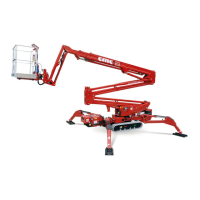
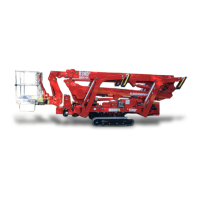
Mobile Elevating Work Platform(MEWP)
S19N
USE AND MAINTENANCE MANUAL
Man.219 Rev.8

Questions and Answers

Summary

0 Introduction

0.1 Content of the manual

Details the manual's content, including technical specifications and instructions for transfer, use, and maintenance.

0.2 Disclaimer

CMC disclaims responsibility for non-observance of instructions and issues regarding machine use.

0.3 Where and how to keep the manual

Instructions for storing and keeping the manual accessible for consultation during operations.

0.4 Regulatory references

Lists national and international laws and directives according to which the manual was drawn up.

0.5 Amendments and integrations

Covers information updates, legislative references, and the right of CMC to modify publication data without prior notice.

1 Specifications

1.1 Technical sheet

Provides detailed technical specifications including performance, dimensions, and power options for the MEWP.

1.2 Identification plate

Details the machine's identification plate, including type, model, serial number, manufacturer, and specifications.

1.3 CE certification

States that the S19N was designed and produced in compliance with national and European standards.

1.4 TÜV certification

States that the S19N was designed and produced in compliance with US standards ANSI/SAIA A92.20:2020.

1.5 Classification

Classifies the MEWP S19N as group B and type 1 for displacement.

1.6 Loading cycles

Estimates the machine's lifespan in working cycles and recommends periodic in-depth checks.

1.7 Working diagram

Illustrates the working diagram of the MEWP, showing load capacities and outreach limits.

2 Description and purpose

2.1 Definition

Defines the S19N as a mobile elevating work platform (MEWP) according to industry standards.

2.2 Machine purpose

Explains the MEWP's primary function of reaching high-positioned work areas and its intended use by trained staff.

2.3 Description of the main components

Identifies and labels the key components of the MEWP with a visual diagram.

2.3.1 Frame

Describes the steel structure of the frame and its hydraulic jacks for stabilization.

2.3.2 Turret

Details the turret's construction and its rotation mechanism.

2.3.3 Pantograph

Explains the pantograph's structure, arms, cylinder, and working range.

2.3.4 Telescopic boom

Describes the telescopic boom's elements and the cylinder for its extraction/return.

2.3.5 Basket

Details the basket's construction, safety features, and access.

3 Control stations

3.1 Machine switching on;off station

Details the ignition key operation for starting the engine and describes various indicator lights.

3.1.1 Other power supplies (*optional)

Explains optional power sources like diesel or electric motors and battery charging procedures.

3.2 Platform control stations

Introduces different platform control stations: basket, wired remote, outriggers, and turret.

3.2.1 Platform (operating) control station

Details the controls within the basket, including joysticks, selectors, and warning lights.

3.2.2 Outriggers control station

Describes the outriggers control station on the chassis and its levers for stabilizer operation.

3.2.3 Travel control station

Explains the wired remote control station for travel operations, including joysticks and speed selection.

3.2.4 Platform control (emergency) station

Details the emergency control station on the turret, its activation key, and movement levers.

4 Use procedures

4.1 Environmental operating conditions

Specifies the environmental conditions (temperature, humidity, wind speed) for normal operation.

4.2 Safety distances

Provides safety distances to be maintained from electric lines based on voltage.

4.3 Transport, storage and packaging

Describes methods for loading/unloading the MEWP using cranes or forklifts.

4.3.1 Loading;unloading through ramp

Details the procedure for loading/unloading the MEWP using ramps.

4.4 MEWP use procedures

Outlines the chronological procedures for using the MEWP safely and correctly.

4.4.1 Placement on the working area

Describes steps for placing the MEWP at the working area, including engine start and soil checks.

4.4.2 MEWP stabilization

Details the procedure for stabilizing the MEWP using outriggers and checks for levelness.

4.4.3 Access to the basket

Explains how to couple the basket and secure it before allowing access.

4.4.4 Basket levelling

Describes the procedure for leveling the basket using the joystick and dead man switch.

4.4.5 Use of the aerial part

Guides on operating the MEWP's aerial part using control stations and safety precautions.

4.4.5.1 Slowdown of the aerial part maneuvers

Explains software-set slowdowns for aerial part maneuvers under specific conditions.

4.4.5.1 Moment limiter

Describes the moment limiter system, pre-alarm, and alarm indicators related to outreach.

4.4.5.2 Load limiter (*optional)

Details the optional load limiting system, overload detection, and warnings.

4.4.5.3 Anti-crash system

Explains the anti-crash system that prevents accidental impacts with machine components.

4.4.6 MEWP positioning in the transport configuration

Guides on returning the MEWP aerial part and components to their transport positions.

4.5 Battery pack recharge

Provides instructions for recharging the battery pack, including charge times and cycle capacity.

4.6 Emergency operations

General advice before starting emergency procedures, including contacting C.M.C. Service.

4.6.1 Emergency button

Explains the function of the emergency button and the procedure to secure the machine.

4.6.2 Emergency bypass

Describes how to disable the emergency button function using the 'emergency bypass' lever.

4.6.3 Emergency operations in case of endothermic engine failure

Outlines emergency recovery procedures for endothermic engine failure using electropump or manual pump.

4.6.4 Emergency operations in case of electrical system failure

Describes emergency recovery for electrical system failure using endothermic engine or manual pump.

4.6.5 Simultaneous failure of hydraulic and electrical system

Provides procedures for emergencies involving simultaneous hydraulic and electrical system failures.

4.6.6 Electropump (*optional)

Details the 12V emergency electropump as an alternative energy source for emergency use.

4.7 Safety rules

General safety rules to prevent serious damages to people, things, and the machine.

4.7.1 Before and during the movements with MEWP in transport position

Safety rules for moving the MEWP in transport position, including operator training and alcohol prohibition.

4.7.2 Before positioning the MEWP

Safety checks before positioning the MEWP, including following instructions and checking safety devices.

4.7.3 During the positioning of the MEWP

Safety precautions during MEWP positioning, including working area checks and exhaust emission considerations.

4.7.4 During the entrance in the basket

Safety rules for entering the basket, including load limits and mandatory use of safety belts.

4.7.5 During the use of the MEWP

Safety guidelines during MEWP operation, including stopping in emergencies and checking conditions.

General Prohibitions During MEWP Operation

Lists various forbidden operations and conditions during MEWP use, such as overloading or using as a crane.

4.7.6 At the end of the works

Procedures for preparing the MEWP for transport after work completion, including checking aerial part and outriggers.

5 Markings

Identification plate (fac-simile)

Shows an example of the machine's identification plate with all relevant specifications.

6 Electrical system

7 Hydraulic system

8 Maintenance

8.1 Daily maintenance

Lists daily checks to be performed before operating the MEWP, from the emergency control station.

8.2 Weekly maintenance (or every 40 hours)

Details weekly maintenance tasks, including checking structure, air filter, and hydraulic filters.

8.3 Monthly maintenance (or every 120 hours)

Covers monthly maintenance operations like greasing pins, washing, and checking bolts.

8.4 Quarterly maintenance (or every 300 hours)

Outlines quarterly maintenance tasks, primarily checking bolt tightening on the slewing ring and frame.

8.5 Maintenance after the first 400 hours

Specifies maintenance after 400 hours, including replacing hydraulic filters and registering boom clearance.

8.6 Semi-annual maintenance (or every 750 hours)

Details semi-annual maintenance, involving filter replacement and a complete machine inspection.

8.7 Annual Maintenance (or every 1500 hours)

Covers annual maintenance, focusing on replacing the hydraulic oil and following specific procedures.

8.8 Biannual maintenance

Covers biannual maintenance, requiring a complete inspection of the machine and recording results.

8.9 Five-year maintenance

Details five-year maintenance, involving a general inspection of the entire machine and recording results.

8.10 Safety rules during maintenance

Lists critical safety rules to follow during maintenance operations to prevent harm.

8.11 Maintenance of endothermic engine

Provides technical characteristics of the standard Honda engine and maintenance guidance.

8.12 Maintenance of 48 V electric engine (*optional)

Details technical characteristics and maintenance for the optional 48V electric engine and battery pack.

8.13 Consumables

Lists recommended hydraulic oils, greases, and lubricants for the MEWP.

8.14 Indications for the dismantling of the MEWP

Provides information on the dismantling process and material disposal according to regulations.

8.15 Service

Provides contact information for repairs and maintenance services from C.M.C. s.r.l.

8.15.1 Remote Connection System (*optional)

Explains the optional remote connection system for accessing the machine's logic system.

9 Troubleshooting

Drawback: THE CONSENT LIGHT FOR STABILIZATION DOES NOT TURN ON.

Troubleshooting steps for when the stabilization consent light does not illuminate.

Drawback: THE STABILIZERS DO NOT WORK.

Troubleshooting steps for when the stabilizers are not functioning.

Drawback: WITH THE MEWP STABILIZED, THE CONSENT LIGHT FOR AERIAL PART USE DOES NOT TURN ON.

Troubleshooting for the consent light not activating for aerial part use after stabilization.

Drawback: THE AERIAL PART OF THE MEWP DOES NOT WORK.

Troubleshooting steps for when the aerial part of the MEWP is not operational.

Drawback: THE PLATFORM LEVELLING DOES NOT WORK.

Troubleshooting for platform levelling issues, such as oil leakage or worn seals.

Drawback: LOW MANOEUVRES SPEED.

Troubleshooting for slow maneuver speeds, potentially due to pump failure or filter issues.

Drawback: IMPOSSIBLE TO START THE ENDOTHERMIC ENGINE.

Troubleshooting steps for when the endothermic engine fails to start.

10 Sealing list

11 Overload tests

12 Operating tests

13 Control register

13.1 Delivery of the MEWP to the first owner

Form for recording the initial delivery of the MEWP to the first owner.

13.2 Further transfers of ownership

Form for documenting subsequent transfers of MEWP ownership.

13.3 Replacement of mechanisms

Form for recording the replacement of mechanical components.

13.4 Replacement of structural elements

Form for documenting the replacement of structural elements of the MEWP.

13.5 Replacement of hydraulic components

Form for recording the replacement of hydraulic components.

13.6 Replacement of electrical components

Form for documenting the replacement of electrical components.

13.7 Replacement of safety devices

Form for recording the replacement of safety devices on the MEWP.

13.8 Considerable failures and relevant repairs

Form for recording significant failures and the subsequent repair activities performed.

13.9 Periodical inspections and maintenance journal

Provides a template for users to record periodical inspections and maintenance operations.

13.10 Notes

Section for recording any additional notes or important information related to the MEWP's history.

Summary

0 Introduction

0.1 Content of the manual

Details the manual's content, including technical specifications and instructions for transfer, use, and maintenance.

0.2 Disclaimer

CMC disclaims responsibility for non-observance of instructions and issues regarding machine use.

0.3 Where and how to keep the manual

Instructions for storing and keeping the manual accessible for consultation during operations.

0.4 Regulatory references

Lists national and international laws and directives according to which the manual was drawn up.

0.5 Amendments and integrations

Covers information updates, legislative references, and the right of CMC to modify publication data without prior notice.

1 Specifications

1.1 Technical sheet

Provides detailed technical specifications including performance, dimensions, and power options for the MEWP.

1.2 Identification plate

Details the machine's identification plate, including type, model, serial number, manufacturer, and specifications.

1.3 CE certification

States that the S19N was designed and produced in compliance with national and European standards.

1.4 TÜV certification

States that the S19N was designed and produced in compliance with US standards ANSI/SAIA A92.20:2020.

1.5 Classification

Classifies the MEWP S19N as group B and type 1 for displacement.

1.6 Loading cycles

Estimates the machine's lifespan in working cycles and recommends periodic in-depth checks.

1.7 Working diagram

Illustrates the working diagram of the MEWP, showing load capacities and outreach limits.

2 Description and purpose

2.1 Definition

Defines the S19N as a mobile elevating work platform (MEWP) according to industry standards.

2.2 Machine purpose

Explains the MEWP's primary function of reaching high-positioned work areas and its intended use by trained staff.

2.3 Description of the main components

Identifies and labels the key components of the MEWP with a visual diagram.

2.3.1 Frame

Describes the steel structure of the frame and its hydraulic jacks for stabilization.

2.3.2 Turret

Details the turret's construction and its rotation mechanism.

2.3.3 Pantograph

Explains the pantograph's structure, arms, cylinder, and working range.

2.3.4 Telescopic boom

Describes the telescopic boom's elements and the cylinder for its extraction/return.

2.3.5 Basket

Details the basket's construction, safety features, and access.

3 Control stations

3.1 Machine switching on;off station

Details the ignition key operation for starting the engine and describes various indicator lights.

3.1.1 Other power supplies (*optional)

Explains optional power sources like diesel or electric motors and battery charging procedures.

3.2 Platform control stations

Introduces different platform control stations: basket, wired remote, outriggers, and turret.

3.2.1 Platform (operating) control station

Details the controls within the basket, including joysticks, selectors, and warning lights.

3.2.2 Outriggers control station

Describes the outriggers control station on the chassis and its levers for stabilizer operation.

3.2.3 Travel control station

Explains the wired remote control station for travel operations, including joysticks and speed selection.

3.2.4 Platform control (emergency) station

Details the emergency control station on the turret, its activation key, and movement levers.

4 Use procedures

4.1 Environmental operating conditions

Specifies the environmental conditions (temperature, humidity, wind speed) for normal operation.

4.2 Safety distances

Provides safety distances to be maintained from electric lines based on voltage.

4.3 Transport, storage and packaging

Describes methods for loading/unloading the MEWP using cranes or forklifts.

4.3.1 Loading;unloading through ramp

Details the procedure for loading/unloading the MEWP using ramps.

4.4 MEWP use procedures

Outlines the chronological procedures for using the MEWP safely and correctly.

4.4.1 Placement on the working area

Describes steps for placing the MEWP at the working area, including engine start and soil checks.

4.4.2 MEWP stabilization

Details the procedure for stabilizing the MEWP using outriggers and checks for levelness.

4.4.3 Access to the basket

Explains how to couple the basket and secure it before allowing access.

4.4.4 Basket levelling

Describes the procedure for leveling the basket using the joystick and dead man switch.

4.4.5 Use of the aerial part

Guides on operating the MEWP's aerial part using control stations and safety precautions.

4.4.5.1 Slowdown of the aerial part maneuvers

Explains software-set slowdowns for aerial part maneuvers under specific conditions.

4.4.5.1 Moment limiter

Describes the moment limiter system, pre-alarm, and alarm indicators related to outreach.

4.4.5.2 Load limiter (*optional)

Details the optional load limiting system, overload detection, and warnings.

4.4.5.3 Anti-crash system

Explains the anti-crash system that prevents accidental impacts with machine components.

4.4.6 MEWP positioning in the transport configuration

Guides on returning the MEWP aerial part and components to their transport positions.

4.5 Battery pack recharge

Provides instructions for recharging the battery pack, including charge times and cycle capacity.

4.6 Emergency operations

General advice before starting emergency procedures, including contacting C.M.C. Service.

4.6.1 Emergency button

Explains the function of the emergency button and the procedure to secure the machine.

4.6.2 Emergency bypass

Describes how to disable the emergency button function using the 'emergency bypass' lever.

4.6.3 Emergency operations in case of endothermic engine failure

Outlines emergency recovery procedures for endothermic engine failure using electropump or manual pump.

4.6.4 Emergency operations in case of electrical system failure

Describes emergency recovery for electrical system failure using endothermic engine or manual pump.

4.6.5 Simultaneous failure of hydraulic and electrical system

Provides procedures for emergencies involving simultaneous hydraulic and electrical system failures.

4.6.6 Electropump (*optional)

Details the 12V emergency electropump as an alternative energy source for emergency use.

4.7 Safety rules

General safety rules to prevent serious damages to people, things, and the machine.

4.7.1 Before and during the movements with MEWP in transport position

Safety rules for moving the MEWP in transport position, including operator training and alcohol prohibition.

4.7.2 Before positioning the MEWP

Safety checks before positioning the MEWP, including following instructions and checking safety devices.

4.7.3 During the positioning of the MEWP

Safety precautions during MEWP positioning, including working area checks and exhaust emission considerations.

4.7.4 During the entrance in the basket

Safety rules for entering the basket, including load limits and mandatory use of safety belts.

4.7.5 During the use of the MEWP

Safety guidelines during MEWP operation, including stopping in emergencies and checking conditions.

General Prohibitions During MEWP Operation

Lists various forbidden operations and conditions during MEWP use, such as overloading or using as a crane.

4.7.6 At the end of the works

Procedures for preparing the MEWP for transport after work completion, including checking aerial part and outriggers.

5 Markings

Identification plate (fac-simile)

Shows an example of the machine's identification plate with all relevant specifications.

6 Electrical system

7 Hydraulic system

8 Maintenance

8.1 Daily maintenance

Lists daily checks to be performed before operating the MEWP, from the emergency control station.

8.2 Weekly maintenance (or every 40 hours)

Details weekly maintenance tasks, including checking structure, air filter, and hydraulic filters.

8.3 Monthly maintenance (or every 120 hours)

Covers monthly maintenance operations like greasing pins, washing, and checking bolts.

8.4 Quarterly maintenance (or every 300 hours)

Outlines quarterly maintenance tasks, primarily checking bolt tightening on the slewing ring and frame.

8.5 Maintenance after the first 400 hours

Specifies maintenance after 400 hours, including replacing hydraulic filters and registering boom clearance.

8.6 Semi-annual maintenance (or every 750 hours)

Details semi-annual maintenance, involving filter replacement and a complete machine inspection.

8.7 Annual Maintenance (or every 1500 hours)

Covers annual maintenance, focusing on replacing the hydraulic oil and following specific procedures.

8.8 Biannual maintenance

Covers biannual maintenance, requiring a complete inspection of the machine and recording results.

8.9 Five-year maintenance

Details five-year maintenance, involving a general inspection of the entire machine and recording results.

8.10 Safety rules during maintenance

Lists critical safety rules to follow during maintenance operations to prevent harm.

8.11 Maintenance of endothermic engine

Provides technical characteristics of the standard Honda engine and maintenance guidance.

8.12 Maintenance of 48 V electric engine (*optional)

Details technical characteristics and maintenance for the optional 48V electric engine and battery pack.

8.13 Consumables

Lists recommended hydraulic oils, greases, and lubricants for the MEWP.

8.14 Indications for the dismantling of the MEWP

Provides information on the dismantling process and material disposal according to regulations.

8.15 Service

Provides contact information for repairs and maintenance services from C.M.C. s.r.l.

8.15.1 Remote Connection System (*optional)

Explains the optional remote connection system for accessing the machine's logic system.

9 Troubleshooting

Drawback: THE CONSENT LIGHT FOR STABILIZATION DOES NOT TURN ON.

Troubleshooting steps for when the stabilization consent light does not illuminate.

Drawback: THE STABILIZERS DO NOT WORK.

Troubleshooting steps for when the stabilizers are not functioning.

Drawback: WITH THE MEWP STABILIZED, THE CONSENT LIGHT FOR AERIAL PART USE DOES NOT TURN ON.

Troubleshooting for the consent light not activating for aerial part use after stabilization.

Drawback: THE AERIAL PART OF THE MEWP DOES NOT WORK.

Troubleshooting steps for when the aerial part of the MEWP is not operational.

Drawback: THE PLATFORM LEVELLING DOES NOT WORK.

Troubleshooting for platform levelling issues, such as oil leakage or worn seals.

Drawback: LOW MANOEUVRES SPEED.

Troubleshooting for slow maneuver speeds, potentially due to pump failure or filter issues.

Drawback: IMPOSSIBLE TO START THE ENDOTHERMIC ENGINE.

Troubleshooting steps for when the endothermic engine fails to start.

10 Sealing list

11 Overload tests

12 Operating tests

13 Control register

13.1 Delivery of the MEWP to the first owner

Form for recording the initial delivery of the MEWP to the first owner.

13.2 Further transfers of ownership

Form for documenting subsequent transfers of MEWP ownership.

13.3 Replacement of mechanisms

Form for recording the replacement of mechanical components.

13.4 Replacement of structural elements

Form for documenting the replacement of structural elements of the MEWP.

13.5 Replacement of hydraulic components

Form for recording the replacement of hydraulic components.

13.6 Replacement of electrical components

Form for documenting the replacement of electrical components.

13.7 Replacement of safety devices

Form for recording the replacement of safety devices on the MEWP.

13.8 Considerable failures and relevant repairs

Form for recording significant failures and the subsequent repair activities performed.

13.9 Periodical inspections and maintenance journal

Provides a template for users to record periodical inspections and maintenance operations.

13.10 Notes

Section for recording any additional notes or important information related to the MEWP's history.

CMC S19N Specifications

General IconGeneral
BrandCMC
ModelS19N
CategoryLifting Systems
LanguageEnglish

Related product manuals