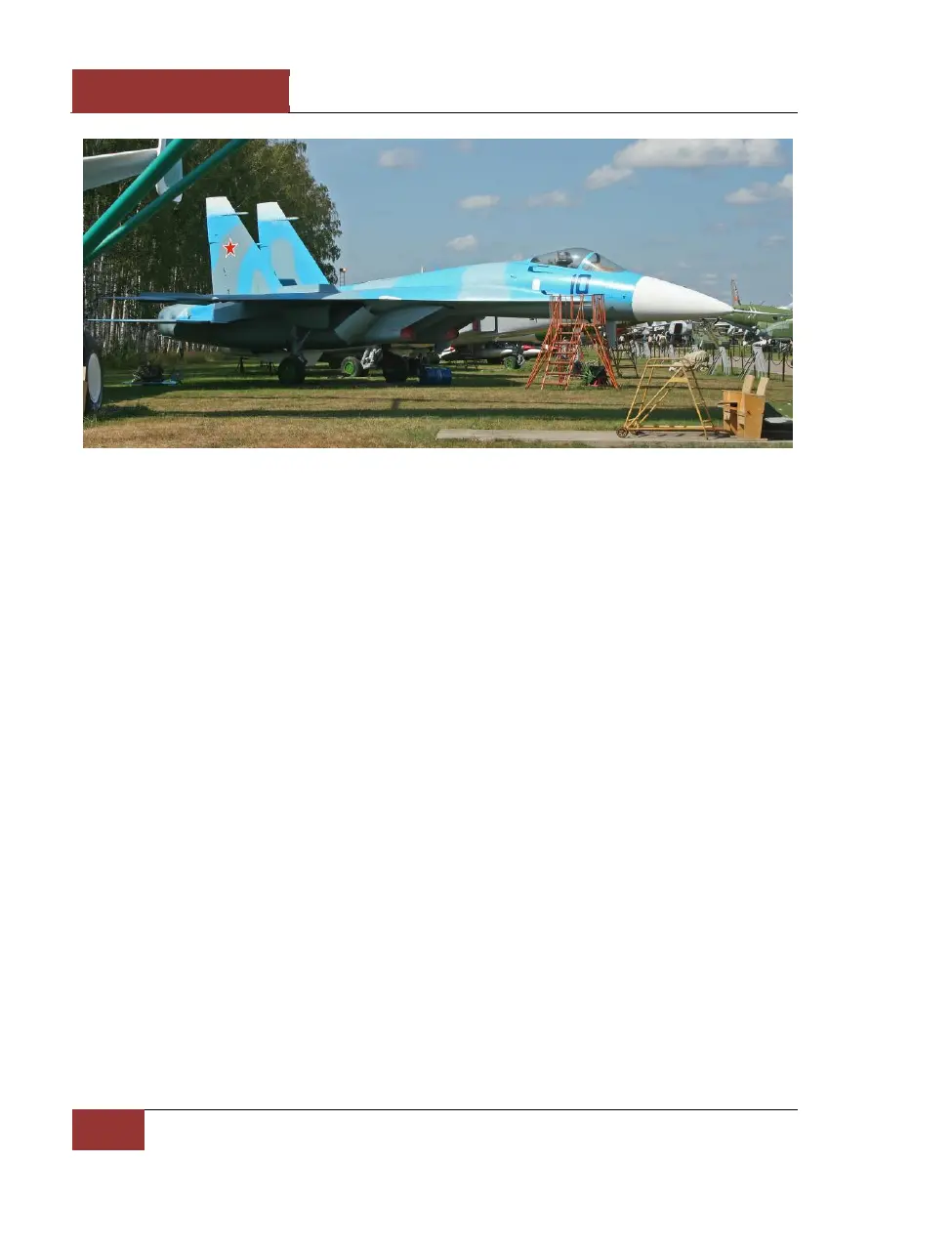
Figure 5: T-10-1 in the Russian Air Force Museum (Monino)
The Su-27 fighter conceptual and detailed design stages were completed in 1975-1976, and after
issuance of required design documentation and drawings, the manufacturing of first prototypes was
initiated at the Kulon plant. Unfortunately, Pavel Sukhoi did not live long enough to see the fighter -
he died in 1975 to be succeeded by Yevgeny Ivanov. From 1976 on, the Su-27 programme has been
under immedeate guidance of Chief Designer Mikhail Simonov. The first prototype designated T10-1
was completed in early 1977. Due to the lack of the Al-31F turbofan bypass engines, the prototype
was equipped with two AL-21F-3AI engines - a modified version of the series-production AL-21F-3A
engine mounted on other Sukhoi-developed fighters (Su-17, Su-24). After the completion of required
ground checks and run-ups, everything was ready for test flights and on 20 May, 1977 Vladimir
Ilyushin, Sukhoi's chief pilot, took the T10-1 off the ground for its maiden flight. The first prototype
was used to evaluate its key flight performances as well as stability and controllability.
In 1978, the second prototype designated T10-2 was completed though its life was brief. On 7 July,
1978, the fighter suffered a mid-air accident resulting in death of test pilot Yevgeny Solovyov. The
crash was triggered by the plane's oscillation in the longitudinal plane at a supersonic speed, due to
which it suffered an extremely high g-load and disintegrated in midair. The black box recorder
readings showed that the fighter got into an unexplored resonant mode, which caused the mid-air
disintegration of the aircraft. This happened so fast that Yevgeny Solovyov, distinguished test pilot
and Hero of the Soviet Union, had no chance to eject. The after-action review established the actual
reasons for the tragedy and allowed the developer to introduce necessary changes into the fighter's
design. During 1978, preparations for preliminary production of the Su-27 were made at the Gagarin
machine-building plant situated in the Far Eastern city of Komsomolsk-on-Amur. At the same time,
the Sukhoi mechanical plant commenced assembling another two Su-27 prototypes. Unlike the first
two prototypes, those two fighters were to be powered by AL-31F engines. The new powerplant was
500 kg lighter, its thrust was 12 percent higher than that of the predecessor with fuel consumption
being lower. In comparison with the AL-21F-3s, the AL-31F engines had smaller diameter and length
while their nozzles were accommodated with a secondary (bypass) duct control system. On 23
August, 1979, Vladimir Ilyushin took the T10-3 off for its maiden flight. Two months later, the T10-4
joined the flight testing too. At first, both aircraft were used for in-flight engine testing. Then the


 To Next Page