T10-3 was remodeled to be further tested on the Nitka training facility in support of the development
of the Su-27 ship-borne version while the T10-4 was used for the further refining of the weapons
control system.
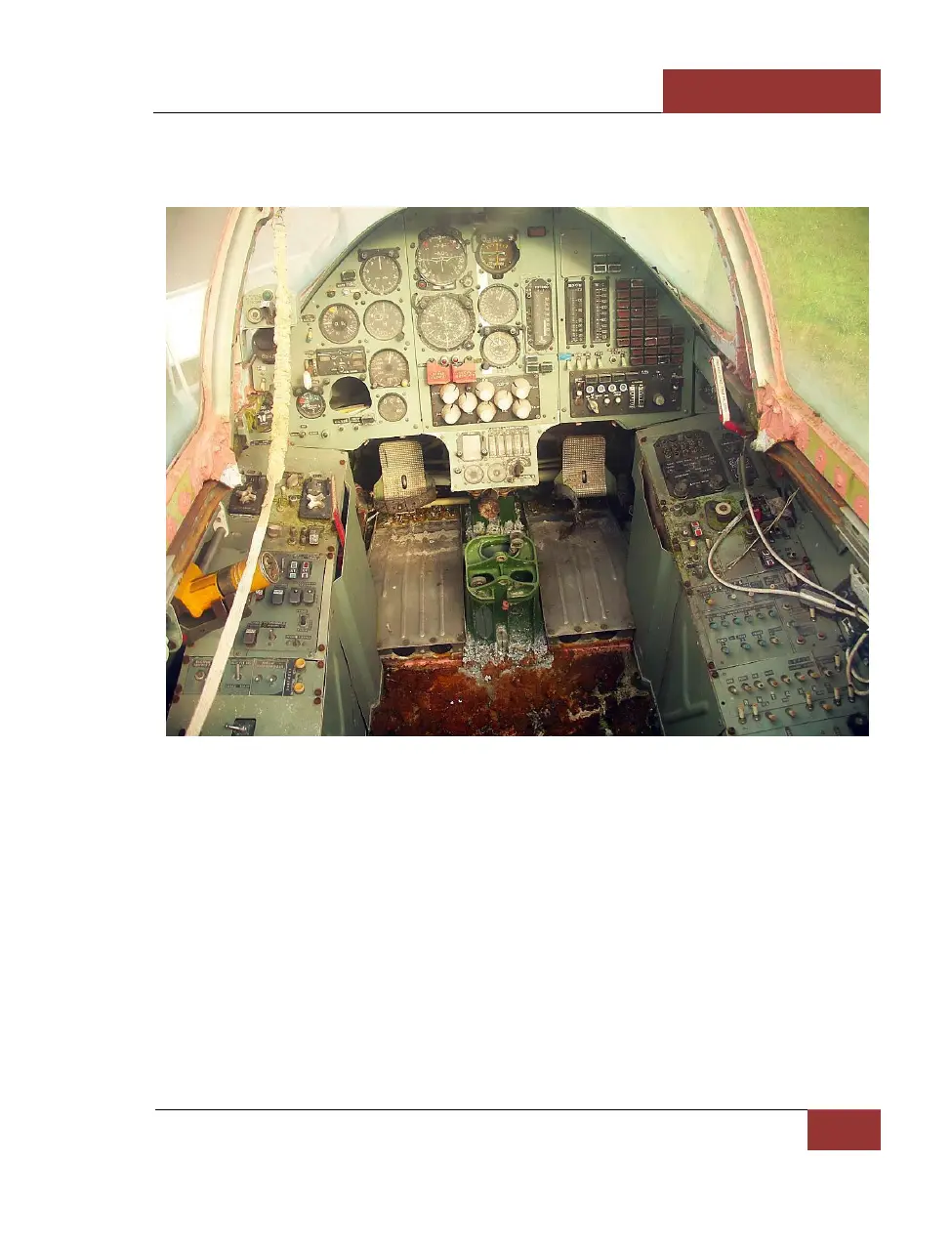
Figure 6: T-10 cockpit
By the early 1980, as many as three prototypes (T10-1, T10-3 and T10-4) had been taking part in
the Su-27 testing programme with first pre-series aircraft expected to join soon. It seemed that
everything was in line with the schedule and the new fighter would have been fielded in a couple of
years. However, there were staunch objections against commencing series production of the aircraft
in the then airframe configuration, made by the Siberian aviation research institute's (SibNIA)
aerodynamic experts and... Chief Designer Mikhail Simonov himself. According to the SibNIA experts
who had done the bulk of aerodynamic research under the Su-27 programme, several mistakes were
made during the fighter development stage. The combination of the accepted wing planform and
leading-edge extension configuration caused premature vortex flow separation: the non-stationary
airflow around the wing would begin as early as at the 8-to-10 angle of attack (AoA), which would
cause deterioration of the airframe's lifting capability, buffeting and decrease in lateral stability. The
tail unit configuration designed for the T10 would fail to provide required effectiveness of the
longitudinal control surfaces, lateral and directional stability devices. The SibNIA-held T-10 wind


 To Next Page