Field Water Capacity Values Moisture Meter User Manual 4.0
Calculating Field Capacity
There are two methods for estimating Field Capacity:
1. Interpretation of field measurements
2. Laboratory measurements
Field Measurements
To determine a field’s natural capacity, it is necessary to collect a series of soil
moisture profile readings before, during and after a thorough wetting-up of the soil.
Unless time is of the essence, this is best done by a heavy, prolonged rainfall or by a
complete field irrigation
1
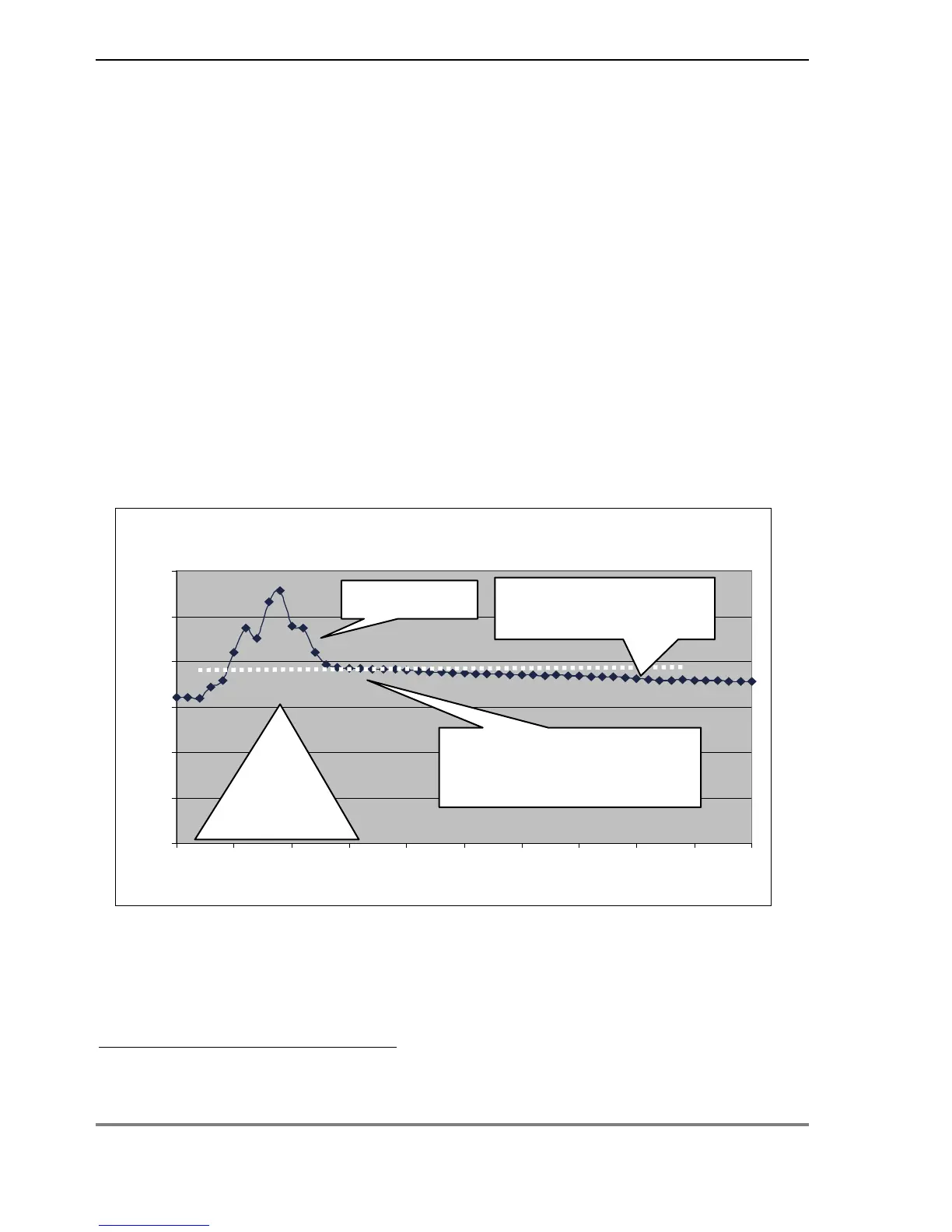
. From the collected data set, construct a graph of soil
moisture against time for each profile depth. For the upper soil profiles (0-40cms) the
Field Capacity can usually be interpolated relatively easily from the graph as the level
of soil moisture at which drainage stops and normal evaporation and transpiration
losses take over. In certain soils or where drainage is restricted by a natural obstacle,
- such as a high water table, plough panning, or a saturated clay substrate – it will be
necessary to graph the individual sensor readings, not the summed total.
1
It is tempting to simply wet-up the area around the sensors, if however, the readings
are to be used as the basis of field scale interpretation, this can create an imbalance
that will only be corrected when the field is naturally over-filled again.


 To Next Page