4.2 ACCESSORY INSTALLATION
4.2.1 REVERSING EDGE INSTALLATION
Although the 1601 and 1602 barrier gate operators are equipped with an electronic reversing device
(ERD) which will reverse the travel of the arm should it come into contact with an obstruction during
the down cycle, installing an optional electric reversing edge (p/n 8080-016) on the bottom of the
wood arm will offer additional protection to the arm, the operator, and to the object that caused the
obstruction.
If the operator is equipped with the square plastic arm (p/n 1601-071), it may not be necessary to
install the reversing edge on the bottom of this arm since it is soft enough to bend out of the way
should it meet an obstruction.
1. Be sure that power to the operator is OFF.
2. Attach the 6-foot mounting bracket to the bottom of the barrier arm using ¾-inch wood
screws (not supplied) at 1-foot intervals (a drill will be required to drill through the
mounting bracket and into the wood arm). Position the mounting bracket so that it (the
bracket) is centered in the traffic lane.
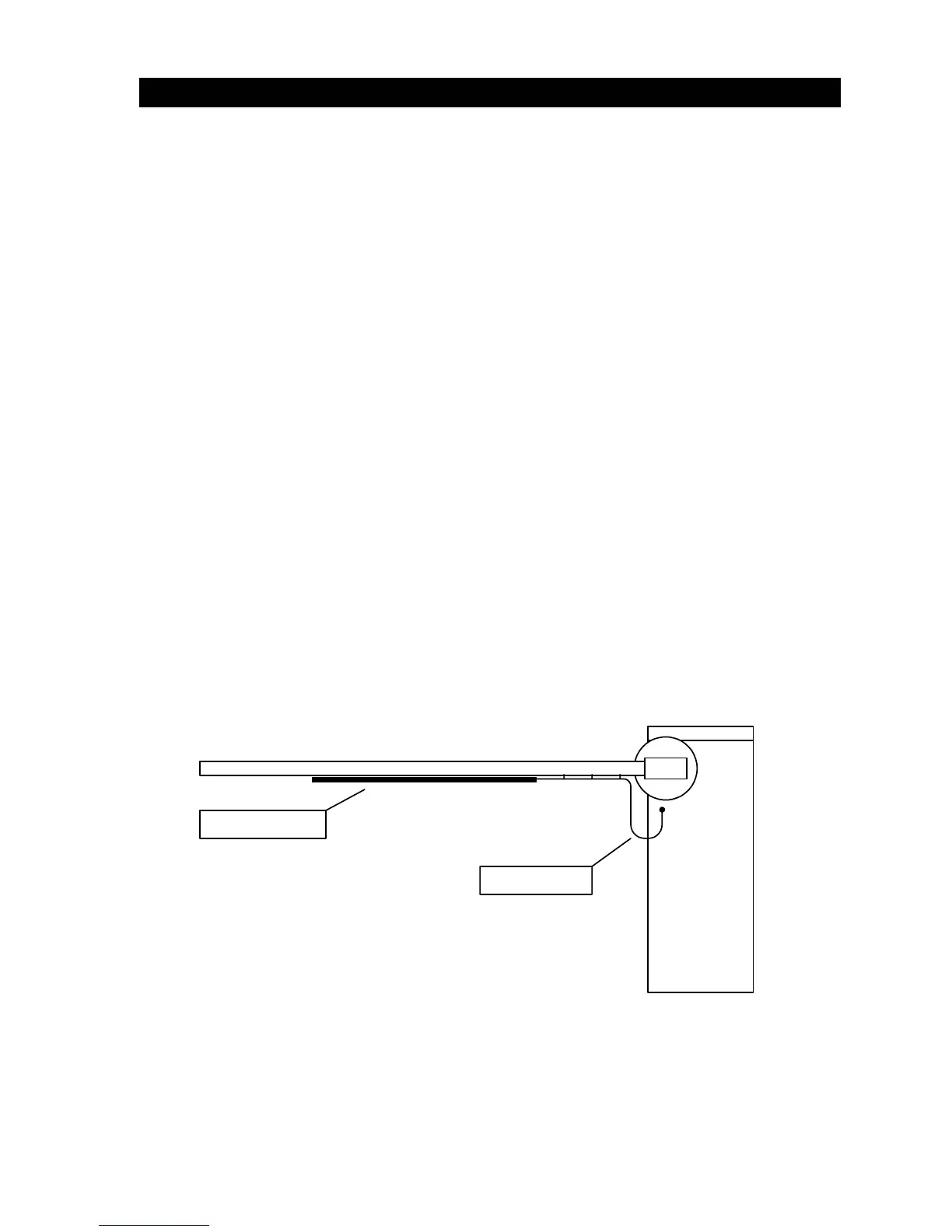
3. Slide the reversing edge into the mounting bracket being sure that the lead-in wires are
on the end of the reversing edge closest to the barrier operator.
4. Route the lead-in wire along the side of the arm. It is recommended that the wire be
secured to the arm with cable clamps (not supplied).
5. Drill a ¼-inch access hole in the side of the operator cabinet beneath the operator shaft.
Install a grommet in this hole to protect the lead-in wire from any sharp metal edges.
6. Route the lead-in wire through the hole drilled in step 5. Be sure to leave a loop to allow
the arm to rotate without obstruction from the lead-in wire.
7. Route the lead-in wire internally so that it does not interfere with any moving mechanical
linkages in the operator.
8. Connect the lead-in wires to terminals 9 and 14.
Reversing Edge
Lead-In Wire
Figure 30
39


 To Next Page