EasyManua.ls Logo

Festo MPS - User Manual

Festo MPS
116 pages
Go to English
Print Icon
To Next Page IconTo Next Page
Loading...
655633 de/en
07/18 R2.6
Station Handhaben
Handbuch
Handling station
Manual
CD-ROM included

Table of Contents

Question and Answer IconNeed help?

Do you have a question about the Festo MPS and is the answer not in the manual?

Summary

Introduction to the Handling Station

Training Contents Overview

Details the subjects covered in training, including mechanics, pneumatics, electrical systems, PLC, and fault finding.

Important Safety Notes

Essential guidelines for safe and trouble-free operation of the MPS® system, emphasizing safety recommendations.

Risks in Modular Production System Use

Highlights potential risks of physical injury or damage when using the MPS® system, emphasizing intended use and safe conditions.

System Intended Use

Specifies the system's purpose for vocational and further training in automation, including advice and maintenance.

General Notes on Safety

Technical Data and Combinations

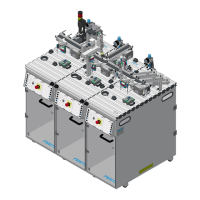
MPS Station Combinations

Illustrates possible combinations of MPS® stations as downstream units in a production flow.

Transport, Unpacking, and Scope of Delivery

Design and Functionality

The Handling Station

Introduces the Handling station, defining its role in material flow and its primary functions.

Station Functionality

Describes the station's function in determining workpiece characteristics, fetching, and depositing them on slides.

Sequence Description

Details the operational sequence, including starting prerequisites, initial positions, and workpiece handling steps.

Receptacle Module

Explains the Receptacle module where workpieces are manually inserted and detected by a diffuse sensor.

PicAlfa Pneumatic Module

Describes the PicAlfa-pneumatic module, its handling components, pneumatic drives, and flexible capabilities.

PicAlfa Electrical Module

Details the PicAlfa-electrical module, its electrical linear axis, and how slide positions are sensed electrically.

Slide Module Details

Explains the Slide module's purpose for transporting and storing workpieces and its adjustable angle of inclination.

Station Commissioning Procedures

Workstation Requirements

Lists the necessary components and prerequisites for commissioning the MPS® station.

Mechanical Set Up

Provides instructions for the mechanical assembly of the profile plate and control console for the station.

Linear Axis End Stops

Details the procedure for setting the mechanical end stops for the linear axis positions.

Sensor Adjustments

Guides on adjusting diffuse and proximity sensors for proper station function.

System Connections

Details pneumatic connection procedures and voltage supply requirements for the station.

Loading the PLC Program

Guides on loading PLC programs for different controllers (Siemens, Festo, Allen Bradley, Mitsubishi).

Starting the Sequence

Describes how to initiate and operate the station's sequence, including stopping and cycle selection.

Maintenance Guidelines

Content of the CD-ROM

Updates and Online Resources

Summary

Introduction to the Handling Station

Training Contents Overview

Details the subjects covered in training, including mechanics, pneumatics, electrical systems, PLC, and fault finding.

Important Safety Notes

Essential guidelines for safe and trouble-free operation of the MPS® system, emphasizing safety recommendations.

Risks in Modular Production System Use

Highlights potential risks of physical injury or damage when using the MPS® system, emphasizing intended use and safe conditions.

System Intended Use

Specifies the system's purpose for vocational and further training in automation, including advice and maintenance.

General Notes on Safety

Technical Data and Combinations

MPS Station Combinations

Illustrates possible combinations of MPS® stations as downstream units in a production flow.

Transport, Unpacking, and Scope of Delivery

Design and Functionality

The Handling Station

Introduces the Handling station, defining its role in material flow and its primary functions.

Station Functionality

Describes the station's function in determining workpiece characteristics, fetching, and depositing them on slides.

Sequence Description

Details the operational sequence, including starting prerequisites, initial positions, and workpiece handling steps.

Receptacle Module

Explains the Receptacle module where workpieces are manually inserted and detected by a diffuse sensor.

PicAlfa Pneumatic Module

Describes the PicAlfa-pneumatic module, its handling components, pneumatic drives, and flexible capabilities.

PicAlfa Electrical Module

Details the PicAlfa-electrical module, its electrical linear axis, and how slide positions are sensed electrically.

Slide Module Details

Explains the Slide module's purpose for transporting and storing workpieces and its adjustable angle of inclination.

Station Commissioning Procedures

Workstation Requirements

Lists the necessary components and prerequisites for commissioning the MPS® station.

Mechanical Set Up

Provides instructions for the mechanical assembly of the profile plate and control console for the station.

Linear Axis End Stops

Details the procedure for setting the mechanical end stops for the linear axis positions.

Sensor Adjustments

Guides on adjusting diffuse and proximity sensors for proper station function.

System Connections

Details pneumatic connection procedures and voltage supply requirements for the station.

Loading the PLC Program

Guides on loading PLC programs for different controllers (Siemens, Festo, Allen Bradley, Mitsubishi).

Starting the Sequence

Describes how to initiate and operate the station's sequence, including stopping and cycle selection.

Maintenance Guidelines

Content of the CD-ROM

Updates and Online Resources

Festo MPS Specifications

General IconGeneral
CategoryModular Production System
ManufacturerFesto
Power Supply24V DC
Compressed Air Supply6 bar
ComponentsVarious modules including handling, testing, and processing stations
ControlPLC (Programmable Logic Controller)
ProgrammingLadder Diagram, Function Block Diagram, Structured Text
CommunicationPROFIBUS, PROFINET, Ethernet
ActuatorsPneumatic cylinders, electric drives
SensorsProximity sensors, photoelectric sensors, pressure sensors
Materialplastic components

Related product manuals