2. Installation
2.01 Appliance Location
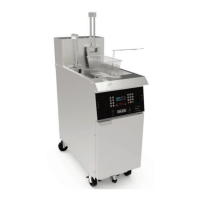
GBF-70 Fryer
Installation
5
The following sections explain procedures necessary to properly install the appliance. To help avoid personal injury or
equipment damage, please adhere to all recommended procedures.
Installation expenses (material & labor) are the sole responsibility of the customer. Generally, it is advisable to
engage the services of professional commercial kitchen equipment specialists, a licensed electrician, and/or a
qualified HVAC contractor to manage the specifics of an installation. You may call Giles Technical Support @
800.554.4537, if assistance is required.
DO NOT MODIFY, ADD ATTACHMENTS OR OTHERWISE ALTER THIS EQUIPMENT
1. Appliance and surrounding area must be free and clear of combustible materials. Maintain 3” [7.6 cm]
clearance.
2. Provide adequate space to allow easy access for future servicing and proper operation.
3. Be sure that electrical service available in the intended location is of a voltage and amp rating adequate to
power the appliance load. NOTE: A banked system requires a separate electrical service for each fryer unit.
4. Be sure unit is installed in a stable position and will not unintentionally move. Front casters have locking
brakes ... be sure they are kept locked when in operation. Some authorities may require that special
anchoring be utilized for this type appliance ... check local code.
5. The appliance must be installed, operated, and maintained in accordance with the Standard for Ventilation
Control, and Fire Protection of Commercial Cooking Operations, NFPA 96. Ventilation must be provided in
the operational area of the cooking appliance, as required by local code requirements.
These steps will help to ensure proper installation. If there are questions concerning these procedures, contact Giles
Technical Support at 800.554.4537 or email services@gfse.com.
2.02 Unpacking
The fryer and associated accessories are shipped on a wooden pallet; secured with high‐tensile plastic strapping and
enclosed by a protective wooden framework. The entire unit is wrapped in plastic stretch‐film for protection.
IMPORTANT!
If crate showed evidence of damage or mishandling, the unit and all accessory items should have been
thoroughly inspected. The freight carrier should be notified about all suspected shipping damage. Typically, it
will be the responsibility of the purchaser to file and negotiate freight damage claims.
Continued on Next Page


 To Next Page