Troubleshooting
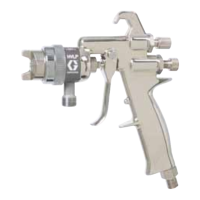
Gun Operation
Troubleshooting
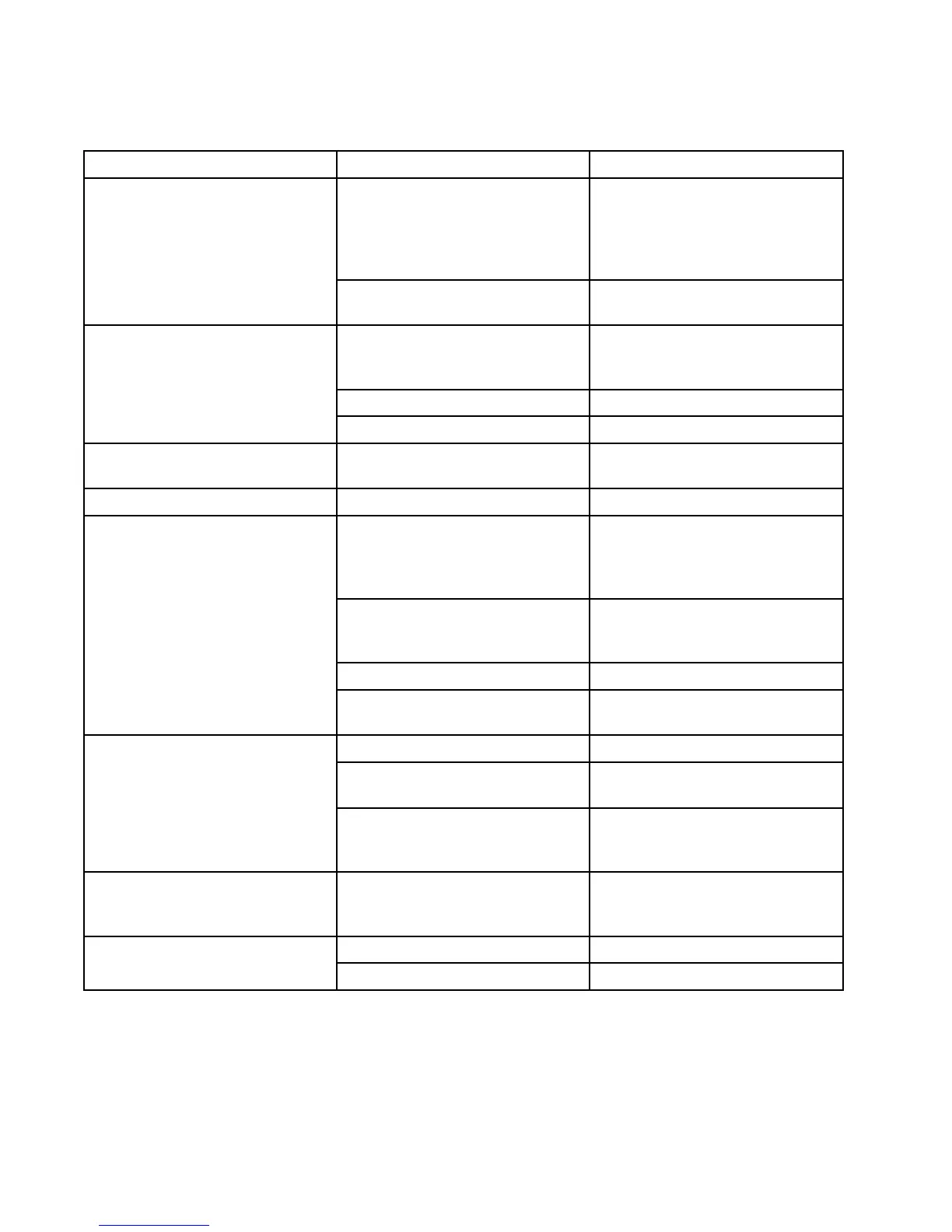
Problem
Cause Solution
Atomizing air
pressure too high.
Close restrictor valve part way, or
decrease air pressure as low as
possible; minimum 45 psi (0.32
MPa, 3.2 bar) needed at gun for
full voltage.
Excessive spray fog.
Fluid too th
in, or fluid flow is too
low.
Increase vi
scosity or increase fluid
flow rate.
Atomizing air pressure too low.
Open atomizing air valve more or
increase gun air inlet pressure;
use lowest air pressure necessary.
Poorly mixed or filtered fluid. Remix or refilter fluid.
“Orange Peel” finish.
Fluid too thick. Reduce viscosity.
Fluid leaks from the fluid packing
area.
Worn pac
kings or rod.
See Packing Rod Repair, page 40.
Air lea
ks from the front of the gun.
Air valve is not seating properly.
See Air
Valve Repair, page 50.
Worn or damaged fluid packing
rod or electrode.
Replace packing rod (2e)
or electrode (3). See
Packing Rod Repair, page 40 or
Electrode Replacement, page 39.
Worn fluid nozzle seat. Replace nozzle (4). See
Air Cap and Nozzle Replacement,
page 38.
Loo
se fluid nozzle.
Tighten.
Fluid leakage from the front of the
gun.
Damaged nozzle o-ring.
See Air Cap and Nozzle
Replacement, page 38.
Low fluid supply. Add fluid if necessary.
D
irty or clogged fluid nozzle.
C
lean. See
C
lean the Gun Daily, page 29.
Gun does not spray.
Closed or damaged fluid
adjustment valve.
Open valve, or see
ES On-Off and Fluid Adjustment
Valve Repair, page 49.
Dirty air cap.
Misaligned air cap and fluid nozzle. Clean fluid buildup off air cap
and fluid nozzle seat. See
Clean the Gun Daily, page 29.
Poor grounding.
See Grounding, page 21.
Excessive paint wrap back to
operator.
Incorrect distance from gun to part. Should be 8–12 in. (200–300 mm).
34 3A2494E


 To Next Page