16 / 89 83000102.Ki
2.12. Control cabinet
The control cabinet conforms to the requirements of EN 60204 and contains the electrical and
electronic components for controlling the chiller. After removing the operator control panel the
control cabinet is accessible and can be opened using a standard two-way key. In order to avoid a
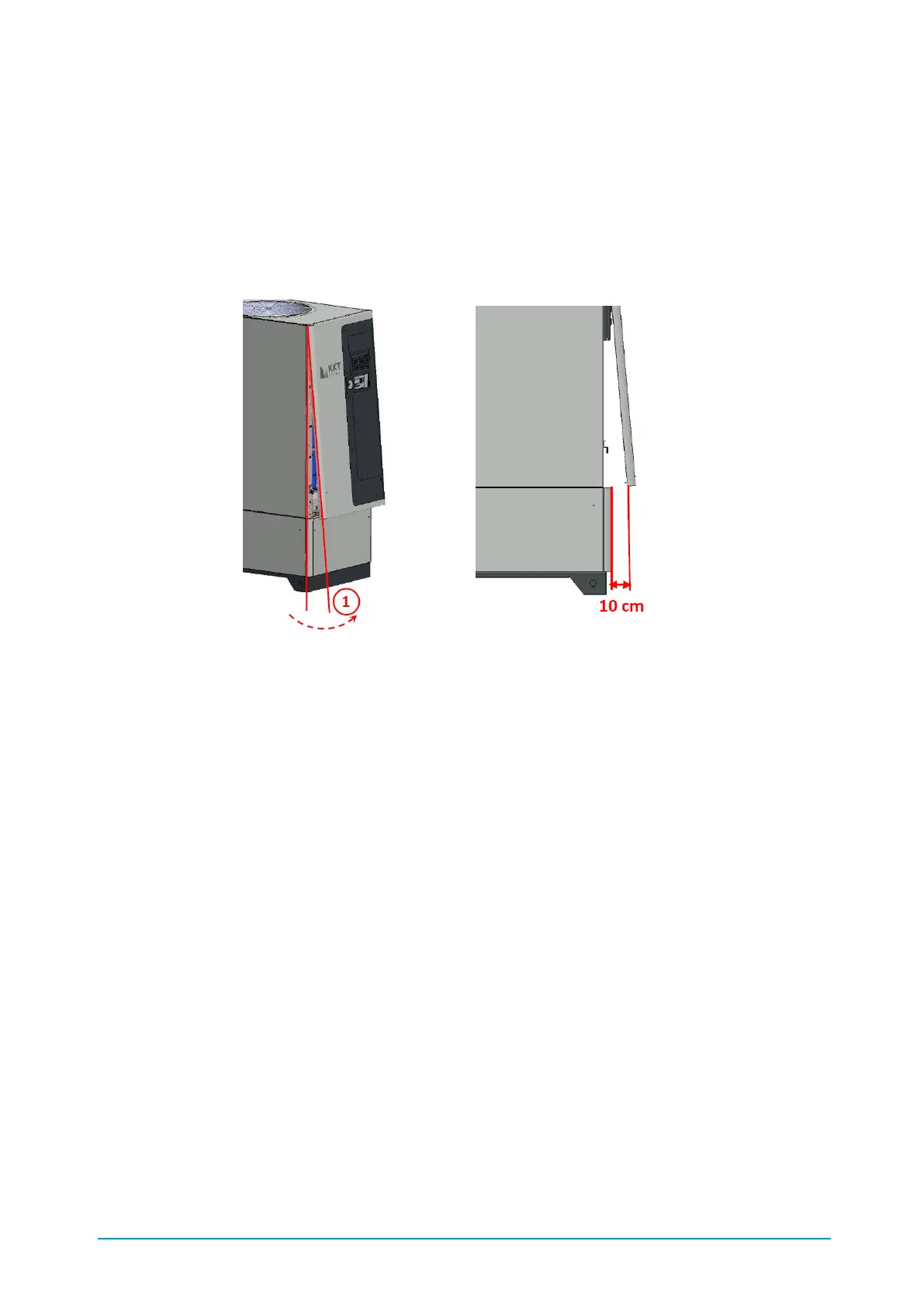
damage of the main switch while demounting the side panel, the side panel has to be tipped
10cm on the bottom side. A circuit diagram is supplied with the unit.
Figure 2: Demounting the side panel of the switch cabinet
2.13. Pump
The chiller's pump ensures the necessary circulation of the cold water. The water is drawn out of
the chiller's internal tank and is pumped through the process circuit. Optionally, the units can also
be designed as a continuous flow cooler without tank, with pump or without tank, without pump
(see Chapter 3.1 Version without tank, with pump, and Chapter 3.2 Version without tank, without
pump).
2.14. Fan
The fan draws the cooling air from the surroundings through the condenser and blows out the
heated air upwards out of the chiller. To prevent injuries, the fan is protected against accidental
contact by protective grilles. The fan's speed is variable and is controlled by the main printed
board. The speed of the fan is essentially controlled by the condensing pressure. The fan is
protected against thermal overload. In units with two fans the speed of fan 1 is always the same
as the speed of fan 2.
2.15. Cold water cycle
The cold water is drawn out of the chiller's internal tank by the internal pump and is pumped
through the process circuit. Optionally, the units can also be designed as a continuous flow cooler
without tank, with pump or without tank, without pump (see Chapter 3.1 Version without tank,
with pump, and Chapter 3.2 Version without tank, without pump). In the process circuit the cold



 To Next Page