TP-6277 10/0328 Scheduled Maintenance
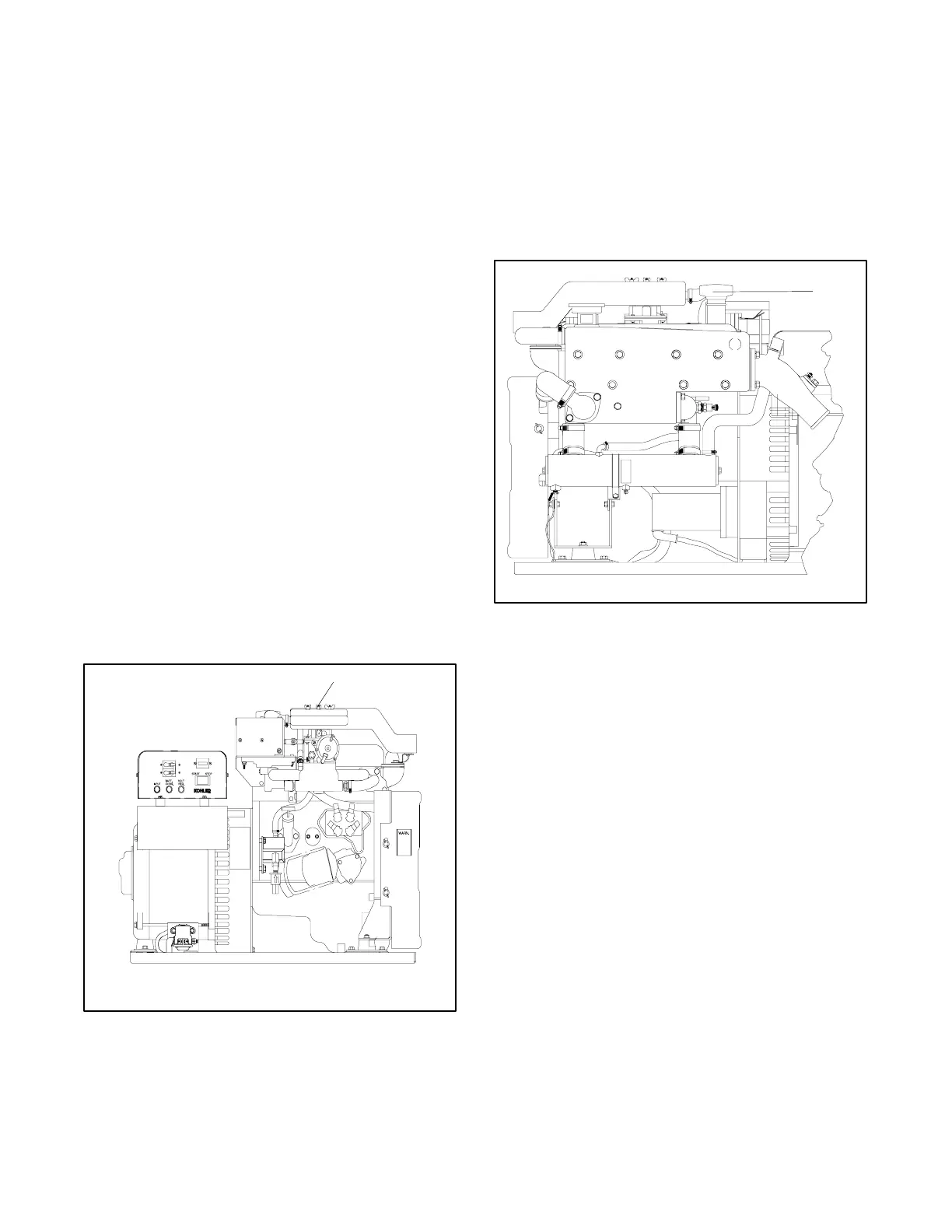
3.8 Backfire Flame Arrestor
3.8.1 Servicing Backfire Flame Arrestor
The United States Coast Guard (USCG)-approved
backfire flame arrestor does not require frequent
service, but does require inspection at the specified
interval. Check the mesh element for accumulated oil or
dirt which could clog the element and cause poor
performance. If necessary, remove and clean the
assembly in evaporative solvent. Allow to dry and
replace. See Figure 3-21. If flame arrestor is damaged,
replace it to ensure that the unit functions as a flame
arrestor. Use USCG-approved Kohler replacement
parts for proper fit and safety.
1. Remove the three wing nuts and cover.
2. Loosen the hose clamp of the breather hose at the
air silencer fitting and remove the hose.
3. Remove the two screws, lock washers, and flat
washers at the air intake duct opening.
4. Loosen the hose clamp attaching the air silencer
assembly to the carburetor. Lift off the air silencer
assembly.
5. Clean the assembly in evaporative solvent and
wipe it clean.
6. Reassemble using the reverse sequence.
1
1. Backfire flame arrestor
ADV5661-C
Figure 3-21 Backfire Flame Arrestor
3.8.2 Crankcase Ventilation System
A tube supplies clean air from the air cleaner to the oil
filter cap on the rocker cover. A calibrated port in the cap
regulates the flow of fumes. A second tube vents the
fumes via the intake manifold into the cylinder for
combustion. See Figure 3-22. Replace the PCV valve
(cap) according to the service schedule. Check and
clean the hoses, tubes, and fittings of this system
according to the service schedule.
1
1. PCV valve (cap)
ADV5661-
Figure 3-22 PCV Valve
3.8.3 Servicing Mixing Elbow
The mixing elbow combines high temperature exhaust
with seawater. The mixture, when exposed to engine
vibration, can cause the exhaust manifold to deteriorate.
Check inside the mixing elbow pipe for carbon buildup
and corrosion. Clean or replace the mixing elbow as
necessary. Inspect exhaust manifold mounting threads
for cracks and corrosion.



 To Next Page