TP-6277 10/03 Installation 41
6.3 Ventilation
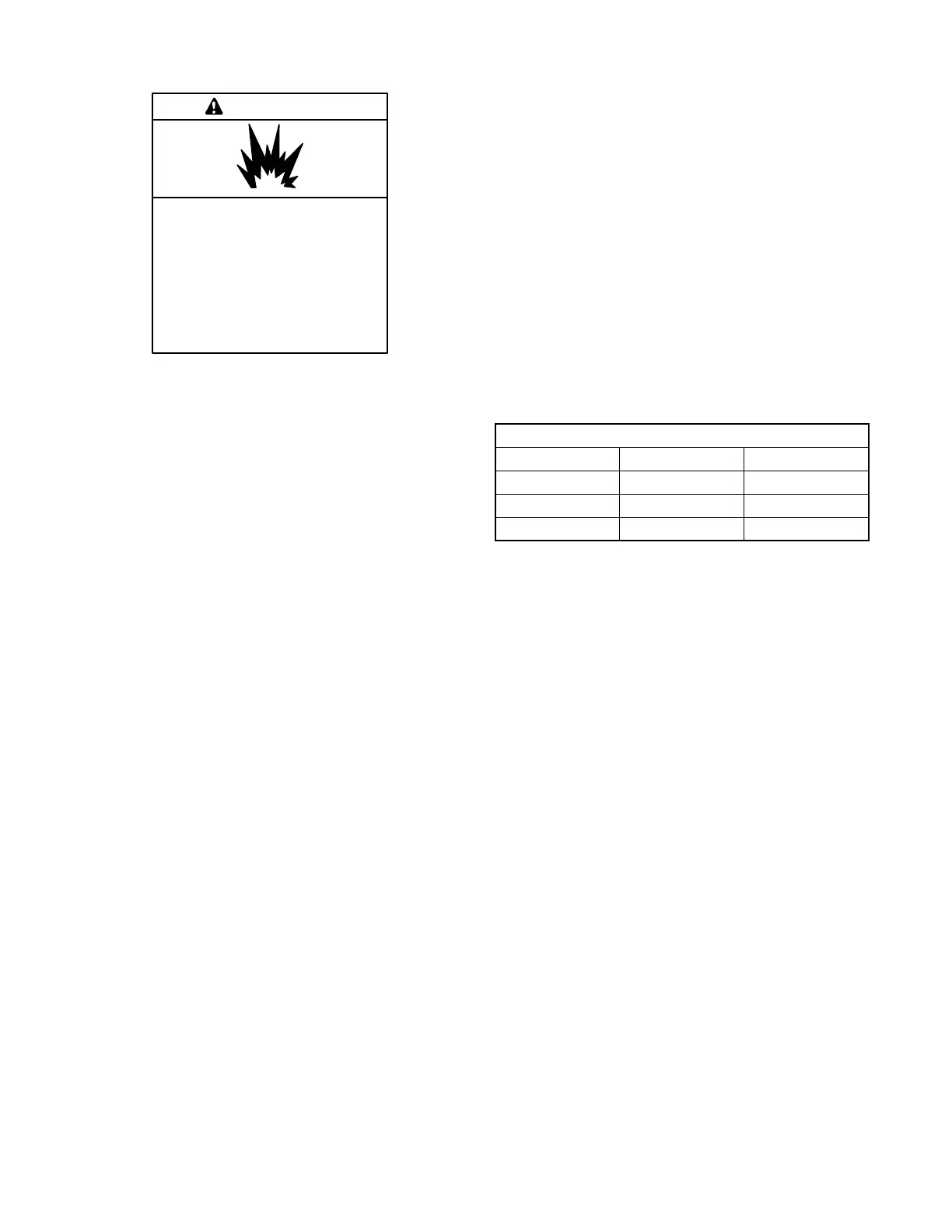
Explosion.
Gasoline vapors can cause
explosion and severe injury or
death.
Before starting the generator set,
operate the blower 4 minutes and
check the engine compartment for
gasoline vapors.
WARNING
Engine combustion, generator cooling, and expulsion of
flammable and lethal fumes require ventilation. Provide
ventilation compliant with USCG regulations governing
the sizing of vents and other considerations.
As a rule, size each inlet- and outlet-vent area to a
minimum of 13 sq. cm/30.5 cm (2 sq. in. per ft.) of the
craft’s beam. Should this rule conflict with USCG
regulations, follow USCG regulations. For applications
with screened inlets, double the size of the hull/deck
openings. Extend the vent ducts to bilges to expel
heavier-than-air fumes.
For generator sets mounted in the engine compartment,
increase the air flow to allow for the generator set’s
requirements. Install UL-listed, ignition-protected
blowers in the outlet vents and wire them to operate
before starting the engine(s). Install optional detection
devices to cause alarm, warning, or engine shutdown
should dangerous fumes accumulate in the
compartment.
Figure 6-2 lists air requirements for various models.
The air intake silencer/cleaner provides combustion air
to the engine. Do not compromise the recommended
minimum clearance of 38 mm (1.5 in.) between a duct
opening and enclosure wall. The engine/generator
performance will be adversely affected if the installer
neglects these guidelines. Follow these guidelines to
optimize generator set performance.
Note: ISO 3046 derates apply. See Appendix D.
Air Requirements L/min. (CFM)
Model Combustion Cooling
8E 742 (26.2) 15516 (548)
10E 742 (26.2) 15516 (548)
12.5E 875 (30.9) 19310 (682)
Figure 6-2 Air Requirements



 To Next Page