TP-6277 10/03 Installation 47
6.6 Exhaust Systems
Carbon monoxide.
Can cause severe nausea,
fainting, or death.
The exhaust system must be
leakproof and routinely inspected.
WARNING
Carbon monoxide symptoms. Carbon monoxide can
cause severe nausea, fainting, or death. Carbon monoxide
is a poisonous gas present in exhaust gases. Carbon
monoxide poisoning symptoms include but are not limited to
the following:
D Light-headedness, dizziness
D Physical fatigue, weakness in
joints and muscles
D Sleepiness, mental fatigue,
inability to concentrate
or speak clearly, blurred vision
D Stomachache, vomiting, nausea
If experiencing any of these symptoms and carbon monoxide
poisoning is possible, seek fresh air immediately and remain
active. Do not sit, lie down, or fall asleep. Alert others to the
possibility of carbon monoxide poisoning. Seek medical
attention if the condition of affected persons does not improve
within minutes of breathing fresh air.
Inspecting the exhaust system. Carbon monoxide can
cause severe nausea, fainting, or death. For the safety of
the craft’s occupants, install a carbon monoxide detector.
Consult t he boat builder or dealer for approved detector
location and installation. Inspect the detector before each
generator set use. In addition to routine exhaust system
inspection, test the carbon monoxide detector per the
manufacturer’s instructions and keep the detector operational
at all times.
Operating the generator set. Carbon monoxide can cause
severe nausea, fainting, or death. Carbon monoxide is an
odorless, colorless, tasteless, nonirritating gas that can cause
death if inhaled for even a short time. Use the following
precautions when installing and operating the generator set.
Do not install the exhaust outlet where exhaust can be drawn
in through portholes, vents, or air conditioners. If the generator
set exhaust discharge outlet is near the waterline, water could
enter the exhaust discharge outlet and close or restrict the flow
of exhaust. Never operate the generator set without a
functioning carbon monoxide detector. Be especially careful if
operating the generator set when moored or anchored under
calm conditions because gases may accumulate. If operating
the generator set dockside, moor the craft so that the exhaust
discharges on the lee side (the side sheltered from the wind).
Always be aware of others, making sure your exhaust is
directed away from other boats and buildings. Avoid
overloading the craft.
6.6.1 Exhaust Lines
Use water-cooled exhaust lines in all marine
installations. Use a 51-mm (2-in.) inside diameter hose.
Keep the lines as short and straight as possible.
NFPA 302 Fire Protection Standard for Pleasure and
Commercial Motor Craft, Clause 4-3 recommends using
two corrosion-resistant hose clamps with a minimum
width of 13 mm (1/2 in.) on each end of the flexible
exhaust hose connections. Kohler Co. requires a
downward pitch of at least 13 mm per 30.5 cm (0.5 in.
per running foot). Use a flexible exhaust hose that
conforms to UL Standard 1129 for the engine wet
exhaust components between the mixer elbow and the
exhaust outlet.
ADV--5661
1
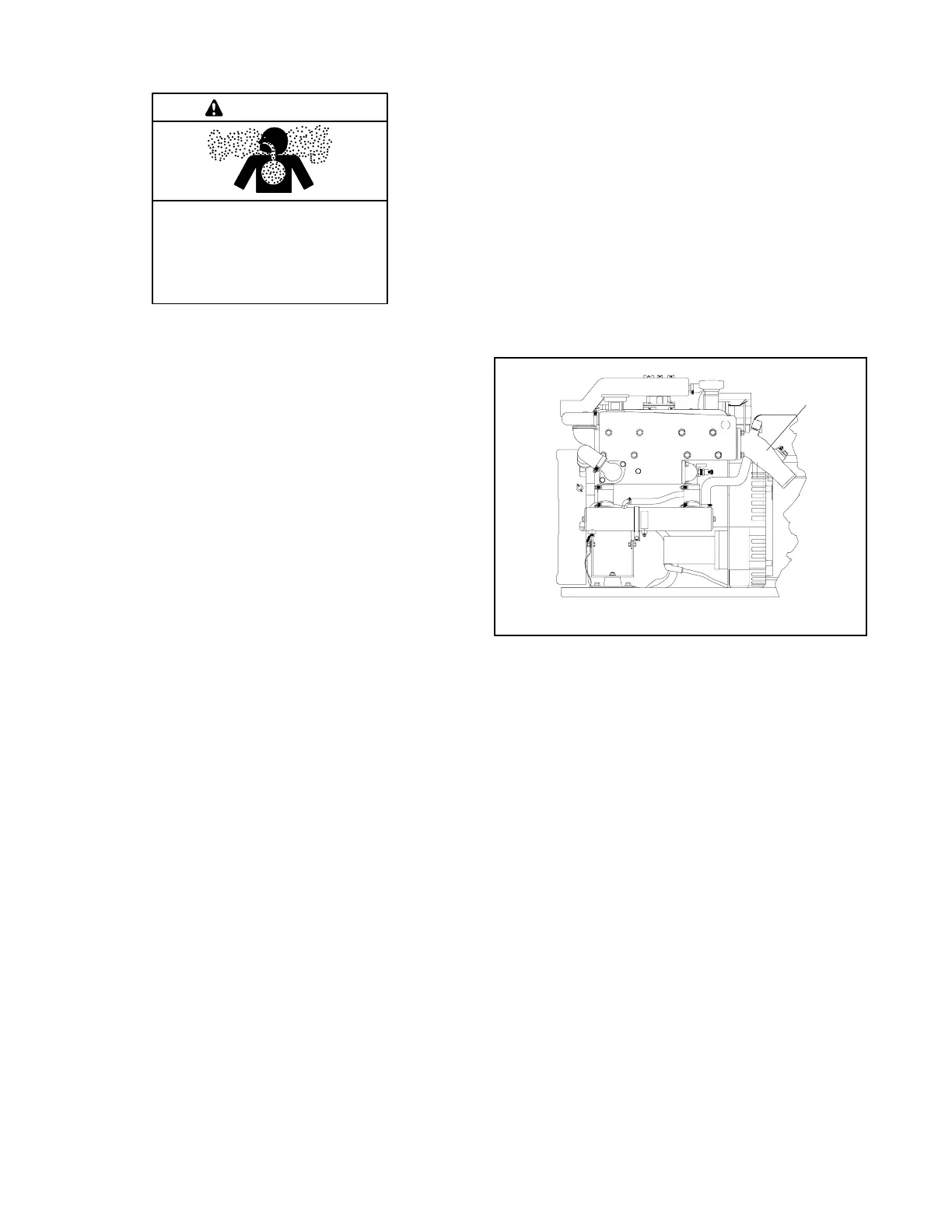
1. Seawater/Exhaust Outlet
Figure 6-16 Mixer Elbow/Exhaust Connection
6.6.2 Exhaust Systems
Mount the silencer independently to eliminate stress on
the exhaust system and the exhaust manifold/mixer
elbow. See Figure 6-16 for the exhaust connection to
the mixer elbow. Provide an adequate hose length from
the exhaust mixer to the silencer to allow for generator
set movement.
Locate the exhaust outlet at least 10 cm (4 in.) above the
waterline when the craft is loaded to maximum capacity.
Install an exhaust port with flap at the exhaust (transom)
outlet to prevent water backup in following seas or when
moving astern (backward). A lift in the exhaust piping
before exiting the boat prevents backwash. See
Figure 6-18, Item 1. Support the exhaust lines to
prevent the formation of water pockets.



 To Next Page