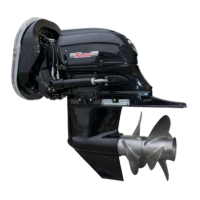
1) Ensure that the propeller height is performed
according to guidelines detailed in diagrams
10-410 (Figures A and B on pages 9 and 10
in this manual). The height of the propeller
is critical to a successful application. If the
propeller centerline is too low, excessive
drag can occur based on transom assembly
location. Intermediate spacers are available
for special concerns.
2) Ensure that the water ow to the propeller
is clear and consistent without interruptions.
Protrusions on the hull surface create a neg-
ative pressure area and induce turbulence.
Turbulence can cause severe propeller inef-
ciency and excessive torsional vibration.
Common problems are:
• Water pickup
• Sonar transducers
• Retrotted surfaces which are not
properly faired or smoothed
• Any hull shape which does not
provide smooth transition
• In heavy applications, the bow can
produce turbulence if the attitude
of the vessel is weighted forward.
• Improper listing of the vessel due
to weight distribution
Installation Guidelines
3) Ensure that the vessel center of gravity is
properly placed. Excessive weight forward
or aft can signicantly affect performance
and the efciency of the propeller.
4) Ensure that the stern drive is trimmed to
the correct level. While undertrimming can
cause premature u-joint wear, overtrimming
can cause propeller inefciency, porpoising,
and premature gear wear.
500 SERIES INSTALLATION MANUAL JANUARY 2010PAGE 8


 To Next Page