CHAPTER
CHAPTER
CHAPTER
CHAPTER III
III
III
III OPERATION
OPERATION
OPERATION
OPERATION INSTRUCTIONS
INSTRUCTIONS
INSTRUCTIONS
INSTRUCTIONS
3.1
3.1
3.1
3.1 STEERING
STEERING
STEERING
STEERING WHEEL
WHEEL
WHEEL
WHEEL
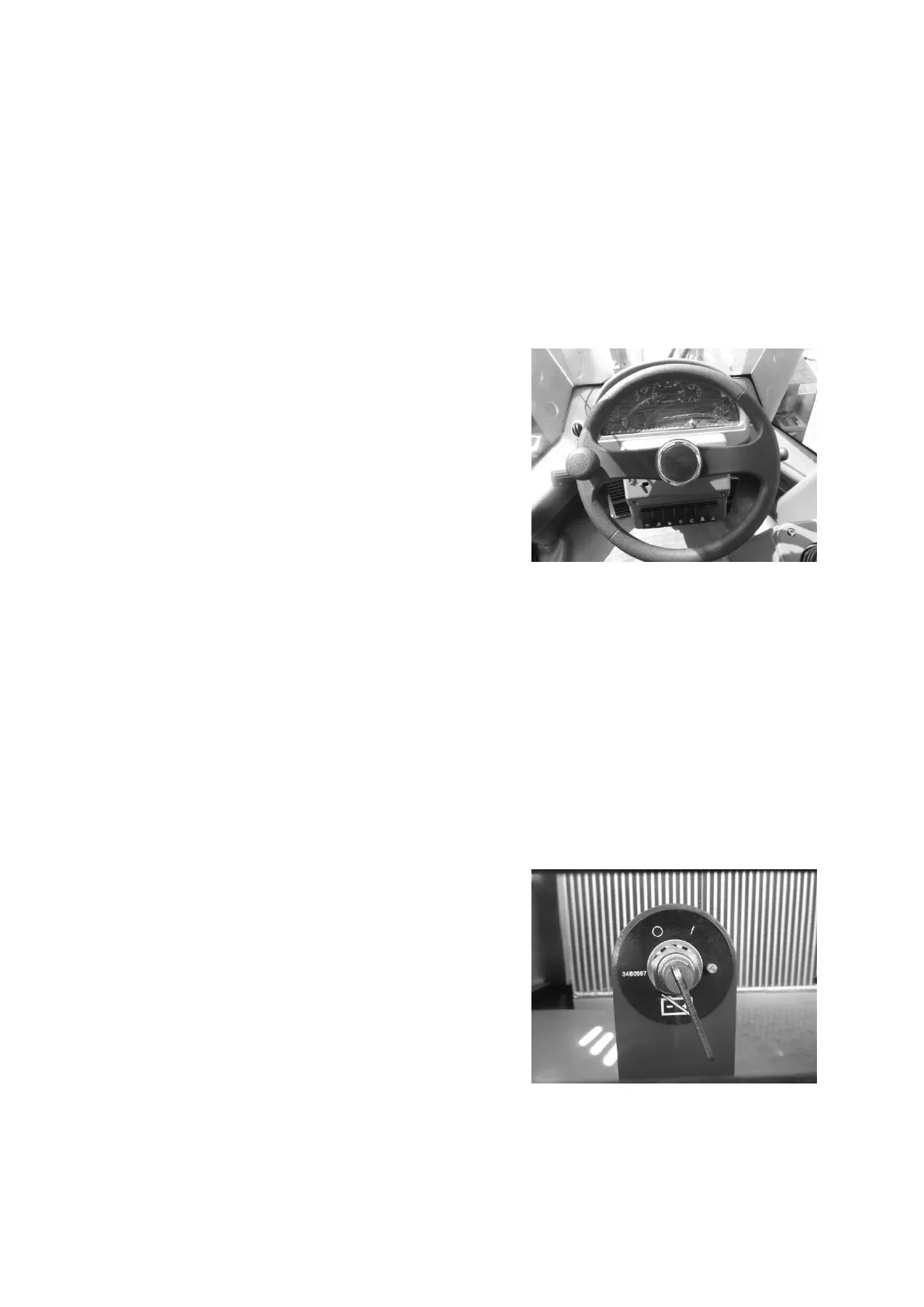
The articulated loader uses fully hydraulic power steering. The steering wheel is arranged
inside the Cab and connected to the full-hydraulic redirector. Turning clockwise the
steering wheel turns the loader right; turning counterclockwise the steering wh eel turns
the loader left.
3.2
3.2
3.2
3.2 NEGATIVE-POLE
NEGATIVE-POLE
NEGATIVE-POLE
NEGATIVE-POLE SWITCH
SWITCH
SWITCH
SWITCH OF
OF
OF
OF BATTERY
BATTERY
BATTERY
BATTERY
The fully hydraulic power steering has the
following features:
1. The turning angle of steering wheel is not
equal to that of the loader. Continuously
turning the steering wheel can increase the
turning angle of loader to the expected value.
2. The faster the steering wheel is turned, the
faster the loader is turned.
3. The steering wheel cannot automatically
return to its original position, thus the turning
angle of loader remains unchanged.
Therefore, when the turning of loader is
accomplished, it is necessary to turn the
steering wheel in the opposite direction, to
br ing the loader to the straight ahead
direction.
The battery negative-pole switch is arranged at
the left side inside the rear hood.
The battery negative-pole switch differs from the
starter switch. Disconnecting the negative-pole
switch will turn off the electrical system of loader.
When the starter switch is turned off, some
electrical parts of loader may still be working
because the battery is still connected with
loader ’ s electrical system.
To
To
To
To
turn
turn
turn
turn off
off
off
off the
the
the
the battery
battery
battery
battery negative-pole
negative-pole
negative-pole
negative-pole switch
switch
switch
switch :
:
:
:
To
disconnect the power supply to the electrical
system of loader, turn the battery negative-pole s


 To Next Page