Installation
7
Std. C95.1-1992 and had been tested in accordance with the measurement procedures specified
in FCC/OET Bulletin 65 Supplement C (2001) and IEEE 1528-2003.
INDUSTRY CANADA (CANADA ONLY)
Operation of this device is subject to the following two conditions:
1. This device may not cause interference.
2. This device must accept any interference, including interference that may cause undesired
operation of the device.
Privacy of communications may not be ensured when using this telephone.
Exposure to Radio Frequency (RF) Signals
The wireless phone is a radio transmitter and receiver. It is designed and manufactured not to
exceed the emission limit for exposure to radio frequency (RF) energy set by the Ministry of
Health (Canada), Safety Code 6. These limits are part of comprehensive guidelines and
established permitted levels of RF energy for the general population. These guidelines are based
on the safety standards previously set by international standard bodies. These standards include
a substantial safety margin designed to assure the safety of all persons, regardless of age and
health.
This device and its antenna must not be co-located or operating in conjunction with any other
antenna or transmitter.
This device has been shown to be capable of compliance for localized specific absorption rate
(SAR) for uncontrolled environment / general public exposure limits specific in ANSI/IEEE
C95.1-1992 and had been tested in accordance with the measurement procedures specified in
IEEE 1528-2003.
INSTALLATION
INSERTING THE STANDARD BATTERY
HEADSET CONNECTION / BLUETOOTH
®
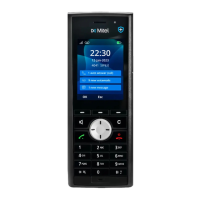
The Mitel 712dt, 722dt, and 732d DECT phones have a 3.5 mm jack on the right side for
connecting a headset. Only use the recommended headsets (see “Accessories” on page 69).
Mitel 7x2d
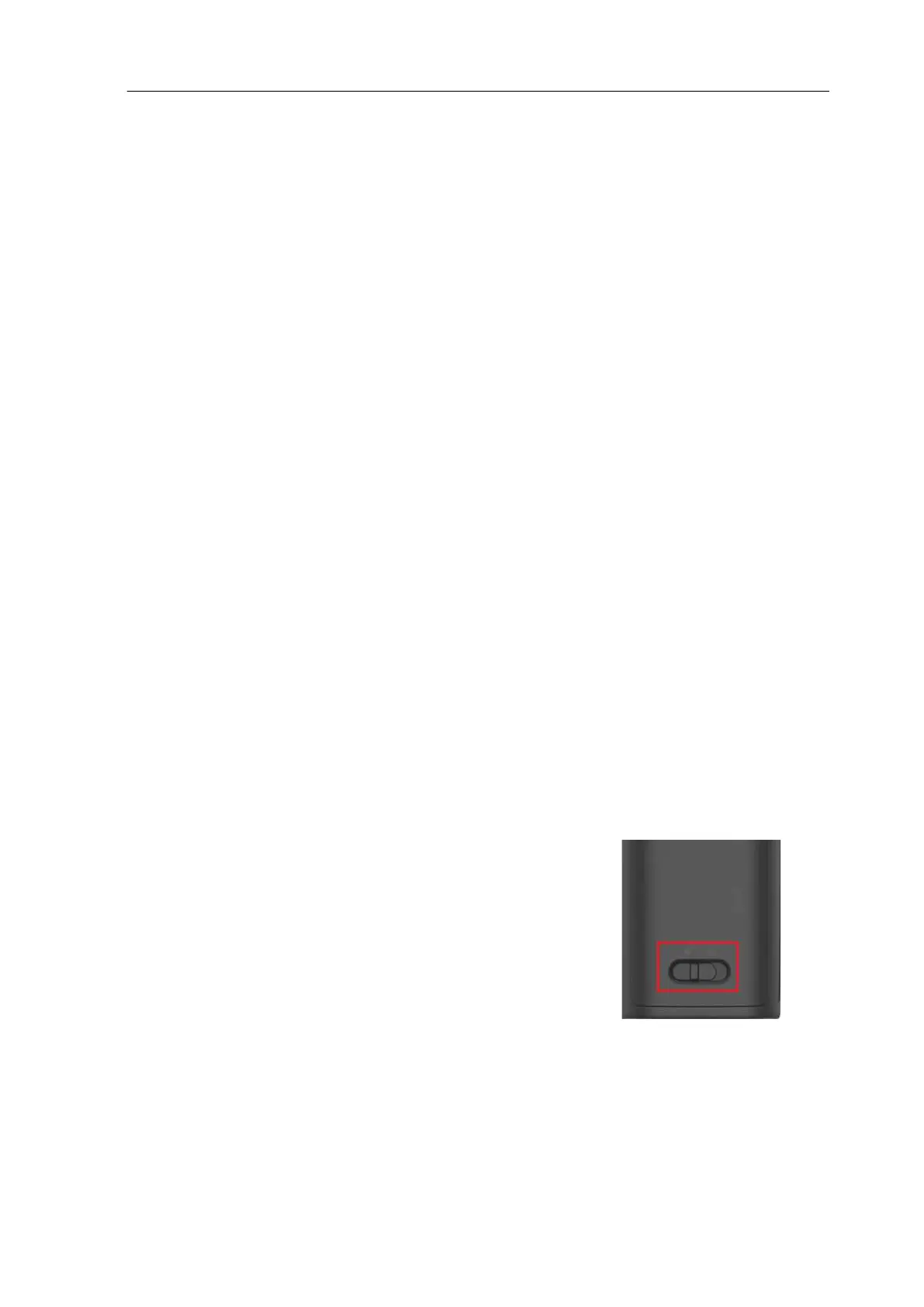
1. Release the lock of the battery cover by sliding the
knob towards the right, then take it off.
2. Insert the battery with the contacts downwards.
3. Replace the battery cover and push it upwards until it
locks.



 To Next Page