Chassis Information --- Section 10
Cayman 2005
355
COOLANT SYSTEM
The cooling system consists of a radiator mounted at the rear of the
motorhome, cooling fan, transmission cooler, and a charge air cooler. Steel
tubes and radiator hoses allow engine coolant to flow between the radiator
and the engine. The fan draws air from the outside of the motorhome,
through the radiator and into the engine compartment. These components
working together ensure that all the chassis systems maintain proper oper-
ating temperatures as they are inter-related. A problem with one component
may cause problems with an entirely different system.
After the engine reaches proper temperature, the water regulator (ther-
mostat) on the engine opens and allows coolant to flow from the engine,
through the upper radiator hose and into the radiator. The coolant is cooled in the radiator and flows
through the transmission cooler and back to the engine through the lower radiator tube. A by-pass tube
installed between the thermostat housing and lower radiator tube functions to supply coolant to the trans-
mission cooler under certain conditions to ensure proper cooling.
As the intake air passes through the turbo charger, the air is pressurized and heat is generated. The air
is then cooled as it travels through the Charge Air Cooler.
With the components working together to maintain the engine and transmission at the proper tem-
perature, proper maintenance of the cooling system is very important. One neglected component could
result in cooling problems. Maintenance of the cooling system includes a proper coolant levels using
the correct mixture of coolant and additives, regular inspection of system components, flushing the
coolant system with approved cleaners, and ensuring that the exterior of the radiator and other external
coolers are kept clean of debris.
The engine coolant level should be checked daily to ensure that it is at the proper level. At the rear of
the motorhome is a plastic translucent "surge tank." Under certain lighting conditions it may be difficult
to see the level of the coolant in the surge tank and a flashlight held behind the surge tank should enable
easier viewing.
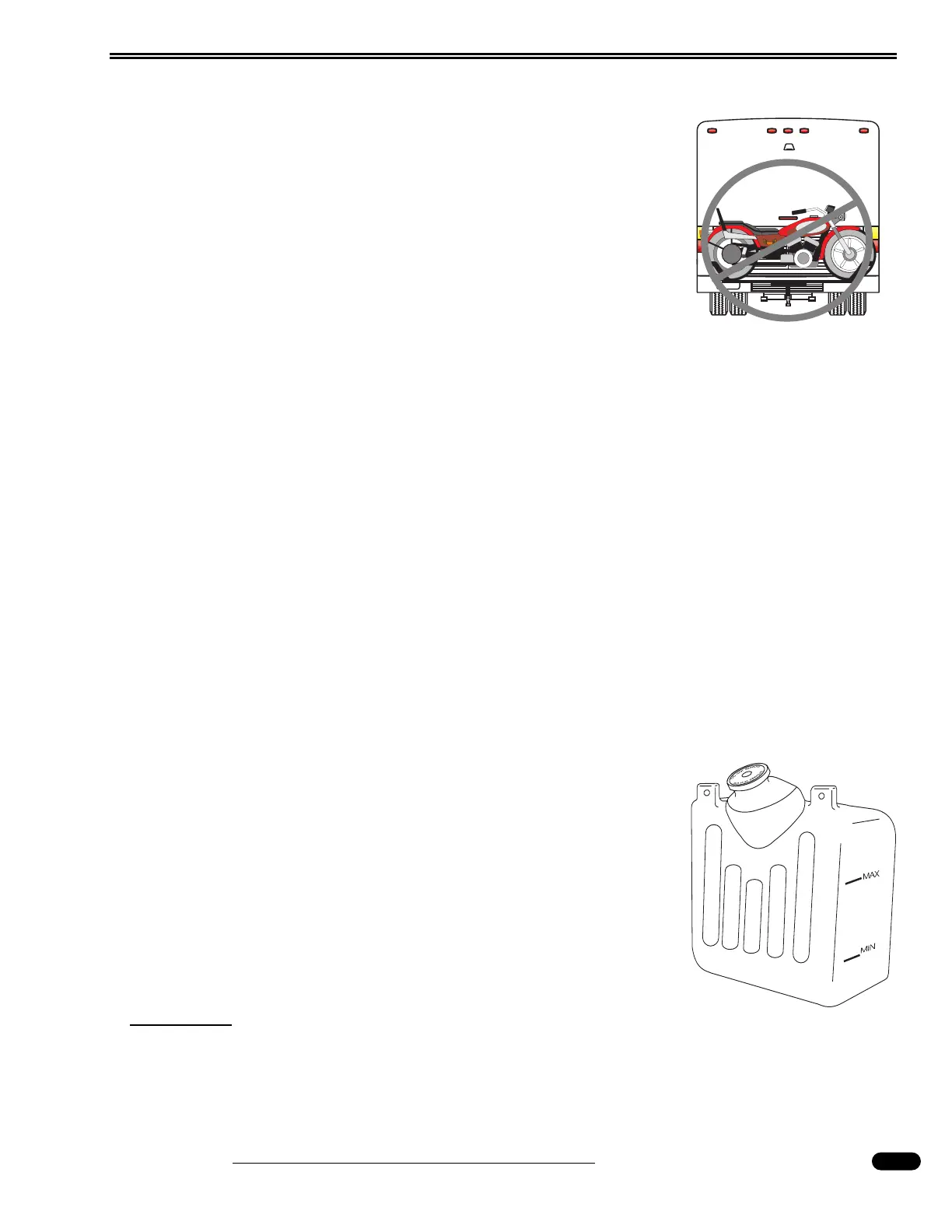
Engine Coolant Reservoir:
The engine coolant reservoir is connected to the radiator by a hose.
When the motorhome is driven, coolant heats and expands. A portion of
fluid displaced by expansion flows from the radiator into the reservoir
tank. When the engine is stopped, the coolant cools and contracts.
Coolant is drawn back in the radiator by a vacuum. Thus, the radiator is
kept filled with coolant to the desired level at all times, resulting in
increased cooling efficiency. The coolant level should be at, or slightly
above, the appropriate mark on the reservoir tank when the system is
cold.
CAUTION:
To avoid scalding hot steam or coolant from being released from the engine cooling sys-
tem, never remove the reservoir cap while the engine is running or hot. Failure to follow
this warning may result in damage to the engine’s cooling system and possibly cause
severe personal injury.
080208d
030823



 To Next Page