Section 10 --- Chassis Information
Cayman 2005
366
FUEL SYSTEM - Fuel Requirements
Low sulfur #2 diesel fuel or #1 and #2 commercial winter blend diesel fuels are the most common
commercially available and recommended for use.
The use of #2 diesel fuel will result in optimum engine performance.
Try to obtain fuel from sources that are serviced often such as large truck service facilities. The
fuel supply is fresh and the possibility of introducing contaminants or water into the fuel system is
reduced. It is important to not empty the engine of fuel. The fuel system on the engine is sensitive to
air. If the engine is allowed to run out of fuel, the fuel system will need to be thoroughly primed before
the engine will start. Refer to the Fuel Filters article for priming instructions.
WARNING:
Do not mix gasohol with diesel fuel. This mixture can cause an explosion.
NOTE:
If the engine has run out of fuel it will need to be primed. Refer to Fuel Filters for
instructions on priming the fuel system.
NOTE:
Due to the precise tolerances of diesel injection systems, it is extremely important
that fuel be kept clean and free of dirt or water. Dirt or water in the system can
cause severe damage to both the fuel pump and the fuel injectors. Fuel additives for
lubricity are not recommended. There are numerous diesel fuel additives to help
remove moisture from fuel, prevent microbe growth and to prevent gelling during
cold weather. Before adding any type of fuel additive or extender, consult the
Manufacturer’s Owner’s Manual.
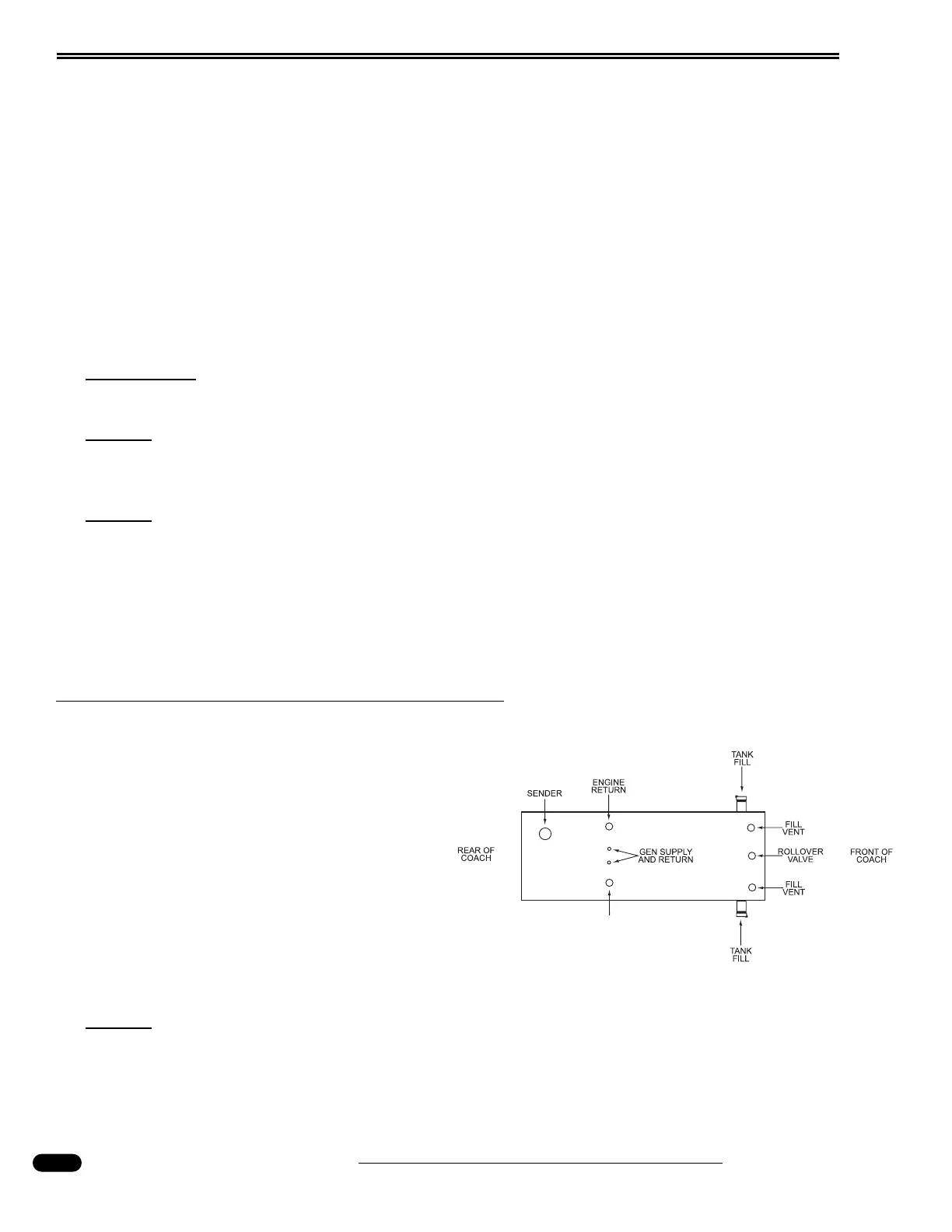
Fuel Tank
The diesel fuel tank is made of steel. The
engine pickup tube is cut at a 45° angle to allow
optimum flow to the engine. The generator tube is
set to approximately ¼ of a tank. This will pre-
vent depleting the fuel supply while dry camping.
Internal baffles slow fuel slosh. A check valve
placed at the bottom of the baffle, at the end of
the tank with the pick-up tube, prevents fuel
starvation through long corners when fuel sup-
ply is low.
NOTE:
Fill the fuel tank if the motorhome is going to be stored for any length of time to
reduce the amount of potential condensation. After storage, check the vent tube for
blockage. It is not uncommon for insects to plug the vent tube. If pressure or vacuum
exists when the fuel cap is removed, the vent tube may be blocked. The end of the
vent tube is located on the curbside of the fuel tank, near the bottom.
090335d
ENGINE
SUPPLY




 To Next Page