17
REVERSE BLOCKS, WYES, AND CROSSOVERS
Reversing loops/sections still present the same potential for short circuits as conventional
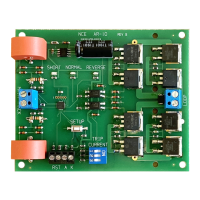
DC layouts. You can use commercial auto-reverse loop modules such as the MRC
AD520 or Tony’s Trains Auto Reverser. See the PB-105 manual or the PB-105 section of
this manual for installation notes. The tail track of a wye (if it doesn’t connect to any
other trackage) can simply be wired through DPDT reversing contacts on the switch
machine used to throw the switch that controls the tail track.
WIRING
If you already have a layout, your existing wiring most likely can be used without
problems as long as it can handle a continuous 5 amp current. We suggest a “bus” of
two large gauge (12-14 AWG) wires that follow the general track route of your layout with
feeder wires to the track about every 3-6 feet. For the most trouble free operation we
suggest a feeder to EVERY piece of rail. Don’t rely on the rail joiners to handle 5 Amps
of current. To prevent voltage drop over long runs a chart of recommended wire sizes is
found below.
For the hobbyist wiring up a new layout our suggested wire sizes based on voltage drop
are:
Runs to twenty-five feet ........ #16
Runs to fifty feet .................... #14
Runs over fifty feet ................ #12
For best results on
long runs (over 20 feet), twist the bus wires about three turns per
foot.
There is no special requirement for routing the power conductors with DCC. If you are
going to have long runs of cab bus cabling along the front of the layout you should run
the track bus wires nearer the rear to prevent potential “crosstalk” between the track
signal and the cab bus.
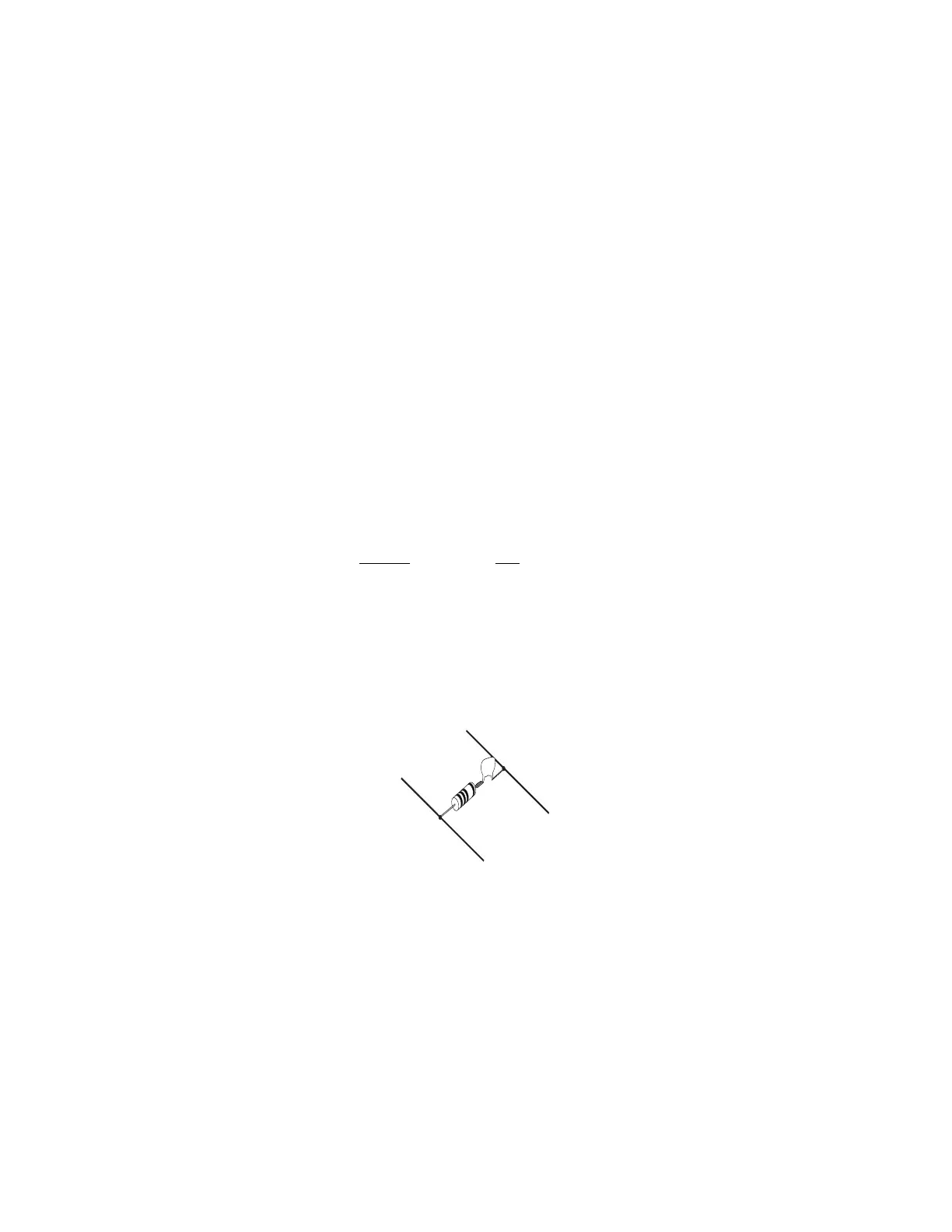
Also recommended on layouts with long track bus or track blocks is a “snubber” wired
across the bus or track. A snubber can easily be made from common parts available from
Radio Shack or other electronic parts stores.
47-100 Ohm,
1/2 Watt
0.1uF,
50 Volts
or more
Track or Track Bus
Track or Track Bus
Track “Snubber”


 To Next Page