35
OLD AND ADVANCED CONSISTS
EXPLAINED
Before setting up any consist an explanation is needed to understand the operating
differences between Advanced and Old Style consists (also called brute force or
Universal). Basic decoders that have a short address but no CONSIST address (Early
Lenz, MRC 30x/31x series and Digitrax 120 series decoders) can not be used with
advanced consisting.
ADVANCED CONSISTS
Decoders that support advanced consisting have an additional short address, the
CONSIST address, in addition to their normal Long and Short addresses. The consist
address is stored in CV19 and can have a value of 1-127.
A decoder considers itself in a consist if the Consist Address (CV19) is something other
than 0 or 128. A decoder is added to a consist when the command station sends a
command to set the consist address in the decoder to the consist number. The decoder
will now use this new consist address for speed and direction commands. This has many
advantages including the need for fewer communications on the track and no need for
the operator or command station to keep track of which locomotives are in what consist
on the layout.
Each locomotive in an advanced consist will still respond to function or programming
commands at the original locomotive address. This means the operator can turn lights or
other functions on or off for each locomotive individually.
To kill an entire consist, a command is broadcast on the tracks for each decoder with
that consist number to clear its consist address and return to individual operation.
Locomotives can also be individually dropped from a consist. You can also add
locomotives to a consist after the initial set up of that consist.
Advanced style consists can easily be taken from layout to layout and they will continue
to operate as a single unit.
OLD STYLE CONSISTS (also called brute force or
Universal)
With an Old Style consist, the command station keeps track of each locomotive in a
consist within the memory of the command station. Each speed change of the cab
generates a separate speed command to each of the decoders in the consist. These
extra speed commands on the track have significant ramifications if you have a lot of
consists operating at one time as in a club situation. The effect is to slow down
locomotive response to the throttle speed controls.
Use this method of building a consist with MRC and Digitrax 120 series decoders.
Decoders in an old style consist have no knowledge of being in a consist and will not
operate as a unit when moved to another layout. You can add one or more advanced
consists to any old style consist.
SETTING UP AN ADVANCED CONSIST
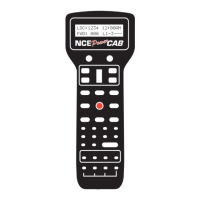
To set up a consist press SETUP. This screen allows you to choose the type of consist
to be created. For those consists that will contain advanced decoders, press ENTER to
select the advanced mode.
CONSIST 2:00PMCONSIST 2:00PM
CONSIST 2:00PMCONSIST 2:00PM
CONSIST 2:00PM
ENTER=ADV 1=OLDENTER=ADV 1=OLD
ENTER=ADV 1=OLDENTER=ADV 1=OLD
ENTER=ADV 1=OLD
An advanced consist has no limit to the number of loco’s assigned.
NOTE: you can not setup, add a loco to, or delete a loco from a consist while the
locomotive is moving. It must be at speed 0. Decoders will not accept consist commands
while they are in motion. This prevents reception of false consist make/break commands
due to electrical noise generated by the wheels rolling on the track.


 To Next Page