85
HELPFUL HINTS FOR OPERATION
Passing an old style consist: Use ASSIGN LOCO TO CAB to transfer an old style
consist to any other Cab on the system. This causes a swap between the active loco/
consist on your Cab and the active loco/consist on the target Cab.
Nesting consists: Say a heavy freight is approaching a long grade and helpers are
needed. The train’s locomotives are an advanced consist. The two GP9 pushers are
also consisted using an advanced consist. The pusher consist is brought out of the
siding at the base of the grade and put in place. A “old style” consist is now set up
using the freight’s lead loco number and the pusher’s lead loco number. You can now
operate the entire train to the grade crest as one unit. Upon reaching the cutoff siding
at the crest the “old style” consist is killed and the pushers are selected to move to the
siding. The freight consist continues on while the pushers drift back down the hill.
When setting up an old style Consist, you may want to use a Loco number that
does not exist for the first Loco (Consist address). This will allow you to put the actual
lead loco in recall to operate the headlight, and the sound loco to operate the Horn
and Bell.
· If a cab does not respond after plugging it in, press the ENTER key a couple of
times. This will cause it to exit from any mode it was in when it was unplugged.
When making your own cables using RJ plugs be SURE the connectors are
“flipped” over at opposite ends of the wire. See the illustration on page 25 for proper
cab bus cabling.
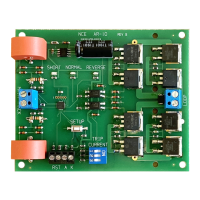
Power booster
Your power booster can put out considerable power. Sufficient input power is
required for it to perform to its optimum. Proper AC wiring and fusing of the transformer
is required to prevent melted wiring or possibly a fire.
Your power booster is internally protected by an automatic shutdown circuit. After
shutdown in the presence of a short circuit it will automatically restore power after 2
seconds.
The 5 Amp power booster is factory set to put out 14.25 volts to the track. This
voltage is adjustable from 10 to 18 volts, see the Power Booster portion of this manual
for instructions on adjusting the voltage. The voltage delivered to the motor or lights of
a locomotive will typically be about 1 volts less than the voltage on the track.
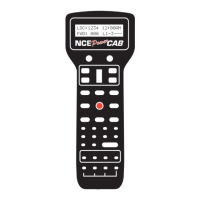
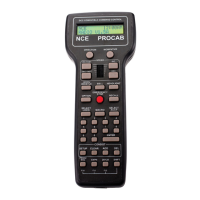
Using the ProCab
In DCC there are 2 kinds of addresses (loco numbers), long and short. When
entering the address of the loco you wish to control long addresses from 1 to 127 are
entered by preceding the actual number by a zero. Short addresses are entered
without a leading zero. Long addresses in the range of 1 -127 are displayed on your
cab with an asterisk before the loco number. ie: “*042” indicates the long address for
loco forty-two and “042” indicates the short address. Most modern decoders made
since 1997 support long (4 digit) addresses. Older Lenz, Digitrax and MRC decoders
only support the short address.
When entering numbers if you make a mistake there is no “erase” or “backup” key. If
you keep pressing digits the display will clear allowing you to start entering your
number over again.
If you wish to abandon what you are doing when in the middle of entering a
number push the “PROG/ESC” key and you will be returned to normal operation.
During various operations where you are doing something other than normal loco
operation such as “set up consist” or “select accessory” speed control of the loco is
not available, however the Emergency Stop will still work if you need to stop your loco.
programming on the programming track the command station first reads the value of
a location (such as “short address” or “acceleration”) and displays it on your cab. If you
wish to accept this value just press ENTER to continue or type in a new number if you
want to change it.


 To Next Page