Doc# E107706 7- 1
Electro Industries/GaugeTech
The Leader In Power Monitoring and Smart Grid Solutions
7: Transformer Loss Compensation
7: Transformer Loss Compensation
7.1: Introduction
The Edison Electric Institute's Handbook for Electricity Metering, Ninth Edition defines
Loss Compensation as:
A means for correcting the reading of a meter when the metering point and point of
service are physically separated, resulting in measurable losses including I2R losses
in conductors and transformers and iron-core losses. These losses may be added to or
subtracted from the meter registration.
Loss compensation may be used in any instance where the physical location of the
meter does not match the electrical location where change of ownership occurs. Most
often this appears when meters are connected on the low voltage side of power trans-
formers when the actual ownership change occurs on the high side of the trans-
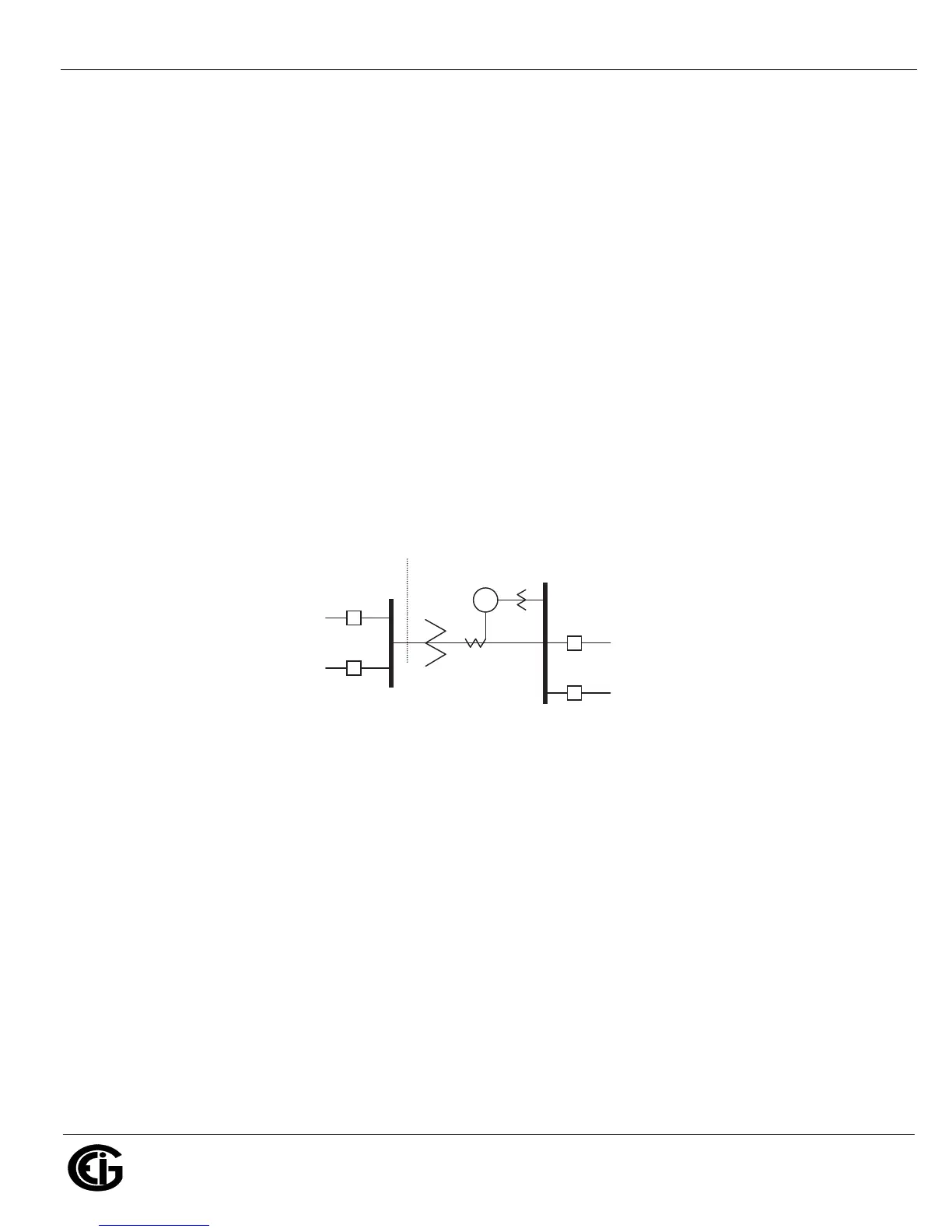
former. This condition is shown pictorially in Figure 7.1.
Figure 7.1: Low Voltage Metering Installation Requiring Loss Compensation
It is generally less expensive to install metering equipment on the low voltage side of
a transformer and in some conditions other limitations may also impose the require-
ment of low-side metering even though the actual ownership change occurs on the
high-voltage side.
The need for loss compensated metering may also exist when the ownership changes
several miles along a transmission line where it is simply impractical to install meter-
ing equipment. Ownership may change at the midway point of a transmission line
where there are no substation facilities. In this case, power metering must again be
compensated. This condition is shown in Figure 7.2.
M
Ownership Change


 To Next Page