Doc# E107706 4- 1
Electro Industries/GaugeTech
The Leader In Power Monitoring and Smart Grid Solutions
4: Electrical Installation
4: Electrical Installation
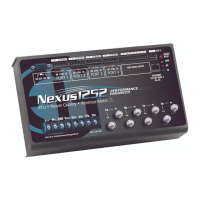
This chapter provides electrical installation information for the Nexus® 1250/1252
meter.
4.1: Considerations When Installing Meters
Installation of the Nexus® 1250/1252 meter must be performed only by
qualified personnel who follow standard safety precautions during all
procedures. Those personnel should have appropriate training and experi-
ence with high voltage devices. Appropriate safety gloves, safety glasses and
protective clothing are recommended.
During normal operation of the Nexus® meter, dangerous voltages flow through
many parts of the unit, including: Terminals and any connected CTs (Current Trans-
formers) and PTs (Potential Transformers), all I/O Modules and their circuits. All
Primary and Secondary circuits can, at times, produce lethal voltages and
currents. Avoid contact with any current-carrying surfaces.
Do not use the meter or any I/O device for primary protection or in an
energy-limiting capacity. The meter can only be used as secondary protec-
tion.
Do not use the meter for applications where failure of the meter may cause harm or
death.
Do not use the meter for any application where there may be a risk of fire.
All meter terminals should be inaccessible after installation.
Do not apply more than the maximum voltage the meter or any attached device can
withstand. Refer to meter and/or device labels and to the Specifications for all devices
before applying voltages. Do not HIPOT/Dielectric test any Outputs, Inputs or Com-
munications terminals.
EIG requires the use of Fuses for voltage leads and power supply, and shorting blocks
to prevent hazardous voltage conditions or damage to CTs, if the meter needs to be
removed from service. One side of the CT must be grounded.
NOTE: The current inputs are only to be connected to external current transformers


 To Next Page