Version 4.0.2 dated 2019-4-3Page 30 Translation of the original instructions
BF20V | BF20L | BF20LDGB
BF20V_BF20L_BF20LD_GB_4.fm
OPTIMUM
MASCHINEN - GERMANY
®
4.6 Clamping the workpieces
CAUTION!
Risk of injury caused by workpieces flying off.
The workpiece is always to be fixed by a machine vice, jaw chuck or by another
appropriate clamping tool such as for the clamping claws.
4.7 Changing the speed range
ATTENTION!
Wait until the drilling-milling machine has come to a complete halt, before performing
any changes on the gear switch.
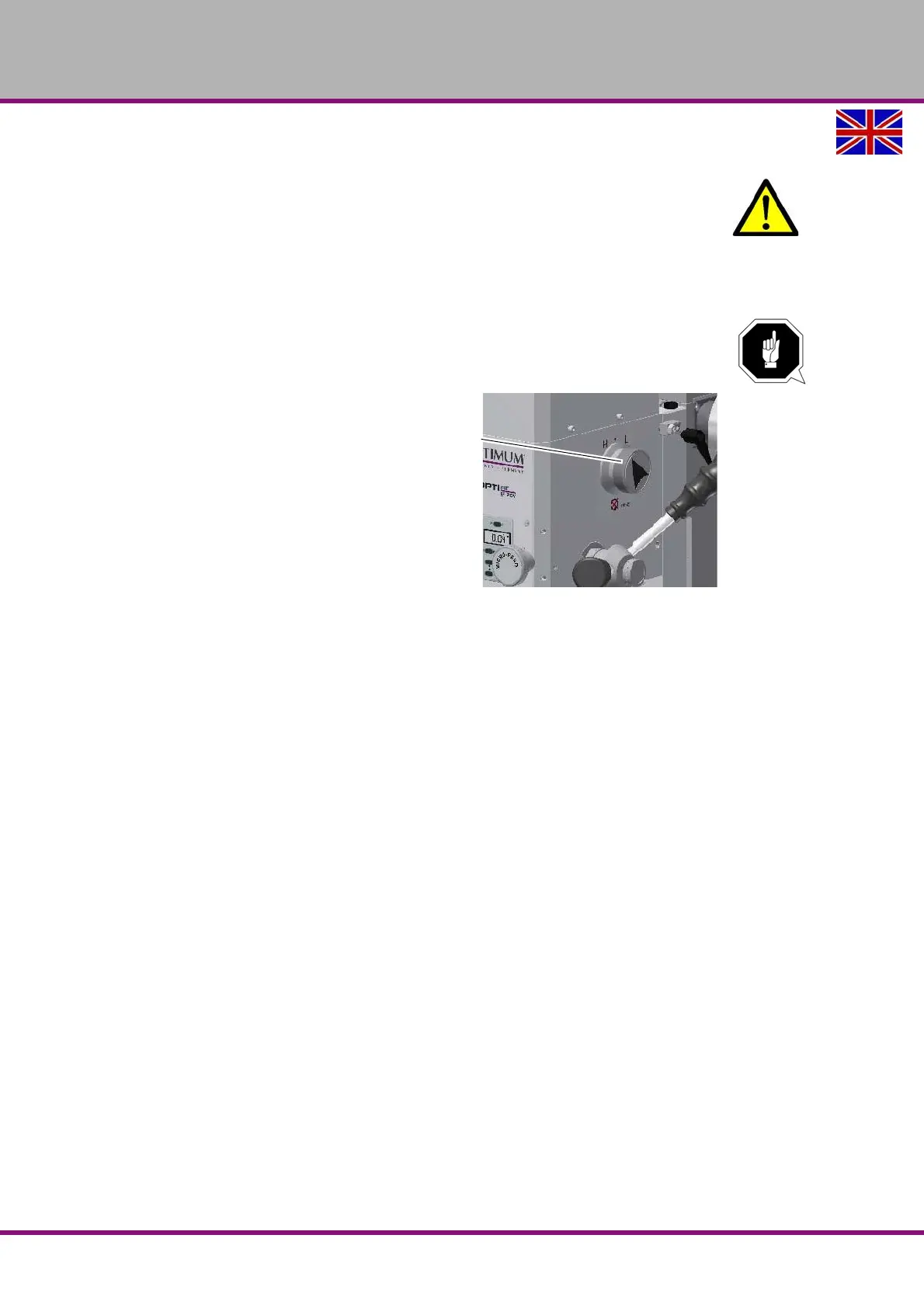
Select gear level
H = rapid
L = low
Adjust the speed with the
potentiometer. The speed and
thus the cutting speed
depends on the material of the
workpiece, the milling cutter
diameter and the cutter type.
Img.4-6: Drilling and milling head
4.8 Selecting the speed
The correct speed is an important factor for milling. The speed determines the cutting speed by
which the cutting edges cut the material. By selecting the correct cutting speed, the service life
of the tool is increased and the working result is optimized.
The optimum cutting speed mainly depends on the material and on the material of the tool. With
tools (milling cutters) made of hard metal or ceramic insert it is possible to work with higher
speeds than with tools made of high-alloy high speed steel (HSS). You will achieve the correct
cutting speed by selecting the correct speed.
In order to determine the correct cutting speed for your tool and for the material to be cut you
may refer to the following standard values or a table reference book (e.g. Tabellenbuch Metall,
Europa Lehrmittel, ISBN 3808517220).
The required speed is calculated as follows:
n = speed in min
-1
(revolutions per minute)
V = cutting speed in m/min (meter per minute)
d = tool diameter in m (Meter)
Selector switch gear stage
H = rapid
L = low





 To Next Page