1-18
INTRODUCTION ORBAN Model 8400
Studio Line-up Levels and Headroom
The studio engineer is primarily concerned with calibrating the equipment to provide the
required input level for proper operation of each device, and so that all devices operate
with the same input and output levels. This facilitates patching devices in and out without
recalibration.
For line-up, the studio engineer uses a calibration tone at a studio standard level, com-
monly called line-up level, reference level, or operating level. Metering at the studio is by
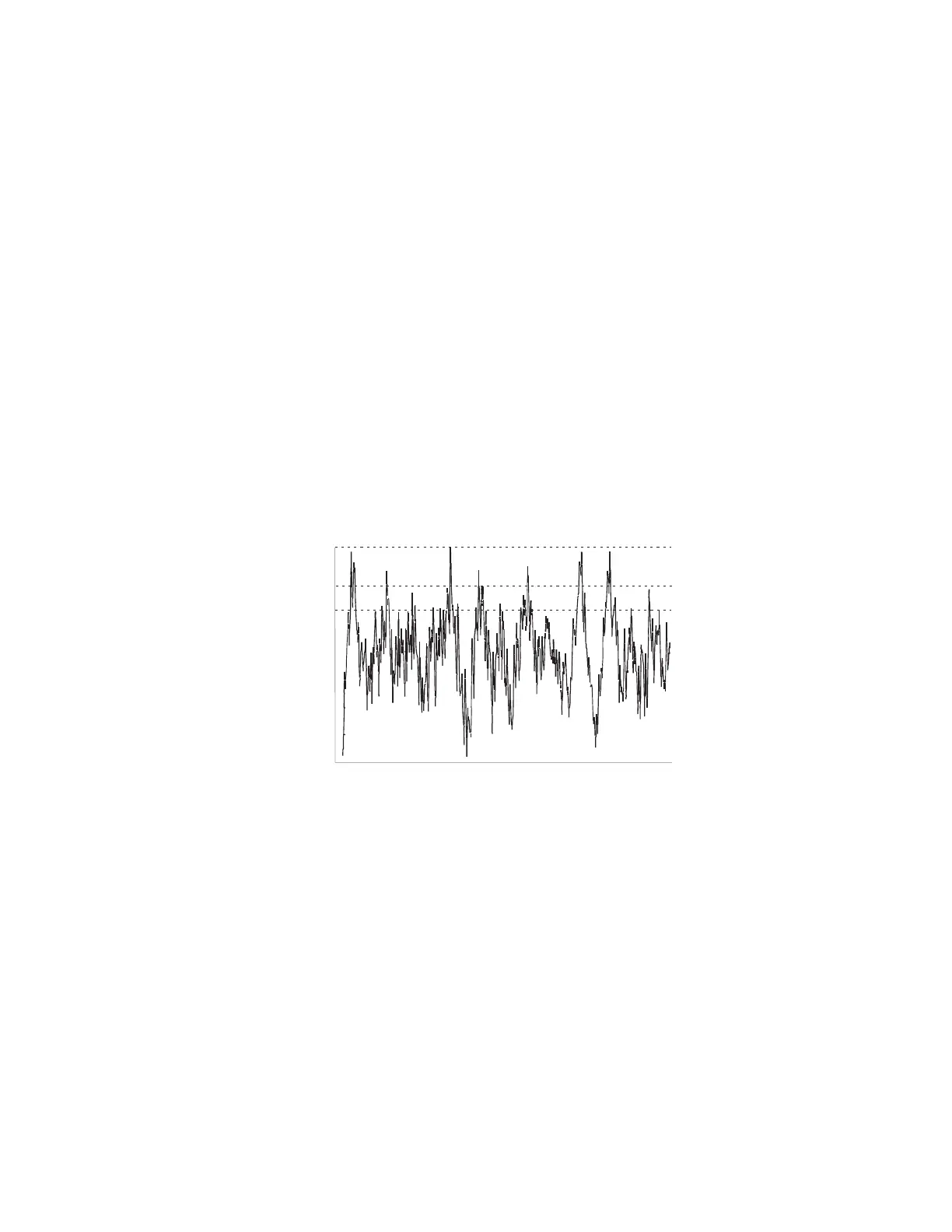
a VU meter or PPM (Peak Program Meter). As discussed above, the VU or PPM indica-
tion under-indicates the true peak level. Most modern studio audio devices have a clip-
ping level of no less than +21 dBu, and often +24 dBu or more. So the studio standard-
izes on a maximum program indication on the meter that is lower than the clipping level,
so those peaks that the meter doesn’t indicate will not be clipped. Line-up level is usually
at this same maximum meter indication. In facilities that use VU meters, this level is usu-
ally at 0VU, which corresponds to the studio standard level, typically +4 or +8 dBu.
ABSOLUTE PEAK
PPM
VU
Fig. 1-1: Absolute Peak Level, VU and PPM Reading
For facilities using +4 dBu standard level, instantaneous peaks can reach +18 dBu or
higher (particularly if the operator overdrives the console or desk). Older facilities with
+8 dBu standard level and equipment that clips at +18 or +21 dBu will experience notice-
able clipping on some program material.
In facilities that use the BBC-standard PPM, maximum program level is usually PPM4
for music, PPM6 for speech. Line-up level is usually PPM4, which corresponds to +4
dBu. Instantaneous peaks will reach +17 dBu or more on voice.
In facilities that use PPMs that indicate level directly in dBu, maximum program and
line-up level is often +6 dBu. Instantaneous peaks will reach +11 dBu or more.


 To Next Page