H - I - J PROGRAMMER’S MANUAL V8.94.11-
- 50 -
Explanation, further submenus
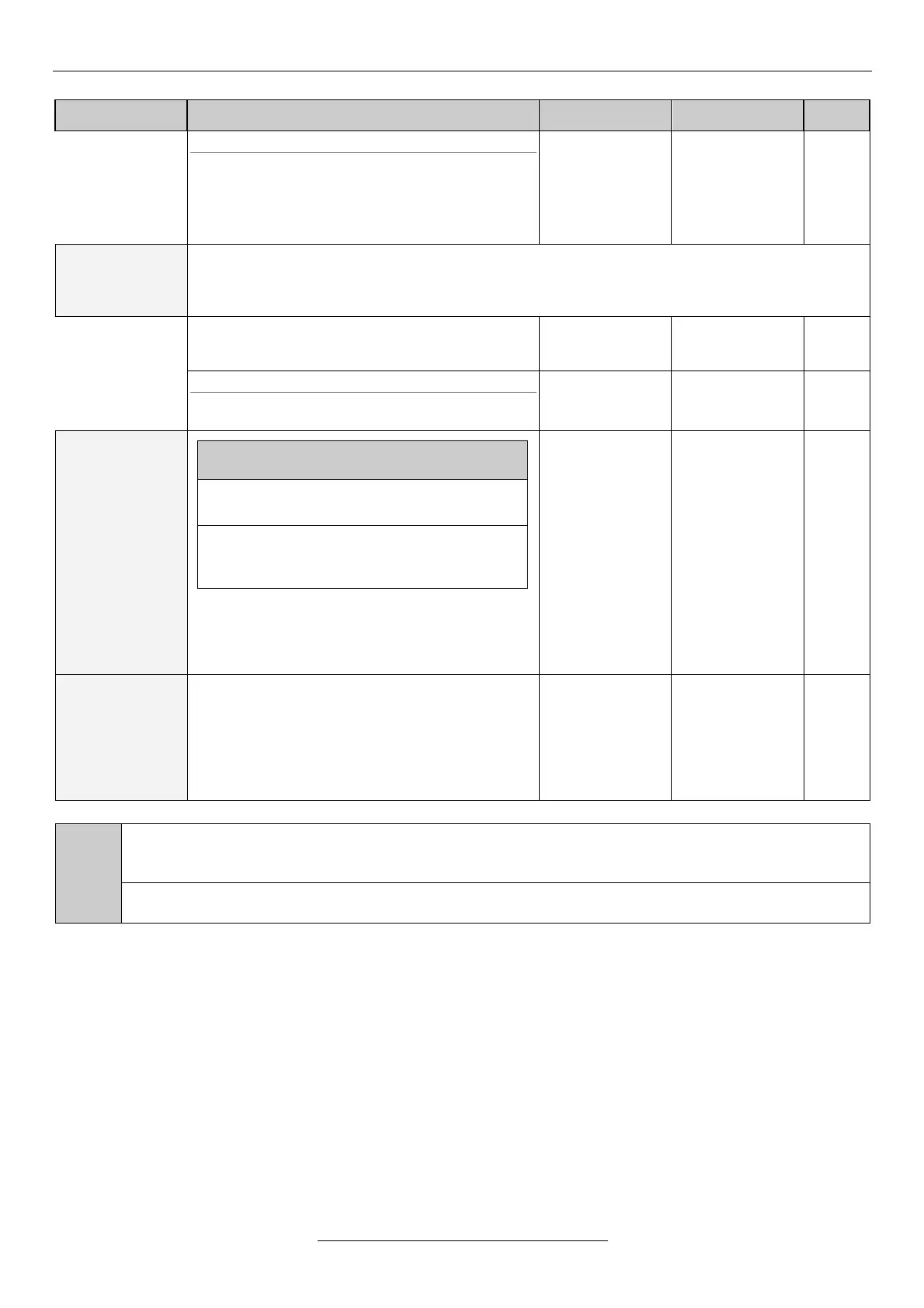
6-7-3 heat
Correction of the calculated thermal model.
(The user can make the modification according to
the ambient thermal load of the motor.)
In colder ambience, higher load is permissible for
the motor.
In case of motor overloading the frequency converter reduces the frequency, in case of generator
overloading it raises the frequency according to the extent of the tilt prevention (menu 6-9-2). If
setting “No” here, the overloading cannot be reduced, thus at reaching the overcurrent it stops with
error message.
6-9-2 extent
The time needed for the frequency to be pulled
back from fmax to 0 at 100 % current overrun.
Prior to the test the nominal parameters of the
motor have to be set!
In case of testing the running motor, it has to
be assured that the motor axle is not loaded
and mechanical damage cannot occur!
At activating the frequency converter performs a
motor test.
Test of the standing motor can be performed
anytime.
In vector mode (6-28 mode) after giving start,
should the equipment perform a dc stator
resistance measurement or not.
The measurement limits the rotation of the motor
for a short time, it will start later, but the equipment
will operate with a more accurate stator resistance
value.
The default values in the motor menu depend on the nominal current and voltage of the frequency converter,
too. For reliable motor protection, the nominal motor parameters must be set. (Pn , In ,Un , fn , cooling type,
thermal limit)..
Setting the motor parameters affects the scaling of the analogue outputs
(see at menu 5 Outputs).
Programming vector mode frequency converters (with IRE)
Parameters to be set at vector type operation
6.1 nominal power (Pn) from the motor data plate
6.2 nominal voltage (Un) from the motor data plate
6.4 nominal current (In) from the motor data plate
6.5 nominal rotation speed (nn) from the motor data plate
6.9.1. tilt prevention enable motor type/generator type
Setting of the other parameters is to be made in the usual way. (control reference signal, source of the regulation
reference signal, IRE, etc.)
6.10 test in this menu motor test has to be performed, first on the standing motor, then on the running motor!


 To Next Page