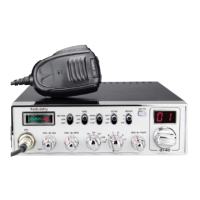
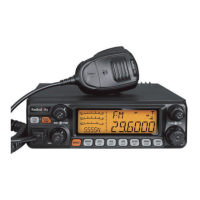
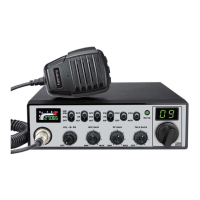
Radioddity Extended manual for Radioddity DB25-D, DB40-D & GD-88 v3.0
© Radioddity 2023 page 56 of 252
5.13.2 Analog Functions
An analog call is a call on an analog channel.
Working bandwidth for the radio
(Narrow band: 12.5 kHz, Wide band: 25 kHz)
It is the signal strength required to adjust the received signal.
Normally the higher squelch level, the higher received signal
strength is required. Settable squelch level is from O - 9. Level
0 is normally open, and there is background sound from the
speaker once the radio is on. Level 9 is the highest and the
required received signal strength is the strongest.
If it is ON, when received the carrier signal, it is prohibited to
transmitting when pressing the [PTT]-key.
Monitor allows the user to open the receiver squelch manually
to listen to on-channel signals.
CTCSS code for RX radio must be same as TX radio, so that the
audio can be received successfully
DCS code for RX radio must be same as TX radio, so that the
audio can be r11ceived successfully
Private call is a one-to-one call.
Group call is a one-to-many call.
All call is a call to all contacts on the current digital channel.
Not used by ham operators.
When the repeater fails to work or the radio exceeds the
coverage of the repeater, it can communicate off-line (RX & TX
at the same frequency) to communicate
Roam Mode, RSSI Set, Connect Check Timer, Connect Recheck
Timer, Connect Timer
When the radio moves from one site to another, it will
automatically find the next available site through roaming.
Record any received and/or transmitted audio
Used as the TX PTT prompt tone and RX prompt tone before
receiving the audio signal.
TDMA direct mode Is used to divide a direct channel (simplex)
into two TimeSlots lo allow efficient channel usage. Multiple
parties may share the channel without interference
depending on slot setting.



 To Next Page