EasyManua.ls Logo

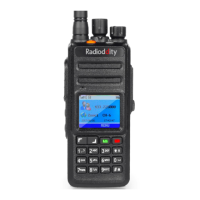
Radioddity GD-88 - User Manual

Default Icon
252 pages
Print Icon
To Next Page IconTo Next Page
Loading...
© Radioddity 2023 page 1 of 252
V3.0, September 23
rd
, 2023
Extended Manual for
DB25-D, DB40-D & GD-88

Table of Contents

Question and Answer IconNeed help?

Do you have a question about the Radioddity GD-88 and is the answer not in the manual?

Summary

Product Safety and RF Exposure

Notes on Radio Use

Important safety instructions for radio operation, including local regulations and handling.

Prepare Radio for Operation

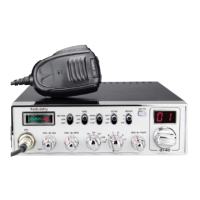
DB25-D Preparation

Instructions for preparing and mounting the DB25-D radio for operation.

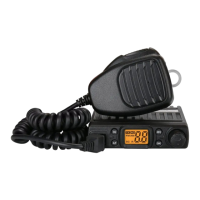
DB40-D Preparation

Instructions for preparing and mounting the DB40-D radio for operation.

GD-88 Preparation

Steps for preparing the GD-88 handheld radio for initial use.

DB25-D Radio Controls

Identifies and explains the functions of the DB25-D radio's physical controls.

DB40-D Radio Controls

Identifies and explains the functions of the DB40-D radio's physical controls.

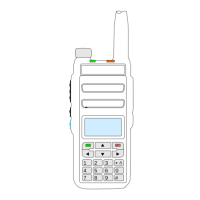
GD-88 Radio Controls

Identifies and explains the functions of the GD-88 radio's physical controls.

Status Icons

Describes the meaning and function of various status icons displayed on the radio.

Keypad Operations

Details how to operate the radio using its keys and the ENC knob.

Main Functions Description

Explains the core functions of the radio, categorized by mode.

Common Functions

Explains common radio functions like Zone, VFO Mode, Power, and Emergency Alarm.

Analog Functions

Describes functions specific to analog radio operation, like bandwidth and squelch.

Digital Functions

Details functions specific to digital radio operation, like private calls and roaming.

Basic Operation

Turning the Radio On;Off

Instructions on how to power the radio on and off correctly.

Adjust Volume

Steps to adjust the audio volume for VFOs on different radio models.

Adjust Squelch

How to adjust the squelch level for VFOs to manage signal reception.

Switch VFOs

Procedure for switching between VFO A and VFO B for operation and settings.

Busy Channel Lockout

How to enable or disable Busy Channel Lockout to manage transmissions.

CTCSS; DCS

How to set CTCSS and DCS signaling for analog channels to manage squelch.

Channel Selection

Methods for selecting the desired working channel on the radio.

VFO Frequency Set

How to manually enter frequencies for VFO mode using the keypad.

Zone; Channel Selection

Ways to select and switch between zones and channels on the radio.

Repeater; Talk Around

How to use the Talk Around function when a repeater is unavailable or out of range.

Emergency Alarm

How to use the emergency alarm function to send calls or alerts in critical situations.

Scan On;Off

How to turn the radio's scanning feature on or off using different methods.

Roaming On; Off

How to enable or disable the roaming feature to automatically find the next available repeater.

Using the Radio Menu

Accessing the Menus and Operations

Detailed steps for navigating menus, selecting items, and confirming settings.

Placing a PTT Call

High; Low Power

How to adjust the radio's transmit power between high and low settings.

Select the Transmitting VFO

How to switch between VFO A and VFO B for transmission.

Receive and Answer to a Digital Radio Call

How to make and receive digital radio calls like private, group, and all calls.

Initiate a Digital Radio Call

Ways to initiate a digital radio call using preset channels, contacts, or manual dial.

Receive and Answer to an Analog Radio Call

How to receive and answer analog radio calls, including handling CTCSS/DCS.

Special DMR Functions

Remote Monitor

How to allow or prohibit remote monitoring of the radio's microphone and transmitter.

Remote Kill

How to allow or prohibit remote disabling of the radio, useful if stolen or lost.

The Radio Menu Functions in Detail

Parameters

Configuration of various radio parameters like TOT, Power, and Signaling.

Prepare for Using the CPS

Install Device Driver

Steps to install the necessary device driver for the programming cable.

Install CPS

Guide to installing the CPS software required for radio configuration.

Start CPS

Instructions on how to launch and begin using the CPS software.

Connect to the Radio

Steps to establish communication between the radio and the PC via the programming cable.

Read Codeplug from DB25-D, DB40-D or GD-88

How to read and transfer the radio's current configuration (codeplug) to the PC.

Safe Codeplug to File (Safe As)

Instructions on how to save the codeplug data to a file on the PC.

Write Codeplug to DB25-D, DB40-D or GD-88

How to transfer changed settings (codeplug) from the PC back to the radio.

Factory Reset

Procedure for resetting the radio to factory default settings using the CPS or radio menu.

Using the CPS to Make Changes to Your Settings

Basic Parameters

Essential settings like Radio Name, Language, and TOT for initial radio setup.

TOT

Configures the Time-Out-Timer to limit transmission duration per call.

Busy Channel Lockout

Controls whether the radio transmits when receiving signals, preventing interference.

Power-saving

Activates power-saving modes to extend battery life by reducing power consumption.

Squelch (A) Level

Adjusts the squelch level for the upper VFO (A) to control audio circuit activation.

Squelch (B) Level

Adjusts the squelch level for the lower VFO (B) to control audio circuit activation.

Radio ID

Programs a unique ID for radio identification, used for private calls and text messages.

Roaming

Settings related to roaming, enabling automatic selection of the best repeater based on signal strength.

Preset Keys (Programmable Function Keys)

Defines functions assigned to programmable keys like P1-P7 for quick access.

Mic Gain

Adjusts microphone gain levels and enables/disables the feature for better audio quality.

DMR Service

Enables or disables advanced DMR services like remote monitor, kill, and radio detection.

Radio Detection

Allows or prohibits remote detection of the radio's presence and activity without indication.

Setup of Channels

Import Channels from CSV-file

Imports channel lists from CSV files into the CPS for radio setup.

RX Freq

Sets the receive frequency for channels, dependent on radio's frequency ranges.

TX Freq

Sets the transmit frequency for channels, dependent on radio's frequency ranges.

Power

Sets the transmit output power independently for each channel.

RX TS

Sets the TimeSlot for receiving in digital mode, crucial for TDMA channels.

TX TS

Sets the TimeSlot for transmitting in digital mode, crucial for TDMA channels.

RX CC (Color Code)

Assigns a color code for RX channels to identify systems sharing the same frequency.

TX CC (Color Code)

Assigns a color code for TX channels to match repeater or system requirements.

Relay mode

Configures the working mode of a channel when in relay mode (Off, Only RX, Only TX, RX and TX).

Crossband analog to analog

Repeats analog signals received on one channel to another channel.

Crossband digital to analog

Repeats digital signals received on one channel to an analog output channel.

Crossband analog to digital

Repeats analog signals received on one channel to a digital output channel.

Crossband;Crossmode digital;analog to analog

Repeats digital or analog signals received on one channel to an analog output channel.

Crossband;Crossmode analog;digital to digital

Repeats analog or digital signals received on one channel to a digital output channel.

Crossband digital to digital

Repeats digital signals received on one channel to a digital output channel.

Same Frequency Repeater digital to digital

Allows a radio to act as a DMR-repeater for a specific frequency and TalkGroup.

CTCSS sub audio and DCS signaling

Explains CTCSS and DCS codes for analog channels to manage squelch and interference.

RX SQ

Selects the decoder type or value (CTCSS, DCS, DCS-I) for receiving carrier signals.

TX SQ

Selects the encoder type or value (CTCSS, DCS, DCS-I) for transmitting carrier signals.

APRS

Configuration for APRS protocol, including analog and digital settings for beacons and reporting.

Contacts

Manages digital contacts, including creating, editing, importing ham contacts, and ham groups.

Contact List

Manages the radio's address book for calls, including creating, editing, and importing contacts.

Ham Contacts

Manages ham contacts list from CSV files, supporting up to 300,000 entries.

Ham Groups

Manages ham groups list from CSV files, supporting up to 20,000 groups.

Scan List

Associates scan/roaming lists with channels for monitoring activity and finding repeaters.

Firmware Update

Firmware Update

General advice on updating radio firmware and PC software (CPS).

Install Program for Firmware Update

Steps to install the IAP-updater program for firmware updates.

Perform Firmware Update

Detailed procedure for updating the radio's firmware, including device preparation.

Perform Flash Update

Instructions for performing Flash updates using FLASH-files, requiring normal operating mode.

Quickstart for Common Use Cases

Simplex Analog FM Operation with Other Station

Step-by-step guide for setting up simplex analog FM operation with another station.

Duplex Analog FM Operation with a Local Analog FM-Repeater

Guide for setting up duplex analog FM operation using a local analog FM repeater.

Simplex Digital DMR Operation with Other Station

Guide for setting up simplex digital DMR operation with another station.

Simplex Digital DMR Operation with a Single-HAT Hotspot

Steps for setting up simplex digital DMR operation using a Single-HAT hotspot.

Duplex Digital DMR Operation with a Dual-HAT Hotspot

Guide for setting up duplex digital DMR operation using a Dual-HAT hotspot.

Digital DMR Operation with Digital Repeater

Steps for setting up digital DMR operation with a digital repeater.

Connectivity

Common Problems and How to Solve Them

Summary

Product Safety and RF Exposure

Notes on Radio Use

Important safety instructions for radio operation, including local regulations and handling.

Prepare Radio for Operation

DB25-D Preparation

Instructions for preparing and mounting the DB25-D radio for operation.

DB40-D Preparation

Instructions for preparing and mounting the DB40-D radio for operation.

GD-88 Preparation

Steps for preparing the GD-88 handheld radio for initial use.

DB25-D Radio Controls

Identifies and explains the functions of the DB25-D radio's physical controls.

DB40-D Radio Controls

Identifies and explains the functions of the DB40-D radio's physical controls.

GD-88 Radio Controls

Identifies and explains the functions of the GD-88 radio's physical controls.

Status Icons

Describes the meaning and function of various status icons displayed on the radio.

Keypad Operations

Details how to operate the radio using its keys and the ENC knob.

Main Functions Description

Explains the core functions of the radio, categorized by mode.

Common Functions

Explains common radio functions like Zone, VFO Mode, Power, and Emergency Alarm.

Analog Functions

Describes functions specific to analog radio operation, like bandwidth and squelch.

Digital Functions

Details functions specific to digital radio operation, like private calls and roaming.

Basic Operation

Turning the Radio On;Off

Instructions on how to power the radio on and off correctly.

Adjust Volume

Steps to adjust the audio volume for VFOs on different radio models.

Adjust Squelch

How to adjust the squelch level for VFOs to manage signal reception.

Switch VFOs

Procedure for switching between VFO A and VFO B for operation and settings.

Busy Channel Lockout

How to enable or disable Busy Channel Lockout to manage transmissions.

CTCSS; DCS

How to set CTCSS and DCS signaling for analog channels to manage squelch.

Channel Selection

Methods for selecting the desired working channel on the radio.

VFO Frequency Set

How to manually enter frequencies for VFO mode using the keypad.

Zone; Channel Selection

Ways to select and switch between zones and channels on the radio.

Repeater; Talk Around

How to use the Talk Around function when a repeater is unavailable or out of range.

Emergency Alarm

How to use the emergency alarm function to send calls or alerts in critical situations.

Scan On;Off

How to turn the radio's scanning feature on or off using different methods.

Roaming On; Off

How to enable or disable the roaming feature to automatically find the next available repeater.

Using the Radio Menu

Accessing the Menus and Operations

Detailed steps for navigating menus, selecting items, and confirming settings.

Placing a PTT Call

High; Low Power

How to adjust the radio's transmit power between high and low settings.

Select the Transmitting VFO

How to switch between VFO A and VFO B for transmission.

Receive and Answer to a Digital Radio Call

How to make and receive digital radio calls like private, group, and all calls.

Initiate a Digital Radio Call

Ways to initiate a digital radio call using preset channels, contacts, or manual dial.

Receive and Answer to an Analog Radio Call

How to receive and answer analog radio calls, including handling CTCSS/DCS.

Special DMR Functions

Remote Monitor

How to allow or prohibit remote monitoring of the radio's microphone and transmitter.

Remote Kill

How to allow or prohibit remote disabling of the radio, useful if stolen or lost.

The Radio Menu Functions in Detail

Parameters

Configuration of various radio parameters like TOT, Power, and Signaling.

Prepare for Using the CPS

Install Device Driver

Steps to install the necessary device driver for the programming cable.

Install CPS

Guide to installing the CPS software required for radio configuration.

Start CPS

Instructions on how to launch and begin using the CPS software.

Connect to the Radio

Steps to establish communication between the radio and the PC via the programming cable.

Read Codeplug from DB25-D, DB40-D or GD-88

How to read and transfer the radio's current configuration (codeplug) to the PC.

Safe Codeplug to File (Safe As)

Instructions on how to save the codeplug data to a file on the PC.

Write Codeplug to DB25-D, DB40-D or GD-88

How to transfer changed settings (codeplug) from the PC back to the radio.

Factory Reset

Procedure for resetting the radio to factory default settings using the CPS or radio menu.

Using the CPS to Make Changes to Your Settings

Basic Parameters

Essential settings like Radio Name, Language, and TOT for initial radio setup.

TOT

Configures the Time-Out-Timer to limit transmission duration per call.

Busy Channel Lockout

Controls whether the radio transmits when receiving signals, preventing interference.

Power-saving

Activates power-saving modes to extend battery life by reducing power consumption.

Squelch (A) Level

Adjusts the squelch level for the upper VFO (A) to control audio circuit activation.

Squelch (B) Level

Adjusts the squelch level for the lower VFO (B) to control audio circuit activation.

Radio ID

Programs a unique ID for radio identification, used for private calls and text messages.

Roaming

Settings related to roaming, enabling automatic selection of the best repeater based on signal strength.

Preset Keys (Programmable Function Keys)

Defines functions assigned to programmable keys like P1-P7 for quick access.

Mic Gain

Adjusts microphone gain levels and enables/disables the feature for better audio quality.

DMR Service

Enables or disables advanced DMR services like remote monitor, kill, and radio detection.

Radio Detection

Allows or prohibits remote detection of the radio's presence and activity without indication.

Setup of Channels

Import Channels from CSV-file

Imports channel lists from CSV files into the CPS for radio setup.

RX Freq

Sets the receive frequency for channels, dependent on radio's frequency ranges.

TX Freq

Sets the transmit frequency for channels, dependent on radio's frequency ranges.

Power

Sets the transmit output power independently for each channel.

RX TS

Sets the TimeSlot for receiving in digital mode, crucial for TDMA channels.

TX TS

Sets the TimeSlot for transmitting in digital mode, crucial for TDMA channels.

RX CC (Color Code)

Assigns a color code for RX channels to identify systems sharing the same frequency.

TX CC (Color Code)

Assigns a color code for TX channels to match repeater or system requirements.

Relay mode

Configures the working mode of a channel when in relay mode (Off, Only RX, Only TX, RX and TX).

Crossband analog to analog

Repeats analog signals received on one channel to another channel.

Crossband digital to analog

Repeats digital signals received on one channel to an analog output channel.

Crossband analog to digital

Repeats analog signals received on one channel to a digital output channel.

Crossband;Crossmode digital;analog to analog

Repeats digital or analog signals received on one channel to an analog output channel.

Crossband;Crossmode analog;digital to digital

Repeats analog or digital signals received on one channel to a digital output channel.

Crossband digital to digital

Repeats digital signals received on one channel to a digital output channel.

Same Frequency Repeater digital to digital

Allows a radio to act as a DMR-repeater for a specific frequency and TalkGroup.

CTCSS sub audio and DCS signaling

Explains CTCSS and DCS codes for analog channels to manage squelch and interference.

RX SQ

Selects the decoder type or value (CTCSS, DCS, DCS-I) for receiving carrier signals.

TX SQ

Selects the encoder type or value (CTCSS, DCS, DCS-I) for transmitting carrier signals.

APRS

Configuration for APRS protocol, including analog and digital settings for beacons and reporting.

Contacts

Manages digital contacts, including creating, editing, importing ham contacts, and ham groups.

Contact List

Manages the radio's address book for calls, including creating, editing, and importing contacts.

Ham Contacts

Manages ham contacts list from CSV files, supporting up to 300,000 entries.

Ham Groups

Manages ham groups list from CSV files, supporting up to 20,000 groups.

Scan List

Associates scan/roaming lists with channels for monitoring activity and finding repeaters.

Firmware Update

Firmware Update

General advice on updating radio firmware and PC software (CPS).

Install Program for Firmware Update

Steps to install the IAP-updater program for firmware updates.

Perform Firmware Update

Detailed procedure for updating the radio's firmware, including device preparation.

Perform Flash Update

Instructions for performing Flash updates using FLASH-files, requiring normal operating mode.

Quickstart for Common Use Cases

Simplex Analog FM Operation with Other Station

Step-by-step guide for setting up simplex analog FM operation with another station.

Duplex Analog FM Operation with a Local Analog FM-Repeater

Guide for setting up duplex analog FM operation using a local analog FM repeater.

Simplex Digital DMR Operation with Other Station

Guide for setting up simplex digital DMR operation with another station.

Simplex Digital DMR Operation with a Single-HAT Hotspot

Steps for setting up simplex digital DMR operation using a Single-HAT hotspot.

Duplex Digital DMR Operation with a Dual-HAT Hotspot

Guide for setting up duplex digital DMR operation using a Dual-HAT hotspot.

Digital DMR Operation with Digital Repeater

Steps for setting up digital DMR operation with a digital repeater.

Connectivity

Common Problems and How to Solve Them

Radioddity GD-88 Specifications

General IconGeneral
GPSYes
Operating Voltage7.4V DC
IP RatingIP54
BluetoothYes
Frequency RangeVHF: 136-174MHz
Output PowerLow: 1W
ModesDigital
DisplayColor LCD
Channel Spacing12.5kHz
Operating Temperature-20°C to +55°C
Weight300g

Related product manuals