Appendix B: Configuring Link Aggregation
(LACP) for AP Backhaul
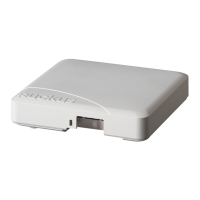
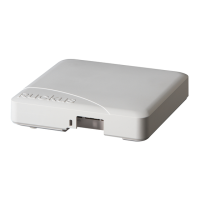
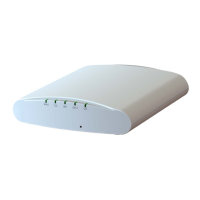
The ZoneFlex R710 can use link aggregation control protocol (LACP) as defined in the
802.1ax (formerly 802.3ad) standard to control the bonding of two 1Gbps physical
Ethernet ports together to form a single 2Gbps logical link.
Link Aggregation and When To Use It
An access point such as the R710 is capable of passing wireless traffic in excess of
1Gbps. This only occurs in extreme cases, such as during concurrent dual-band operation
over the widest possible channels and highest possible modulation and coding scheme
(MCS) rates in each band, with all traffic flowing in the same direction. In such cases, a
single Gigabit Ethernet backhaul will saturate and limit the AP’s capacity to less than
1Gbps.
To alleviate this backhaul limitation, link aggregation can be used to bond multiple Gigabit
Ethernet links into a single, high capacity logical link. The R710’s link partner, typically
an Ethernet switch, must also support LACP and be configured to use this feature.
Wi-Fi client capabilities and data demands should be considered before deploying LACP
for AP backhaul. For the vast majority of enterprise WLANs, single Gigabit backhaul for
APs is more than sufficient.
Configuring LACP
LACP is configurable via the AP CLI on R710. The set bond command is used with the
following syntax:
set bond <profile> {options}
+++++++++++++++++++++++++++++++++++++++++++++++++++++
** <profile>: bond0, ...
** options:
- lacp-rate [0,1], 0 for slow, 1 for fast
- xmit-hash [0,1,2], 0 for L(ayer2), 1 for L3+4, 2
for L2+3
- {add|delete} <ethX>
+++++++++++++++++++++++++++++++++++++++++++++++++++++
Profile (profile) – “bond0” is the only valid profile name.
Options:
• LACP rate (lacp-rate) defines the rate at which the AP asks its link partner (usually
the switch) to transmit LACP control packets (LACPDUs). A faster rate allows the link
end-points to respond quicker to any changes on the physical interface (for instance,
ZoneFlex Indoor Access Point Release 104.0 User Guide
149
149



 To Next Page