7-36 Maintenance and Testing Date Code 20011026
SEL-321/321-1 Instruction Manual
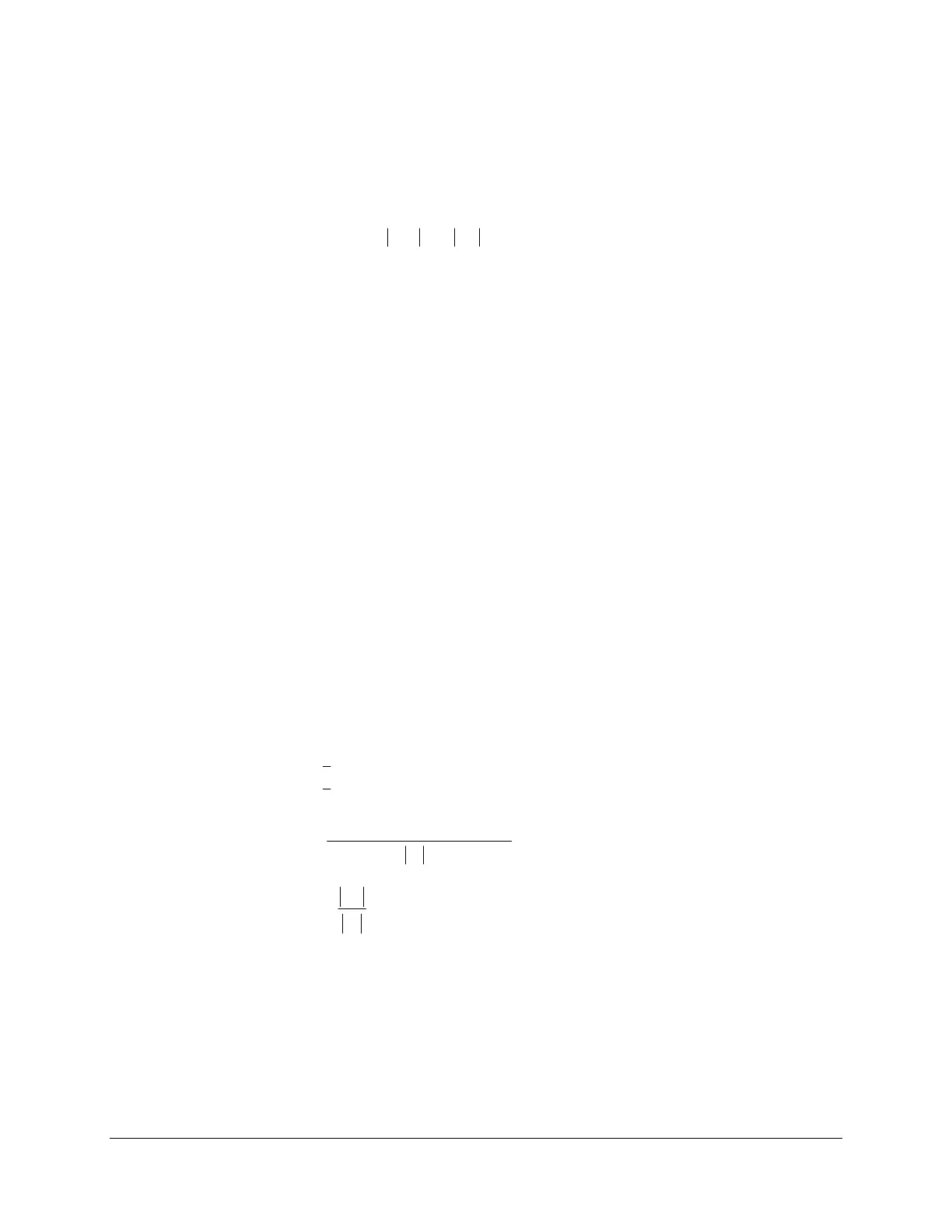
When the magnitude of V
BC
calculated above is greater than 67 volts, use │V
B
│ =
│V
C
│ = 67 V. Calculate the angle β using Equation 7.9.
When the magnitude of V
BC
calculated above is less than 35 volts, use │V
B
│ = │V
C
│
= 35 V. Calculate the angle β using Equation 7.9.
()
[]
degV•2/Vsina180
CBC
−°=β Equation 7.9
Select V
A
= 67 ∠0° volts. For the Zone 2 B-C element test, based upon the example
settings, the magnitude of V
BC
equals 46.8 volts. From the equations above, select
the following test voltage magnitudes and angles.
volts1508.46V
volts1508.46V
volts00.67V
C
B
A
°∠=
°−∠=
°∠=
The phase distance element maximum reach is measured when faulted phase-to-
phase current lags faulted phase-to-phase voltage by the distance element maximum
torque angle. In the SEL-321 Relay, the phase distance element maximum torque
angle is defined by the angle of the relay Z1ANG setting.
For the example relay settings, I
BC
should lag V
BC
by 83.97°. Based upon the test
voltages selected above, V
BC
lags V
A
by 90°, so I
BC
should lag V
A
by 173.97°.
As stated above, the phase distance elements are supervised by the negative-
sequence directional element. It is important to check the negative-sequence
quantities applied and verify that the 32QF element should assert allowing the
forward-reaching distance element to operate. We can calculate the magnitude and
angle of negative-sequence voltage and current applied for the test quantities listed
above. We can then calculate the negative-sequence impedance, Z2c, applied using
Equation 7.2 and compare Z2c to the Z2FT threshold which is a function of the Z2F
setting and Z2m.
()
()
CB
2
A
3
1
2
CB
2
A
3
1
2
IaIaII
VaVaVV
⋅+⋅+⋅=
⋅+⋅+⋅=
()
[]
2
2
22
I
*IANG1Z1VRe
c2Z
⋅°∠⋅
=
Equation 7.2
2
2
I
V
m2Z =
m2Z25.0F2Z25.1FT2Z ⋅−⋅= Equation 7.4
Taking the test signals from Table 7.3.
volts150V8.46V
volts150V8.46V
volts0V0.67V
C
B
A
°∠=
°−∠=
°∠=


 To Next Page