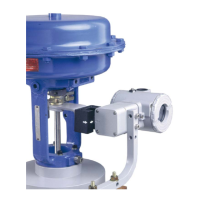
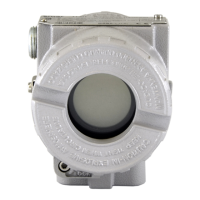
Transmitter General View
VII
TRANSMITTER GENERAL VIEW
The LD301 uses a highly proven technique for pressure measuring by capacitance reading. The
block diagram of the LD301 HART
®
pressure transmitter is shown below.
Isolator
EEPROM with Sensor Data
Temperature Data
Resonant Oscillator
Digital
Reading
Zero/Span Local
Adjustment
- D/A Converter
- HART Modem
- LCD Controller
- Mathematical
Co-processor
- Range
- Special Functions
- PID
- Output Controller
- Communication
- HART
- Advanced Diagnostic
- Firmware Update
Process Unit
Protocol
S
i
g
n
a
l
C
o
n
d
i
t
i
o
n
e
r
I
n
pu
t
/
O
u
t
pu
t
PH
PL
Digital
Sensor
Glass
Metalized
Surface (4)
Ceramics
Filling Fluid (3)
Isolating
Diaphragm (2)
Sensor
Diaphragm (1)
HT3012
4 - 20mA
In the cell center is the sensor diaphragm (1). This diaphragm flexes in response to the different
pressures applied on the LOW and HIGH sides of the cell (PL and PH). These pressures are directly
applied on the isolator diaphragms (2), whose function is to isolate the sensor process and supply
high resistance against corrosion caused by process fluids. The pressure is transmitted directly to
the sensor diaphragm through the filling fluid (3) and causes its deflection. The sensor diaphragm is
a mobile electrode whose two metal surfaces (4) are stable electrodes. A deflection on the sensor
diaphragm is read by the capacitance variation between both stable and mobile electrodes.
The resonance oscillator reads the capacitance variations between the mobile and the stable boards
and generates a pressure output equivalent to the detected capacitance variation. This pressure
value is informed in compliance with the transmitter communication protocol. As the conversion
process does not involve an A/D converter, any errors or deviations are eliminated during the
process. Temperature compensation is done by a sensor, which combined with a precision sensor,
results in high accuracy and range.
The process variable, as well as the diagnostic monitoring and information, are supplied by the
digital communication protocol. The LD301 is available in the HART communication protocol.
Read carefully these instructions for better use of the LD301.


 To Next Page