52
8303460000 Rev A IA672-04-01-Rev. I
11.8.8. Read the Standard Event Status Event Register
This is a basic status and fault register that was first defined in IEEE-488.2. It is an
event register, which means bits are set to “1” when a condition occurs and they are
not cleared until the register value is read using the *ESR? query or the *CLS
command
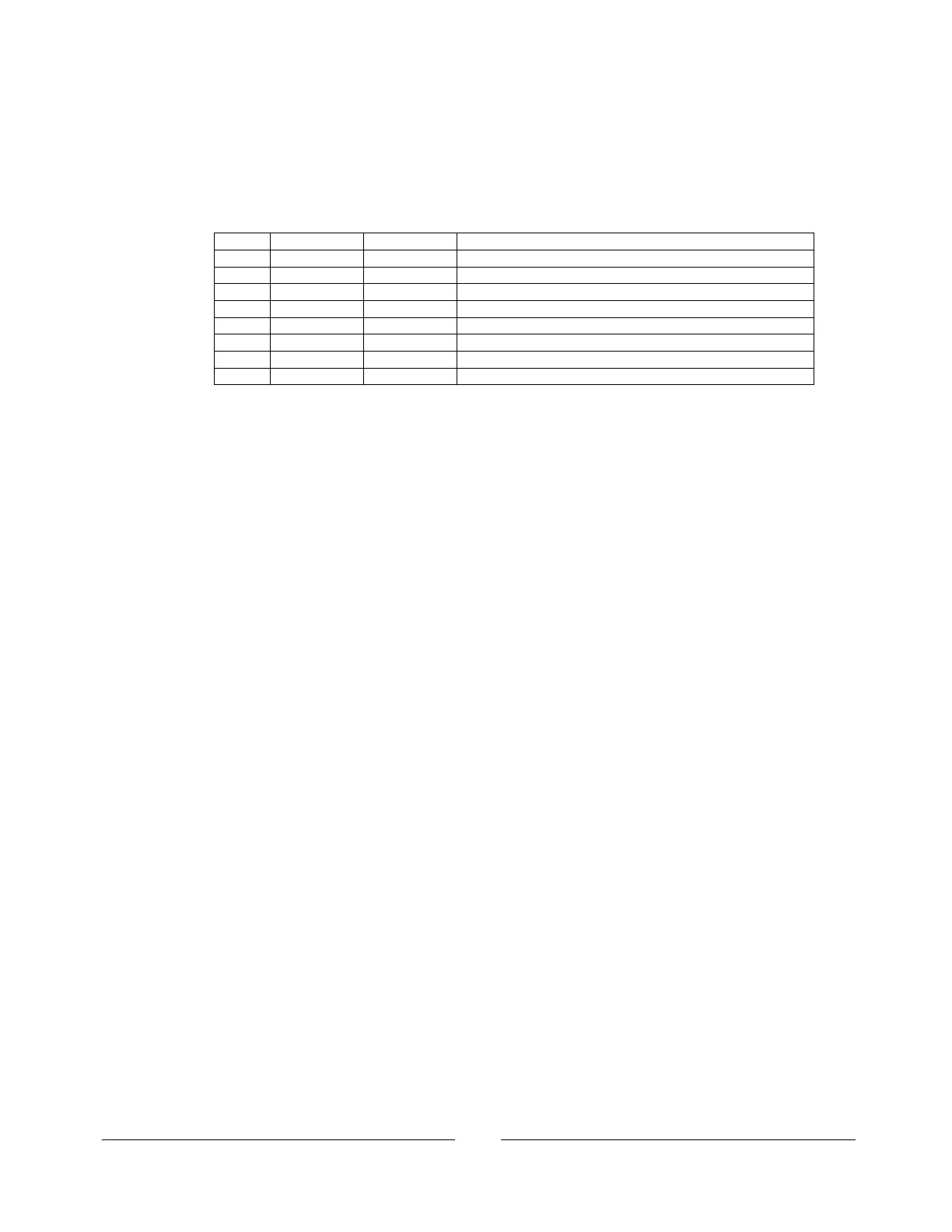
These are the bit assignments of the ESR register:
Operation complete. See section 11.8.10
Query error (response not read)
Device dependant error (fault shut-down)
Execution error (could not execute command)
Command error (invalid command received)
Power On. Set once when power is switched on.
Syntax: *ESR ?
Response: <nnn>, a number from 0 to 255
Example: 32 (an illegal command was received)
11.8.9. Set the Standard Event Status Enable Register
When one or more bits in the Standard Event Status Event Register (*ESR, see
above) are set, a bit can be set in the Status Byte (*STB, see section 11.8.6). This is
done by setting bits in the enable register.
Syntax: *ESE <nnn>
Parameter: <nnn> is a number from 0 to 255. The bit assignments are the
same as the *ESR, in the table above
Example: *ESE 60 will cause bit 5 in the Status Byte to be set if there is a
query error, fault shut-down, execution error or a
command error
Query: *ESE? will return 60 in the example
11.8.10. Enable the Operation Complete
This command will cause bit 0 of the Standard Event Status Register to go to 1
when all pending commands are completed. Because of the Genesys™ power supply
architecture, this bit will go to 1 when the *OPC is received, even if the output is in
transition because of a prior command.
Syntax: *OPC
11.8.11. Read the Operation Complete
This query will read back if all pending operations are completed. This query will
always return 1, even if the DC output is in transition because of a prior command.
Syntax: *OPC ?




 To Next Page