33
5.6 Remove support material
Dissolve PVA support
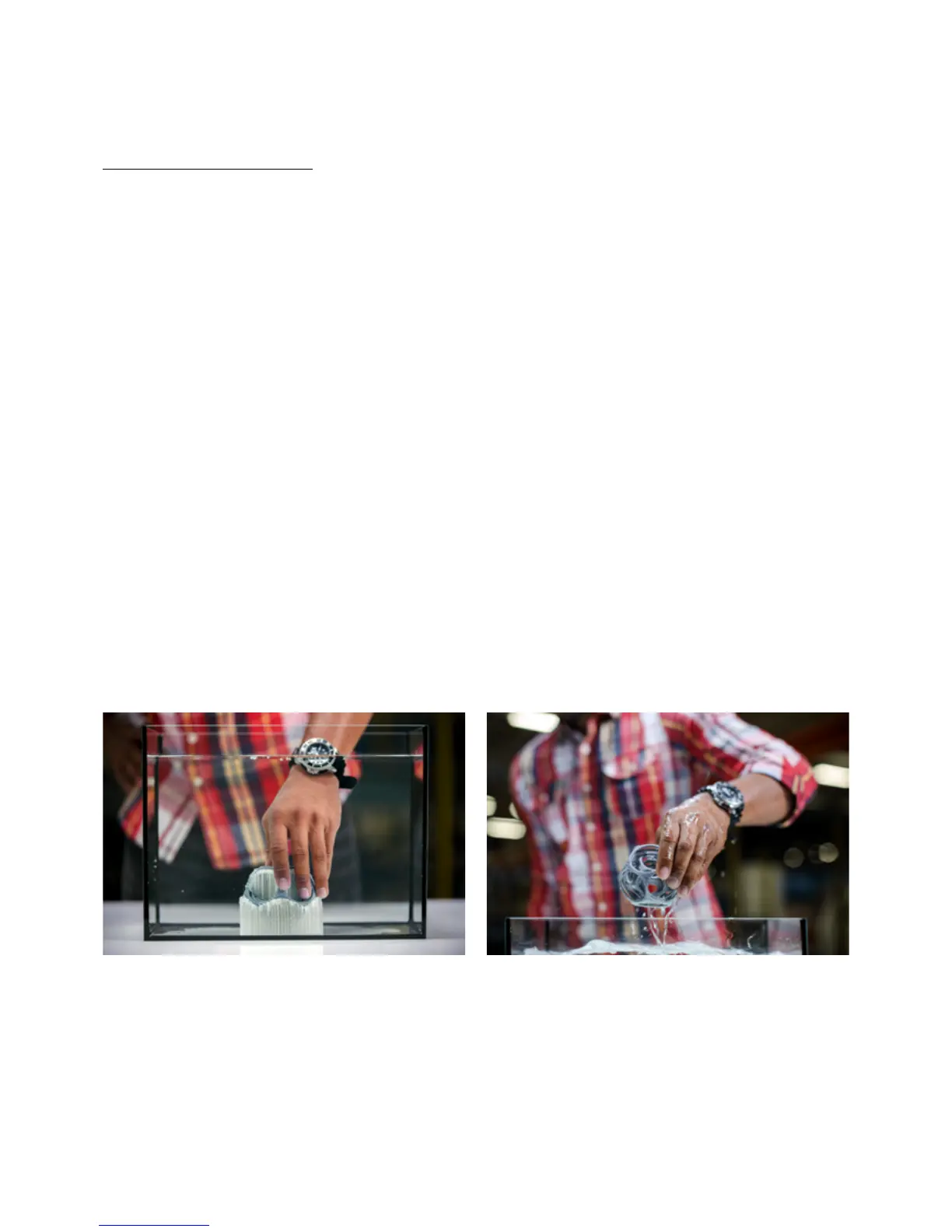
PVA support structures can be removed by dissolving the PVA in water. This takes several hours and leaves no trace
afterwards.
1. Submerge the print in water
By putting a print with PVA in water the PVA will slowly dissolve. This process can be sped up by using:
• Warm water. Warm water will decrease the dissolving time. When using PLA for the build material, ensure that the
water is no hotter than 35 °C, otherwise the PLA part may deform. Never use water above 50 °C, as this increases
risk of burning.
• Stirring. Use stirring/running water to decrease the dissolving time. Moving water enables the PVA to dissolve more
quickly (in some cases under three hours, depending on the amount of support material used).
• Pliers. You can also speed up PVA dissolution by placing the print in water for approximately 10 minutes, then
removing most of the support with pliers. When the print is placed back in the water, only the remaining parts of
PVA will need to be dissolved.
2. Rinse with water
After PVA supports are totally dissolved, rinse the print with water to remove any excess PVA.
3. Let the print dry
Let the print dry completely and apply additional post-processing to the build material if desired.
4. Disposal of waste water
PVA is a biodegradable material, and in most cases disposing the water afterwards is easy. However, it is
recommended that you check local regulations for more comprehensive guidance. The water can be disposed of
down the drain, providing the waste water distribution network is connected to a wastewater treatment plant. After
disposal, run hot water from the tap for approximately 30 seconds to remove any excess saturated PVA water and
to avoid longer-term clogging issues.
It is possible to use the water for more than one print, however, this might extend the dissolving time. Through repeated
use, the water becomes saturated by previously dissolved PVA, so for the quickest result, fresh water is recommended.









 To Next Page