Carl Zeiss Axiotech and Axiotech
vario
3-24 B 40-020 e 06/99
3.4.8
Setting of transmitted-light polarization contrast
Transmitted-light polarization contrast is used with specimens which change the polarization state of
light. Such specimens, e.g. crystals, minerals or polymers, are termed as birefringent. If birefringent
substances are viewed between crossed polarizers (polarizer ⊥ analyzer), they appear bright while their
surrounding remains dark.
Birefringent substances are recognized by the fact that they display 4 bright and 4 dark positions
between crossed polarizers after rotation of the microscope stage around 360°. Depending on the level
of birefringence, thickness and orientation of the object, interference colors will occur from gray (usually
in biological objects) to white, yellow, red and blue. These interference colors can be of 1
st
or higher
order.
3.4.8.1
Transmitted-light polarization contrast with the reflector slider HD DIC on the
Axiotech 30 and Axiotech 100
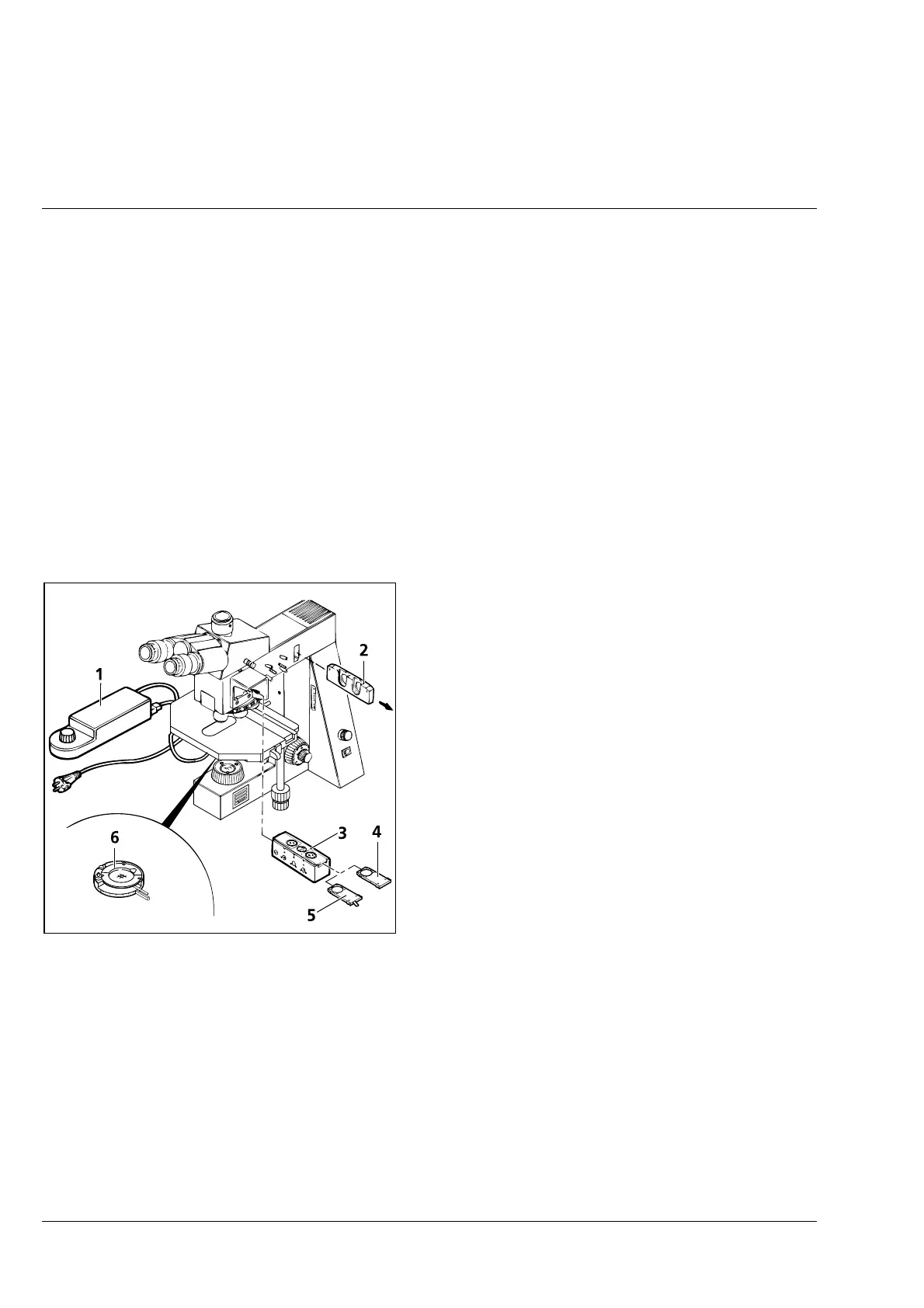
The rotary polarizer D ( 3-23/13) or the swing-in
polarizer (3-23/6) are available to choose from for
the Axiotech 30 and 100.
The rotary polarizer D (3-23/13), Cat. No. 453620-
0000-000, is oriented in the EAST-WEST vibration
direction (zero position). This polarizer is inserted
into the beam path until stop, with the lower lever
(3-23/15) pointing to the right. The upper lever on
the rotary bearing of the polarizer (3-23/14) must
be swung into the zero position (stop) and must
point to the front.
The swing-in polarizer, Cat. No. 453617-0000-
000, is factory-aligned for orientation in EAST-
WEST direction. This polarizer is just swung into
the beam path until stop, with the lever pointing
to the front.
• Perform steps described in sections 2.13.1,
2.13.2 and 3.3.
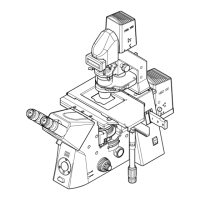
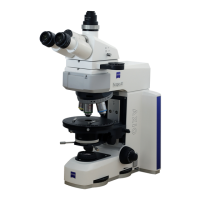
Fig. 3-22 Setting of transmitted-light
polarization contrast with reflector
slider HD DIC (Axiotech 30/100)



 To Next Page