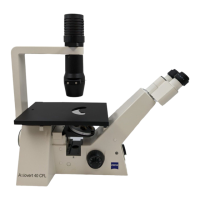
Axiovert 40
B 46-0031 e 11/03 XI
Avoid touching the hot lamp housing. Always pull the power plug before changing the lamps and
allow the instrument to cool down for some 15 minutes.
When fluorescence filters are used, the heat protection filter for heat emitted by the microscope
illuminator must not be removed, since fluorescence filters are sensitive to heat, and their perforĆ
mance could be impaired.
Dust and dirt may impair the instrument's performance. Therefore, the instrument must be protecĆ
ted from these influences as far as possible and covered with the dust cover when not in use. Always
check whether the instrument is switched off before you cover it.
Placing objects against or covering ventilation slats may lead to heat build-up that will damage the
instrument and, in extreme cases, cause a fire. Always keep the ventilation slats clear and ensure
that no objects enter the instrument through the ventilation slats.
The instruments may only be operated by trained personnel who must be aware of the possible
dangers involved with microscopy and the particular application concerned. The Axiovert 40 InĆ
verted Microscopes are high-precision instruments that can be impaired in their performance or
destroyed when handled improperly.
Gas-discharge lamps, e.g. XBO 75, HBO 50 or HBO 103, emit ultraviolet radiation, which can cause
burns to the eyes and skin. Therefore, never look directly into the light of these lamps and avoid
direct, unprotected incidence of their light on your skin. When using the microscope, always use the
protective devices belonging to the instrument (e.g. special attenuation filters). When they are hot,
gas-discharge lamps are under high internal pressure. Therefore, change them only when they have
cooled down, and make sure to wear protective gloves and goggles (for detailed information please
see Operating Manual B 40-065 e).
Defective microscopes must not be disposed of with household waste. Dispose of the microscope in
compliance with the relevant legal requirements.



 To Next Page