Operation
18 025-9567E
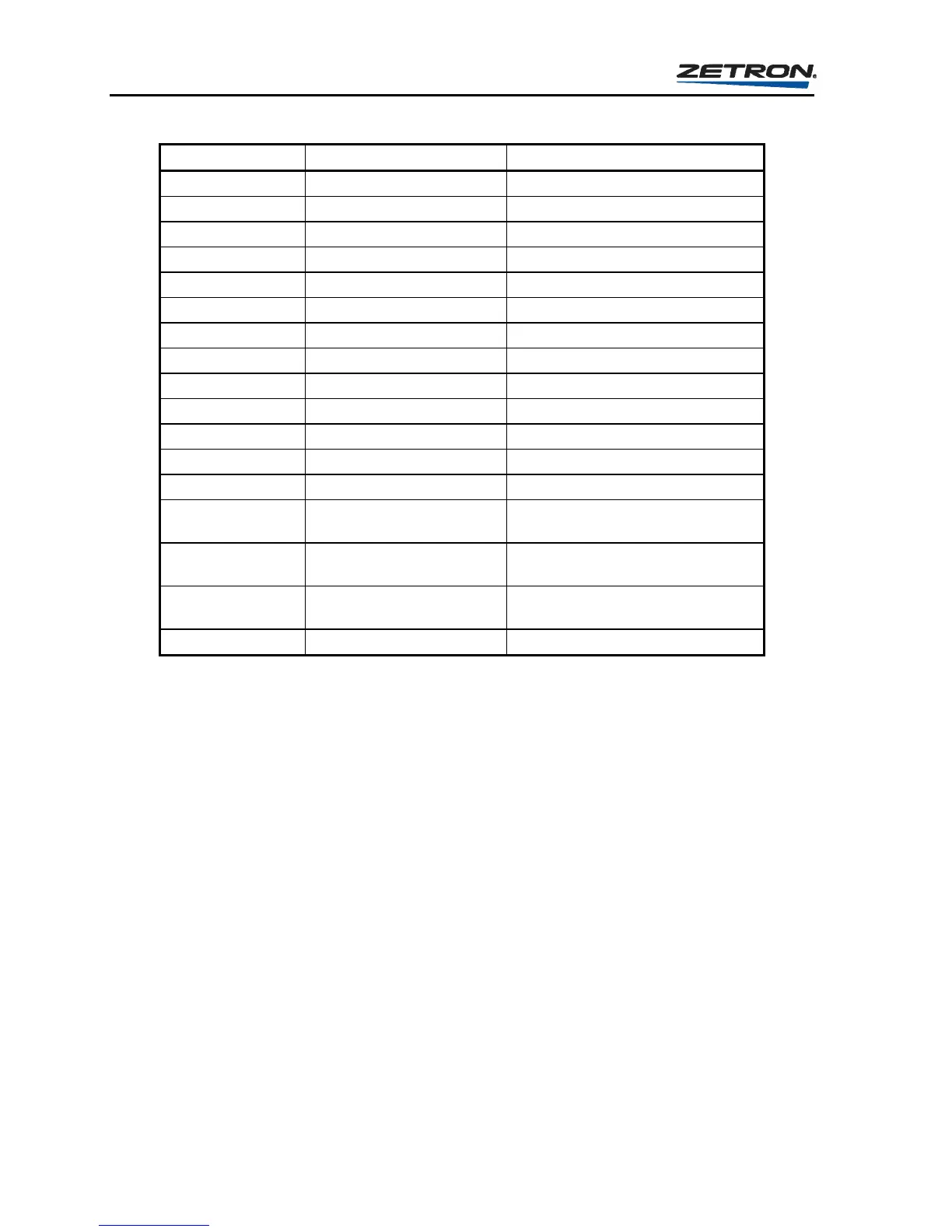
Table 5. Keypad or Remote Input versus Encoder ASCII Output
Keypad Input Remote ASCII Input Encoder ASCII Output
0 - 9 0 - 9 echoes input
A - D A - D echoes input
# # echoes input
* * echoes input
ENTER LINE FEED (control-J) ' (apostrophe)
CLEAR ENTRY CANCEL (control-X) / (slash)
ALERT ! -----ALERT-----
RESET Cntl+Break ---- RESET ----
SEND 1 (FS) (control- ) ---------SEND 1
SEND 2 (GS) (control-]) ---------SEND 2
SEND 3 (RS) (control- ) ---------SEND 3
SEND 4 (US) (control-_) ---------SEND 4
------ RETURN (control-M) ---------SEND 0 ( see note below )
------ T (time)
example: 05/18/1984 13:35:56
( MAY 18, 1984 )
------ V (version)
example: -VERSION 1.00-
( software version 1.00 )
------ S (status)
example: BUSY :----4--1
( channels 4 & 1 busy )
------ P (main menu)
Note: A carriage return (return) sent to the encoder is a special send character. The use
of carriage return allows calls to be sent using the instant call control relays
programmed against their block number or custom call number. This is very
similar to sending using an Instant Call button. The other send characters will
send calls using the control relays programmed against their SEND keys.
When the encoder is awaiting a new command such as a call number it displays the ASCII
prompt “>”. Usually if a key sequence causes an error then a question mark “?” is printed
from the port. In addition to the output shown in the above table, the encoder frequently
makes use of several unprintable ASCII characters; ENQ (ASCII HEX 05), NUL (ASCII
HEX 00), BEL (ASCII HEX 07), LF (ASCII HEX 0A), CR (ASCII HEX 0D), ACK (ASCII
HEX 06), NAK (ASCII HEX 15), EOT (ASCII HEX 04) and SOH (ASCII HEX 01). When
in continuous test mode the encoder also sends an ESC (ASCII HEX 1B).
When the encoder begins a send sequence, it outputs an ASCII call history that shows the
send number used to originate, the busy status, the control relays used, the beginning time,
each call number in the calling stack, and the ending time. The following example describes
a call history sequence.


 To Next Page