BYB User Manual Page 37 of 55 PN: 90020 Version: 1.4
Cable Inspection Guide
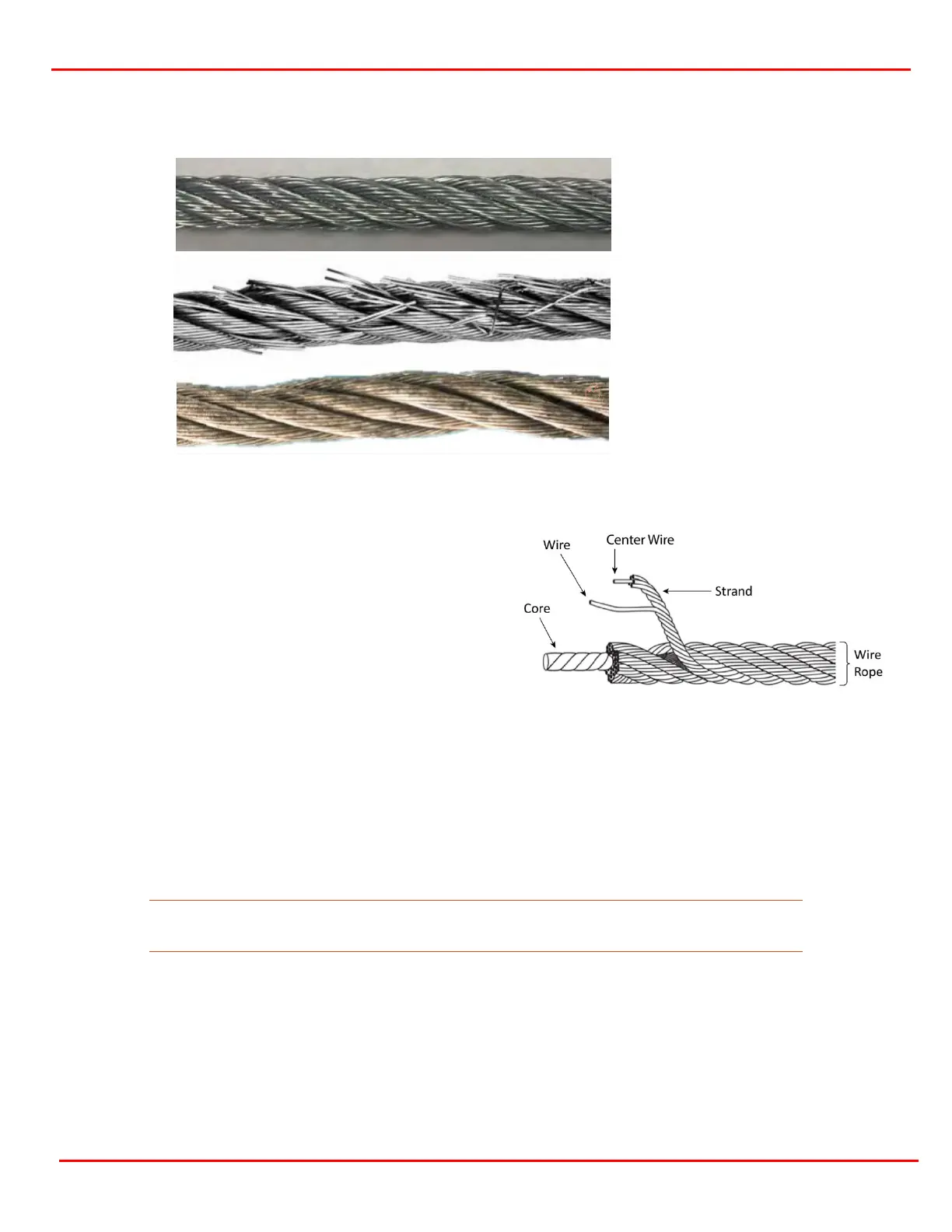
How to Check Your Cables:
When to Replace Your Cables:
• No adjustment is left.
• There are multiple broken wires.
• When heat damaged has occurred.
• Cable wear exceeds 10% of the diameters original size (necking).
• Evidence of corrosion pitting the wires or connectors.
• If you notice kinking, flattening, bird caging, cuts or other possible defects of a cable.
•
If you have any questions regarding the condition of your cables that may not be listed above, contact
Advantage Lifts for assistance.
Always check the full length of the cable
Notes:
• When you replace one cable inspect the others to see if they need to be replaced as well.
• Small cable adjustments periodically will be required, but if frequent adjustments are required the
cables may need to be replaced.
• Cables should be replaced when damage or other factors listed above are present.
• Visually inspect your cables daily. Perform an in-depth inspection monthly.
Good Condition
Broken Wires
Necking
• Visually check for any cable deficiencies.
• Run a rag along the cables. This will check for any
snags.
• Flex the cable to check for broken wires that may
be in concealed in between the strands of the


 To Next Page