K65C/K75C/K95C
4-3
K65C/K75C/K95C
4-3
e
Steering system
The power for the hydrostatic
steering system is supplied via a
priority valve from a gear-type pump.
With a minimum of effort on the
steering wheel, the oil flow is
directed by a steering unit into the
steering cylinder.
Emergency steering
The hydrostatic steering system can
also be used in a limited way if the
diesel engine fails. The loader can
be steered using a considerable
amount of manual effort.
NOTE
See chapter 7, “Towing the loader”.
Service and parking brake
The loader is equipped with a
combined service/auxiliary and
parking brake that acts as a service
and a parking brake.
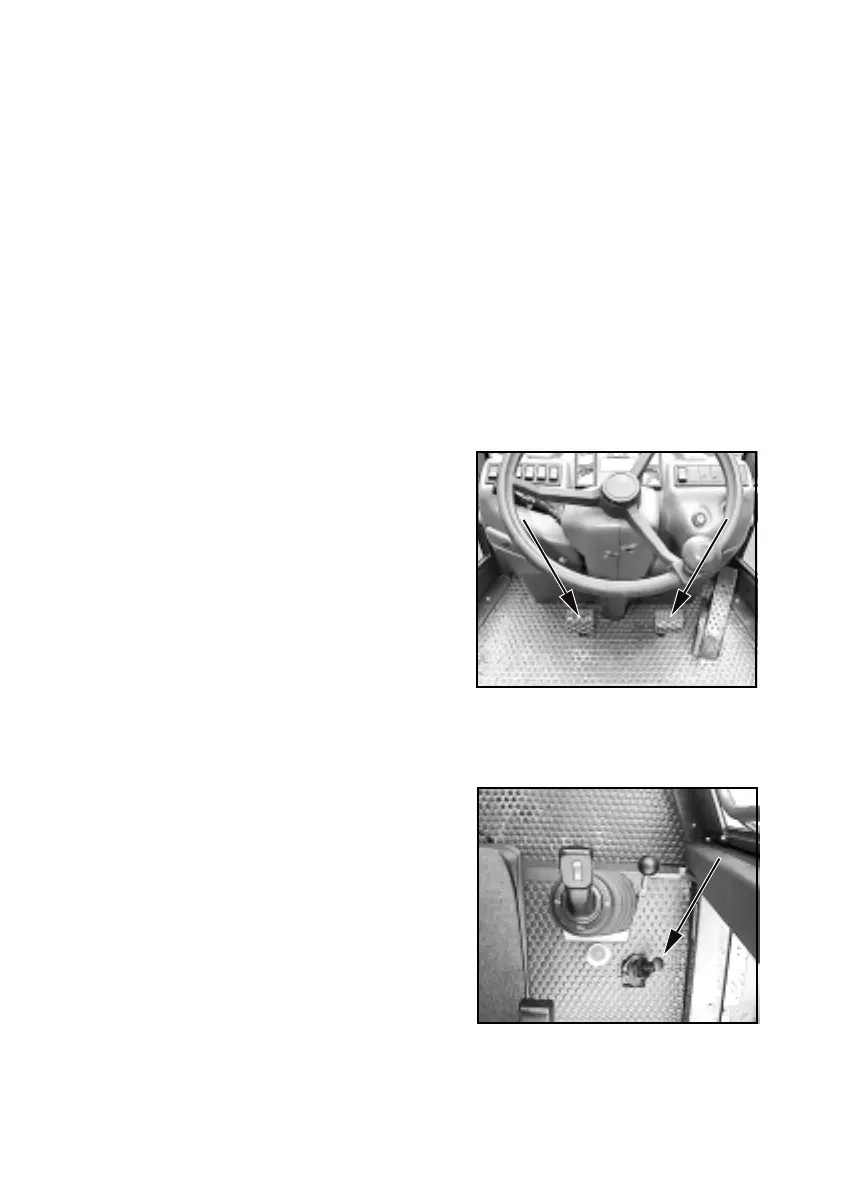
The foot-actuated service brake is
operated by a double pedal to the
left and to the right of the steering
column (4-3/arrows). The brake is a
fully hydraulical wet lamella brake
in the front axle. When the pedal is
pressed down, the control pressure
of the drive pump to the reservoir is
first relieved via an inching gear.
Then the hydraulic pressure in the
main brake cylinder is built up. This
means that the service brake is sup-
ported by the hydrostatic drive unit.
The parking brake, which also acts
as an auxiliary brake, works as a
negative coefficient brake. This
means that the pistons prestressed
by spring packs are loosened when
a defined actuating pressure is
applied. The parking brake is
actuated via a hand lever (4-4/arrow)
located to the right of the operator's
seat.
Figure 4-4
Figure 4-3
Steering system
The power for the hydrostatic
steering system is supplied via a
priority valve from a gear-type pump.
With a minimum of effort on the
steering wheel, the oil flow is
directed by a steering unit into the
steering cylinder.
Emergency steering
The hydrostatic steering system can
also be used in a limited way if the
diesel engine fails. The loader can
be steered using a considerable
amount of manual effort.
NOTE
See chapter 7, “Towing the loader”.
Service and parking brake
The loader is equipped with a
combined service/auxiliary and
parking brake that acts as a service
and a parking brake.
The foot-actuated service brake is
operated by a double pedal to the
left and to the right of the steering
column (4-3/arrows). The brake is a
fully hydraulical wet lamella brake
in the front axle. When the pedal is
pressed down, the control pressure
of the drive pump to the reservoir is
first relieved via an inching gear.
Then the hydraulic pressure in the
main brake cylinder is built up. This
means that the service brake is sup-
ported by the hydrostatic drive unit.
The parking brake, which also acts
as an auxiliary brake, works as a
negative coefficient brake. This
means that the pistons prestressed
by spring packs are loosened when
a defined actuating pressure is
applied. The parking brake is
actuated via a hand lever (4-4/arrow)
located to the right of the operator's
seat.
Figure 4-4
Figure 4-3



 To Next Page