Alerts
User Manual
Ascom Myco Smartphone
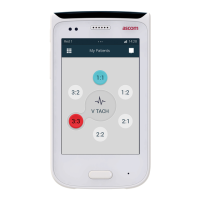
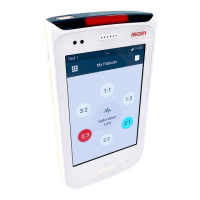
The top bar can also be used to show availability (as in the example below). To enable this, instead of alert
information, the value Login > Enable user availability status needs to be changed to Yes in the Device
Manager (default: No).
Figure 41. Availability status in the top bar
7.2.5 Notification
When an alert is received, it may appear on screen as a notification, see 11.6 Notifications, page 71.
7.3 Prioritization of Alerts
Alerts can be prioritized, which for example controls the order of presentation in the top display. The
following priorities exist for alerts:
Crisis 1 Crisis alert
High 2 High priority alert
Medium 3 Medium priority alert
Low 4 Low priority alert
Information 5 Information
The prioritization of alerts is dependant on configuration, and can differ between system setups.
The table below shows an example of how alerts from patient monitoring systems are prioritized:
High 2 High priority alert
Medium 3 Medium priority alert
Low 4 Low priority alert
7.3.1 Crisis Alerts
Crisis alerts have the highest priority (1) and signal immediate danger or emergency. These alerts prompt
the user to take immediate action. An example of a crisis alert is a "Code Blue" alert, often used to indicate
a cardiac arrest. Crisis alerts can also be used to signal fire.
54 TD 93066EN / 14 December 2018 / Ver. N


 To Next Page