The Audioaccess W.H.E.N. system is made up of three main
system components (the AVR21EN processor/controller, AVH21
A/V hub and WPS21 power hub) and three user interfaces
(the AVR21ENR1 main room remote, KP21 keypad and
KP21R remote room remote). When designing a whole-house
system, careful planning must be done to ensure that the system
has been designed properly, gets installed and configured
properly, and – most important – works the way the home-
owner wants the system to work.
There are two main sections to be considered when designing
and installing a W.H.E.N. system: the home theater, or “main
room,” and the remote rooms, which will be referred to here
as “zones.”
Main Room
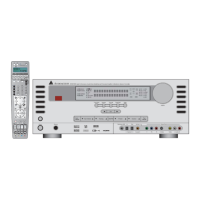
The Main Room component in a W.H.E.N. system is the AVR21EN
processor/controller. At its core, it is a highly evolved audio/video
surround receiver. All source components that will be played in the
main and remote rooms will be located near and connected to the
AVR21EN. The home theater speakers also connect directly to the
AVR21EN.
Typically, the AVR21EN and source components would be installed
in the Main Room in a wall unit, an equipment rack or possibly in
an equipment closet. Wherever they get installed, always leave
adequate space between components for free airflow to keep
components from overheating. Use cooling fans when necessary,
if the components are confined to a tight enclosed area. Always
leave extra space for wiring, and (whenever possible) when work-
ing with a homeowner on new construction, work with the archi-
tect to provide space for the W.H.E.N. system components with
rear access to system connections, for installation and service when
necessary. If rear access is not possible, a pullout equipment rack is
recommended to provide easy access to system connections. (If rack-
mounting, an optional rack-shelf is available from Middle Atlantic
Products for the AVR21EN.)
Always position components such as DVD/CD players, VCRs, iPod
interfaces, etc., to provide access to the user for loading discs or
tapes, or connecting an iPod or other portable media player.
In some cases, the home theater components will be at the front
of the room, near the screen or video display. In designing the
room layout, leave enough space between the system components
and the screen so the components do not distract the eye while
the theater system is in play. (The AVR21EN has front-panel time-
out and brightness options, which allow dimming or turning off
the front-panel display.)
Key to designing the home theater is knowing how it will be used.
What are the homeowner’s habits? Are they critical movie buffs
who want the full, big theater effect, or are they just casual viewers
who want something better than just watching TV? Will they fre-
quently be playing CDs or music from a server in the Main Room?
Knowing this, along with considerations for room dimensions and
layout, will help determine the configuration and placement of the
theater speaker system. The AVR21EN is fully capable of supporting
any audio mode from mono to 7.1 surround. When planning the
speaker section of the main room, pull sufficient wire from the
AVR21EN to all appropriate locations for accommodating 5.1 and
7.1 speaker systems, so that once the walls are sealed, the neces-
sary wires will be in place for upgrading or changing the speaker
configuration at a future date, should the homeowner decide
to upgrade.
The same considerations should be given to the video section
of the Home Theater. The homeowners may start out with an
adequate 32" TV, but at some point may want to upgrade to a
wall-mount LCD or plasma display. They may also consider hanging
a projector and drop-screen once they get more familiar with the
true Home Theater experience. Plan ahead. Have the homeowners
consider these possibilities and suggest they incorporate the addi-
tional wiring during construction, so future upgrades can be
accommodated without ripping the room apart.
9
System Planning

 To Next Page
 Loading...