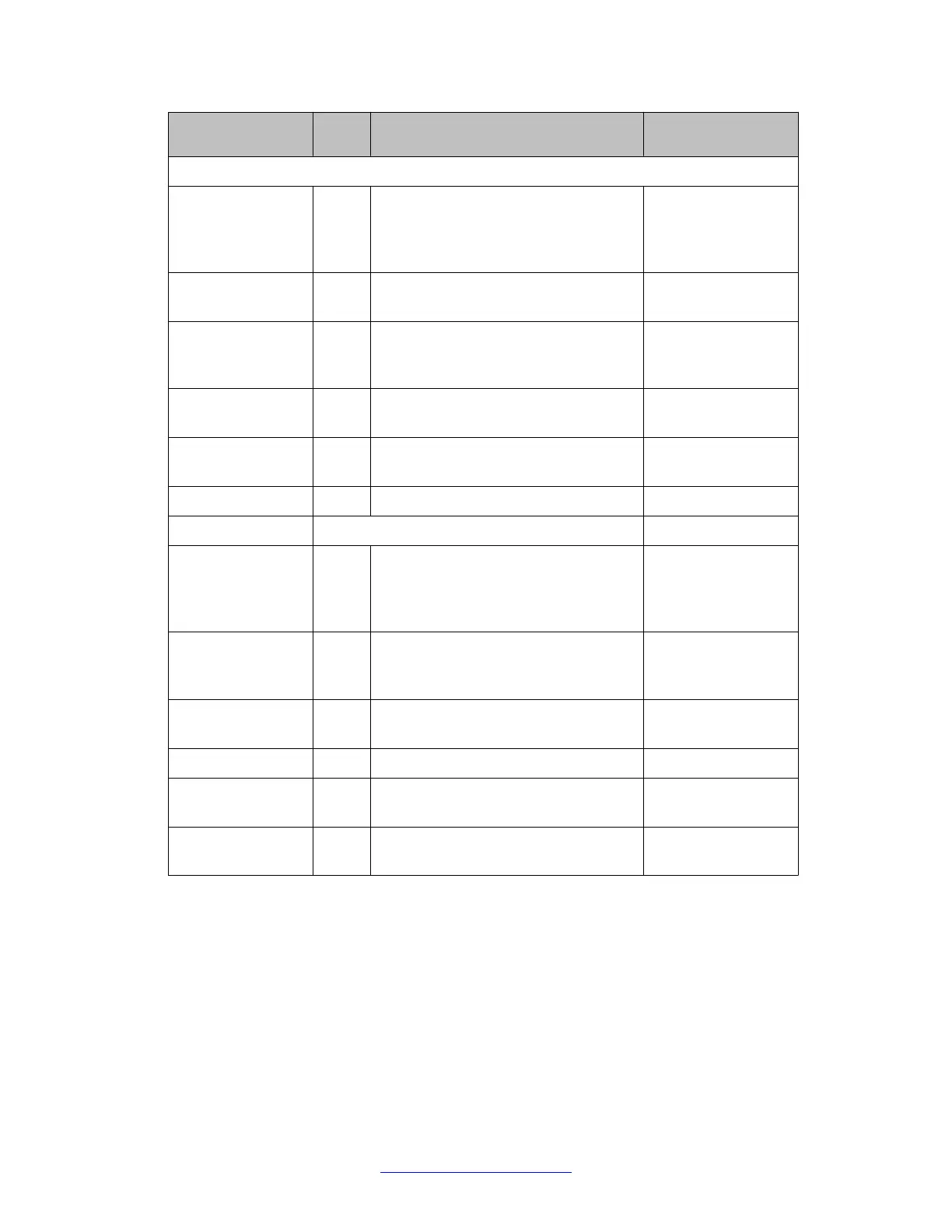
Field Label Description From the CLI
example
(Remote-Statistics items are calculated and evaluated upon reception of RTCP messages)
Loss
rem-loss%
54 The network loss experienced by the
remote RTP receiver. The local RTP
receiver learns about its remote peer
statistics from RTCP packets.
Loss 0.0%
54
#0
#rem-loss-ev 55 The number of samples that were over
the rem-loss threshold
Loss 0.0% #0
55
Avg-Loss 56 The average network loss
experienced by the remote RTP
receiver
Avg-Loss 0.0%
Jitter
rem-jitter
57 The network jitter experienced by the
remote RTP receiver
Jitter 0mS
57
#0
#rem-jitter-ev 58 The number of samples that were over
the remote jitter threshold
Jitter 0mS #0
58
Avg-jitter 59 The average remote jitter Avg-Jitter 0mS
Echo Cancellation:
Loss
loss dbm
60 The echo cancellation loss on the TDM
bus. A high value (that is, a low
absolute value) may indicate
impairment of DCP terminals.
Loss 45dB
60
#1
#loss-ev 61 A counter that increments each time
the echo-cancellation loss is sampled
below its threshold
Loss 45dB #1
61
Len 62 The last echo-cancellation tail length
used for this session
Len 32mS
RSVP:
Status 63 The current (last) RSVP reservation
state at the end of the session
Status Disabled
Failures 64 The total number of reservation
failures during the session
Failures 0
Viewing QoS traps, QoS fault traps, and QoS clear traps
About this task
QoS traps, QoS fault traps, and QoS clear traps sent to the active MGC by the dynamic trap
manager are converted to syslog messages by the SNMP Trap manager on the MGC.
The syslog messages are stored in the messages file on the MGC hard disk. You can view the
syslog messages through the Avaya Maintenance Web Interface to debug the QoS
problems.
Monitoring applications
366 Administering Avaya G430 Branch Gateway October 2013
Comments? infodev@avaya.com



 To Next Page