143
FUEL SYSTEM
FUEL COMPONENT SERVICING
7
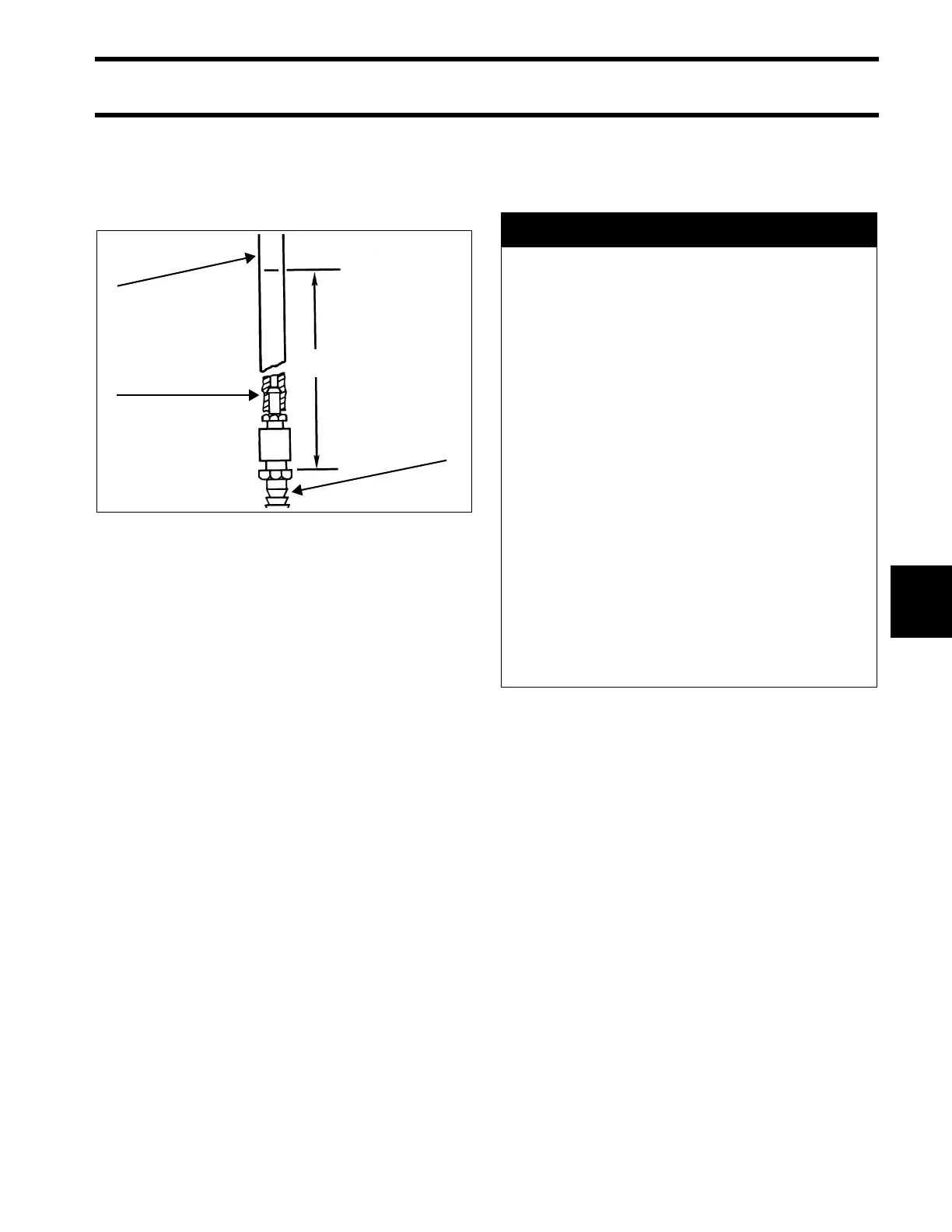
Anti-Siphon Valve Test
Remove anti-sip hon valve from fuel t ank. Inst all
adapter fittings and a 36 in. (91.4 cm) len gth of
clear hose to the inlet side (tank end) of valve.
Fill clear hose with water to a height of 20 in. (500
mm). W ater must NOT flow throug h valve . An
occasional d rip is accep table. Rep lace valve if
water drips continuously.
Increase height of water to 25 in. (630 mm). Water
should flow through valve a s water level re aches
25 in. (630 mm). Replace the anti-siphon valve if
test results are different.
FUEL COMPONENT
SERVICING
Relieving Fuel System Pressure
IMPORTANT: Minimize fue l sy stem pre ssure
prior to disassembly. Temporarily restrict the fue l
supply hose from fuel t ank with hose pincer.
Remove propeller and disco nnect circulation fuel
pump ele ctrical connector. If outb oard runs, start
and run at IDLE for 5 se conds a nd ST OP o ut-
board. If o utboard doe s NOT run, crank for 1 0
seconds.
Disconnect the battery cables at the battery.
1. Anti-siphon valve
2. Adapter fitting
3. Clear hose
DR2277
A WARNING
Gasoline is ex tremely fl ammable and
highly explosive under certain conditions.
Use caution when working on any part of
the fuel system.
Protect aga inst hazardous fuel s pray.
Before st arting any fuel syste m service,
carefully re lieve fuel sys tem pressure.
Refer to Relieving Fuel System Pressure.
Always disco nnect the batte ry cables at
the batte ry befo re servicing the fuel sys-
tem unless instructed to do otherwise.
Always work in a well v entilated area and
wipe off any fuel spillage.
DO NOT smoke and make certain no open
flames or ignition sources exist.
After servicing the fuel system check for
leaks. Failure to c heck for fuel le akage
could allow a l eak to go unde tected,
resulting in fire or explosion.




 To Next Page