(7) With the compressor clutch engaged, record the
left center panel outlet discharge air temperature,
the discharge pressure (high side service port), and
the suction pressure (low side service port). The com-
pressor clutch may cycle, depending upon the ambi-
ent temperature and humidity. If the clutch cycles,
use the readings obtained before the clutch disen-
gaged.
(8) Compare the discharge air temperature read-
ing to the Performance Temperature and Pressure
chart. If the temperature reading is high, check the
refrigerant system for leaks and proper refrigerant
charge level. (Refer to 24 - HEATING & AIR CONDI-
TIONING/PLUMBING - FRONT/REFRIGERANT -
DIAGNOSIS AND TESTING - REFRIGERANT SYS-
TEM LEAKS) and (Refer to 24 - HEATING & AIR
CONDITIONING/PLUMBING - FRONT/REFRIGER-
ANT - DIAGNOSIS AND TESTING - REFRIGER-
ANT SYSTEM CHARGE LEVEL).
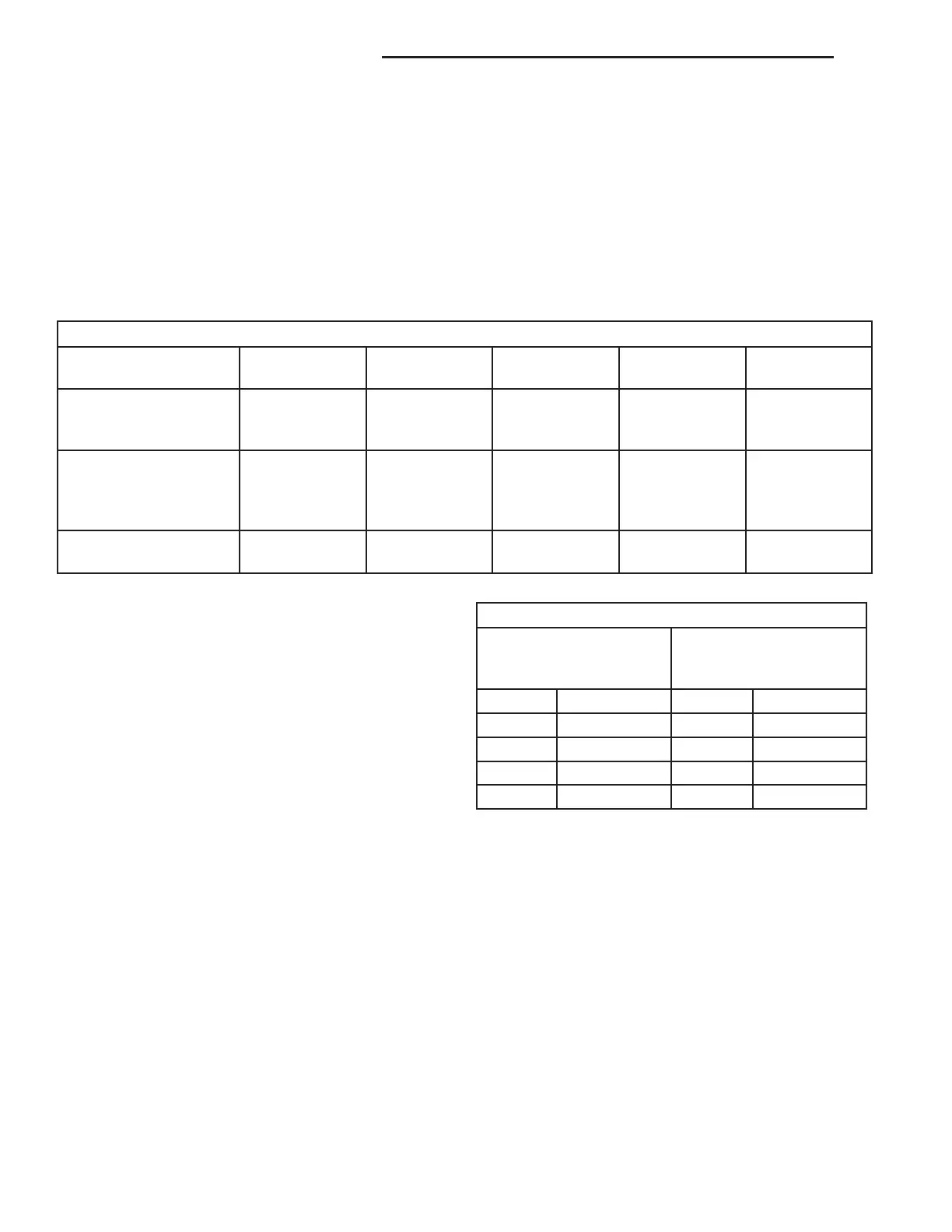
Performance Temperature and Pressure
Ambient Temperature 21° C
(70° F)
27° C
(80° F)
32° C
(90° F)
38° C
(100° F)
43° C
(110° F)
Left Center Panel
Outlet Discharge Air
Temperature
1to8°C
(34 to 46° F)
3to9°C
(37 to 49° F)
4 to 10°C
(39 to 50° F)
6to11°C
(43 to 52° F)
7 to 18° C
(45 to 65° F)
Discharge Pressure
(High Side Service
Port)
1034 to 1724
kPa
(150 to 250
psi)
1517 to 2275
kPa
(220 to 330
psi)
1999 to 2620
kPa
(290 to 380
psi)
2068 to 2965
kPa
(300 to 430
psi)
2275 to 3421
kPa
(330 to 450 psi)
Suction Pressure (Low
Side Service Port)
103 to 207 kPa
(15 to 30 psi)
117 to 221 kPa
(17 to 32 psi)
138 to 241 kPa
(20 to 35 psi)
172 to 269 kPa
(25 to 39 psi)
207 to 345 kPa
(30 to 50 psi)
DIAGNOSIS AND TESTING - HEATER
PERFORMANCE TEST
PRE-DIAGNOSTIC PREPARATIONS
WARNING: REFER TO THE APPLICABLE WARN-
INGS AND CAUTIONS FOR THIS SYSTEM BEFORE
PERFORMING THE FOLLOWING OPERATION.
(Refer to 24 - HEATING & AIR CONDITIONING/
PLUMBING FRONT - WARNING - HEATER PLUMB-
ING).
Check the coolant level, drive belt tension, radiator
air flow, and cooling fan operation. Start the engine
and allow it to warm up to normal temperature.
MAXIMUM HEATER OUTPUT: TEST AND ACTION
Engine coolant is provided to the heater system by
two 16 mm (5/8 inch inside diameter) heater hoses.
With the engine idling at normal running tempera-
ture, set the heater-A/C controls as follows. Temper-
ature control to full Heat, Mode control to Floor,
Blower control to the highest speed setting. Using a
test thermometer, check the air temperature coming
from the center floor outlets and compare this read-
ing to the Temperature Reference table.
TEMPERATURE REFERENCE
AMBIENT
TEMPERATURE
MINIMUM FLOOR
OUTLET
TEMPERATURE
CELSIUS FAHRENHEIT CELSIUS FAHRENHEIT
15.5° 60° 62.2° 144°
21.1° 70° 63.8° 147°
26.6° 80° 65.5° 150°
32.2° 90° 67.2° 153°
If the floor outlet air temperature is insufficient,
check that the cooling system is operating to specifi-
cations. (Refer to 7 - COOLING/ENGINE - DIAGNO-
SIS AND TESTING). Both heater hoses should be
HOT to the touch (the coolant return hose should be
slightly cooler than the supply hose). If the coolant
return hose is much cooler than the supply hose,
locate and repair the engine coolant flow obstruction
in heater system.
POSSIBLE LOCATIONS OR CAUSE OF OBSTRUCTED
COOLANT FLOW
• Pinched or kinked heater hoses.
• Improper heater hose routing.
• Plugged heater hoses or supply and return ports
at cooling system connections.
• Plugged heater core.
• Air locked heater core.
• Restrictor in backwards.
24 - 6 HEATING & AIR CONDITIONING RS
HEATING & AIR CONDITIONING (Continued)









 To Next Page