21
Installation Connectible Devices
power for three of these devices can
be supplied by the bus; if more de-
vices are used, they then require
their own power supplies. The inter-
nal S
0
buses enable point-to-multi-
point calls in accordance with the
DSS1 protocol (Euro-ISDN), and sup-
port the same features as in Deut-
sche Telekom’s T-Net-ISDN.
U
pn
Ports
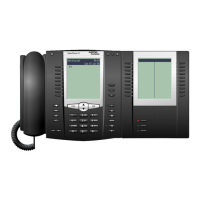
A system terminal can be connected
via a twin-wire cable to every U
pn
port. Cord-bound system terminals
are the OpenPhone 61, OpenPhone
63 and OpenPhone 65. The Open-
Phones 63 and 65 can be cascaded
on a U
pn
adapter, so that you can
operate two OpenPhones on one
U
pn
port. For further details, please
refer to the “OpenPhone 61, 63 and
65” user guide.
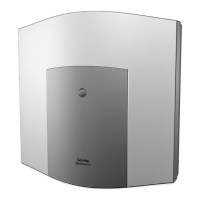
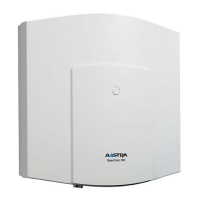
The RFP 21base station is required
for the use of cordless system tele-
phones (e.g OpenPhone .21 or
OpenPhone 25).
The OpenPhone 25 is equipped with
a V.24 port with which you can trans-
fer data and surf in the Internet.
If this base station is connected to
one U
pn
port, four simultaneous calls
are possible with the mobile parts. If
this base station is connected to two
U
pn
ports, eight simultaneous calls
are possible. However, please note
that only as many external connec-
tions are possible as there are con-
nected B-channels available.
If you use mobile parts such as the
OpenPhone 21, these can also be
contacted by other base stations us-
ing the GAP standard.
a/b Ports
The a/b ports a/b1 to a/b4 can be
used for connecting analogue termi-
nals. These can be for speech or data
communication, and use DTMF or
pulse dialling, such as
■ analogue telephones
■ Class 3 faxes
■ analogue (external and inter-
nal) modems
■ external devices for music on
hold
■ external voice mail systems.
Attention! Please adhere to the
notes and recommendations regard-
ing the connection of analogue de-
vices. Devices not meeting the techni-
cal requirements of the OpenCom 100
can cause damage to it.
Analogue Telephones
For analogue telephones we recom-
mend the use of devices with VF sig-
nalling, as the additional features of




 To Next Page