Need help?
Do you have a question about the Endress+Hauser analytikjena PlasmaQuant 9100 and is the answer not in the manual?
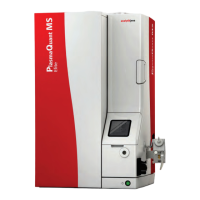
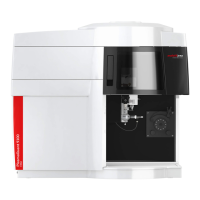
The PlasmaQuant 9100 (Elite) is an Inductively Coupled Plasma - Optical Emission Spectrometer (ICP-OES) designed for chemical analysis in laboratories. It analyzes liquid samples, primarily aqueous, to determine concentrations of up to 75 elements, including trace elements. The device is intended for the analyses specified in the user manual, ensuring user and device safety. It is not suitable for solutions containing hydrofluoric acid if the nebulizer or spray chamber is made of glass or quartz; hydrofluoric acid-resistant components must be used in such cases. Special precautions, including fire and health protection regulations, must be observed when working with organic solvents.
The ICP-OES utilizes plasma at temperatures up to 10,000 K. Samples are introduced into this plasma as an aerosol, which then dries, melts, vaporizes, and atomizes or ionizes. Atoms and ions are excited to emit light, which is then broken down by the device optics into wavelengths. The intensity of these emission lines and their spectral environment are measured by a detector to determine concentrations. Argon is used as the operating gas, flowing through a three-concentric-pipe plasma torch. The plasma gas (cooling gas) flows at 10 to 18 l/min to cool the external torch pipe. The sample aerosol is injected into the plasma through the innermost pipe (injector). The aerosol is generated by a nebulizer and a downstream spray chamber, which separates larger droplets. Exhaust heat from the plasma is dissipated by a recirculating chiller and an exhaust unit.
The PlasmaQuant PQ 9100 and PlasmaQuant PQ 9100 Elite models differ in their optical systems, with identical plasma generation and sample supply systems. The Elite model features high-resolution optics, making it suitable for interference-free analysis of samples in complex matrices, such as rare earths, high-alloy steel, or petrochemical products. The standard PQ 9100 model provides good results for routine analysis with slightly lower resolution.
The sample introduction system is accessible in the sample chamber, while the torch and induction coil are in a shielded plasma compartment to protect the user from high-frequency and UV radiation. This separation also prevents heat transfer from the plasma to the spray chamber, avoiding drift.
The emission spectrometer uses a free-running HF generator with a frequency of 40.68 MHz and an output of 700 to 1700 W into the plasma. The automatic power adjustment ensures high plasma consistency, making the plasma robust for difficult sample matrices. The HF generator is shielded and located behind the plasma compartment. The induction coil, with four windings, transfers power to the torch and is water-cooled. Plasma ignition involves a high-voltage spark from the ignition spark generator to a discharge spring near the induction coil. The torch is a three-layer design (outer tube, inner tube, injector tube). The outer tube insulates the plasma from the induction coil and ambient air. Plasma gas flows between the outer and inner tubes, cooling the outer tube and preventing melting. Auxiliary gas flows between the inner tube and injector, pushing the sample aerosol. The injector delivers the sample aerosol into the plasma.
A hose pump conveys the measurement solution to the nebulizer, with pump speed and tubing diameter determining sample delivery. This ensures sample introduction is independent of solution viscosity. The pneumatic concentric nebulizer generates the aerosol, with argon flow tearing the liquid surface into small droplets. A cyclone chamber separates larger droplets, which flow out via the waste outlet. An optional ultrasound nebulizer provides high aerosol yield for aqueous solutions and can remove interfering solvents by temperature control (120 to 160 °C heating, -20 to +10 °C cooling), increasing sensitivity and lowering detection limits. Analytik Jena AG offers specialized sample supply systems for various applications:
Both models observe analyte emission from two directions (axial and radial, DualView PLUS). Emission radiation is selectively coupled to the monochromator, and the working range is increased by attenuating both directions. The PlasmaQuant PQ 9100 Elite uses a high-resolution double monochromator (prism and echelle grating) with a spectral resolution of 0.002 nm at 200 nm. The PlasmaQuant PQ 9100 has a spectral resolution of 0.006 nm at 200 nm. Both models feature a wavelength-stabilized monochromator with an integrated neon emitter for wavelength reproducibility via internal Ne-line calibration. A low-noise, UV-sensitive semiconductor CCD line detector registers analysis line intensity and its spectral neighborhood, detecting a spectral range of approximately 1 nm at high resolution.
 General
| Brand | Endress+Hauser |
|---|---|
| Model | analytikjena PlasmaQuant 9100 |
| Category | Laboratory Equipment |
| Language | English |

 To Next Page