Model
Total number of drives
Up to 120 Up to 240 Up to 264
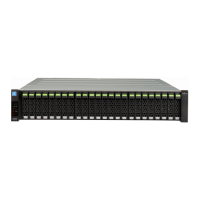
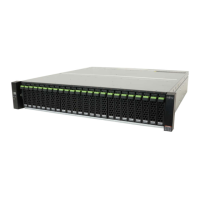
ETERNUS DX200 S4/DX200 S3 1 2 3
■
Types of Drives
If a combination of SAS disks, Nearline SAS disks, SSDs, and SEDs is installed in the
ETERNUS DX,
each different type of drive requires a corresponding hot spare.
2.5" and 3.5" drive types are available. The drive type for high-density drive enclosures is 3.5".
There are two types of rotational speeds for SAS disks; 10,000rpm and 15,000rpm. If a drive error
occurs and a hot spare is configured in a RAID group with different rotational speed drives, the per-
formance of all the drives in the RAID group is determined by the drive with the slowest rotational
speed. When using SAS disks with different rotational speeds, prepare hot spares that correspond
to the different rotational speed drives if required. Even if a RAID group is configured with SAS
disks that have different interface speeds, performance is not affected.
There are two types of interface speeds for SSDs; 6Gbit/s and 12Gbit/s. If a drive error occurs and a
hot spare is configured in a RAID group with different interface speed SSDs, the performance of all
the SSDs in the RAID group is determined by the SSDs with the slowest interface speed. Preparing
SSDs with the same interface speed as the hot spare is recommended.
The capacity of each hot spare must be equal to the largest capacity of the same-type drives.
■
Selection Criteria
When multiple Global Hot Spares are installed, the following criteria are used to select which hot
spare will replace a failed drive:
Table 11 Hot Spare Selection Criteria
Selection order Selection criteria
1 A hot spare with the same type, same capacity, same rotational speed (for disks), and same inter-
face speed (for SSDs) as the failed drive
2 A hot spare with the same type, same rotational speed (for disks), and same interface speed (for
SSDs) as the failed drive but with a larger capacity (*1)
3 A hot spare with the same type and same capacity as the failed drive but with a different rota-
tional speed (for disks) and a different interface speed (for SSDs)
4 A hot spare with the same type as the failed drive but with a larger capacity, a different rotational
speed (for disks), and a different interface speed (for SSDs) (*1)
*1: When there are multiple hot spares with a larger capacity than the failed drive, the hot spare
with the smallest capacity among them is used first.
2. Basic Functions
RAID Functions
30
Fujitsu Storage ETERNUS DX100 S4/DX200 S4, ETERNUS DX100 S3/DX200 S3 Hybrid Storage Systems
Design Guide (Basic)
Copyright 2023 Fujitsu Limited
P3AM-7642-32ENZ0



 To Next Page
 Loading...