MAN-05359-001 -001 Rev. 001 page 7 of 32
Table 3. Unadjudicated Marginal Frequencies – Summary of Descriptive Diagnosis
for Benign Cellular Changes – All Sites Combined
Manual Review Ima
er Review
Number of Patients: 9550 9550
Descri
tive Dia
nosis N % N %
Beni
n Cellular Chan
es: 405 4.2 293 3.1
Infection:
Trichomonas Va
inalis 8 0.1 8 0.1
Fungal organisms consistent with Candida spp. 47 0.5 31 0.3
Predominance of coccobacilli 71 0.7 60 0.6
Bacteria consistent with Actinomyces spp. 1 0.0 1 0.0
Cellular Changes associated with Herpes virus 1 0.0 1 0.0
Other Infection 1 0.0 0 0.0
Reactive Cellular Chan
es Associated with:
Inflammation 218 2.3 156 1.6
Atrophic with inflammation (atrophic vaginitis) 68 0.7 46 0.5
Radiation 0 0.0 0 0.0
Intrauterine contraceptive device (IUD) 0 0.0 0 0.0
Other Reactive Cellular Change 34 0.4 14 0.1
Note: Some patients had more than one diagnostic subcategory.
The Manual Review showed a higher rate of Benign Cellular Changes (405) than the Imager
Review cases (293).
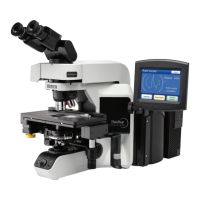
Please refer to the ThinPrep
®
Imaging System Operation Summary and Clinical Information
(MAN-03938-001) for detailed information about the performance of ThinPrep Imaging
System.
G.2 ThinPrep Integrated Imager Compared to the ThinPrep Imaging System
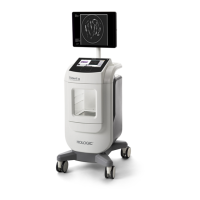
A multi-center, two-armed clinical study was performed at three (3) sites within the United States.
The objective of the study entitled “Multi-Center Evaluation of the ThinPrep
®
Integrated Imager”
was to show that routine screening of ThinPrep Pap Test slides prepared on the ThinPrep
®
2000
System and the ThinPrep
®
5000 processor using the ThinPrep Integrated Imager is similar to the
review of ThinPrep slides using the ThinPrep Imaging System for all categories used for cytologic
diagnosis (specimen adequacy and descriptive diagnosis) as defined by the Bethesda System
criteria
1
.
The two-arm study approach allowed for a comparison of the cytologic interpretation (descriptive
diagnosis and specimen adequacy) from a single ThinPrep-prepared slide (of known diagnosis),
screened first using the Integrated Imager and then after two-week lag were screened with the
assistance of the ThinPrep Imaging System. The adjudicated diagnosis at enrollment was used as a
“gold standard” for truth to evaluate the results of the study.
Slides utilized in this study were processed on the ThinPrep
®
2000 System and the ThinPrep
®
5000
processor. Study slides were produced, reviewed manually and adjudicated during the execution of a
previous study
2
.
All slides were reviewed independently for both study arms. The slides were randomized prior to
slide review in each study arm. Cytological diagnoses and specimen adequacy were determined in
accordance with the Bethesda System criteria for both arms of the study.


 To Next Page