(Main Parts)
MAINTENANCE
SM-18006
4-99
4.2.8 Pressure Sensor
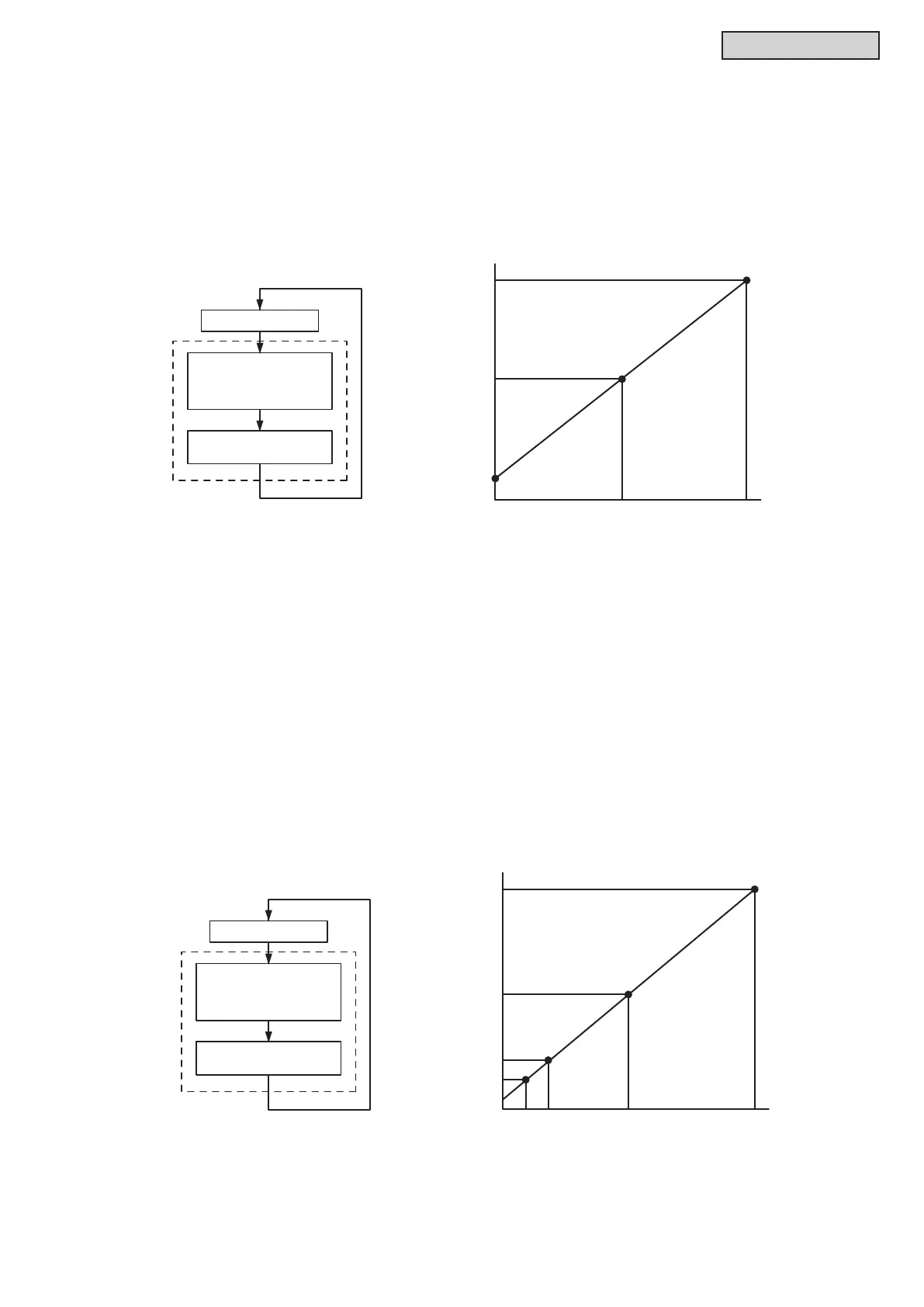
(1) High Pressure Control
The high pressure during heating operation is detected by a high pressure sensor, and compressor
frequencies are controlled by the proportional controlling method with operating capacity of indoor units
(or PID Control for Compressor Frequency) so that the high pressure is controlled in an appropriate
range. The output of the high pressure sensor during heating operation performs protective control;
that is gas by-pass control.
(2) Low Pressure Control
The suction pressure during cooling operation is detected by a low pressure sensor, and compressor
frequencies are controlled by the proportional controlling method with operating capacity of indoor units
(or PID Control for Compressor Frequency) so that the suction pressure is controlled in an appropriate
range.
If the suction pressure is excessively low, the cooling can be insufcient and parts composing the
refrigeration cycle can be damaged. For this reason, if the output of the low pressure sensor indicates
13.1 psi (0.09MPa) or less and the value is maintained for 12 minutes or longer, the compressor is
stopped for the purpose of protection.
4.5
0.5
0 (0) 725 (5.0)
Output Voltage (DC V)
Pressure Psi (MPa)
Heating Operation
Proportional Control of
Compressor Frequency
with Operating Capacity
of Indoor Units
Protection Control (Gas
Bypass Control)
Output Characteristics of High Pressure Sensor
High
Pressure
Control
2.5
363 (2.5)
4.5
0.5
(0.3)
-14.5 (-0.1) 0 (0) 290 (2.0)
Output Voltage (DC V)
Pressure Psi (MPa)
Cooling Operation
Proportional Control of
Compressor Frequency
with Operating Capacity
of Indoor Units
Vacuum Prevention
Control
Output Characteristics of Low Pressure Sensor
Low
Pressure
Control
2.5
145 (1.0)



 To Next Page