MAL-OPS-1026 v3 43
9.17.3. Neutron Background Alarm Thresholds
As background levels of radiation vary as time progresses, so too must the
threshold above which an alarm would sound. A high neutron alarm is triggered
when the count rate registered by the neutron detector is assessed as being
significant (above threshold; the count rate is a result of background radiation plus
a radioactive source). The alarm threshold works by calculating sigma, the
standard deviation of how much the count rate fluctuates, and then multiplies it
by a value k, which is set by a user. The value k determines how many standard
deviations beyond the mean should be used to dictate the alarm threshold. The
higher the k value, the lower the chance of a false alarm but the device becomes
increasingly insensitive to low counts from true sources. A k value of 5 is
recommended to obtain the best balance between false alarm rate and sensitivity.
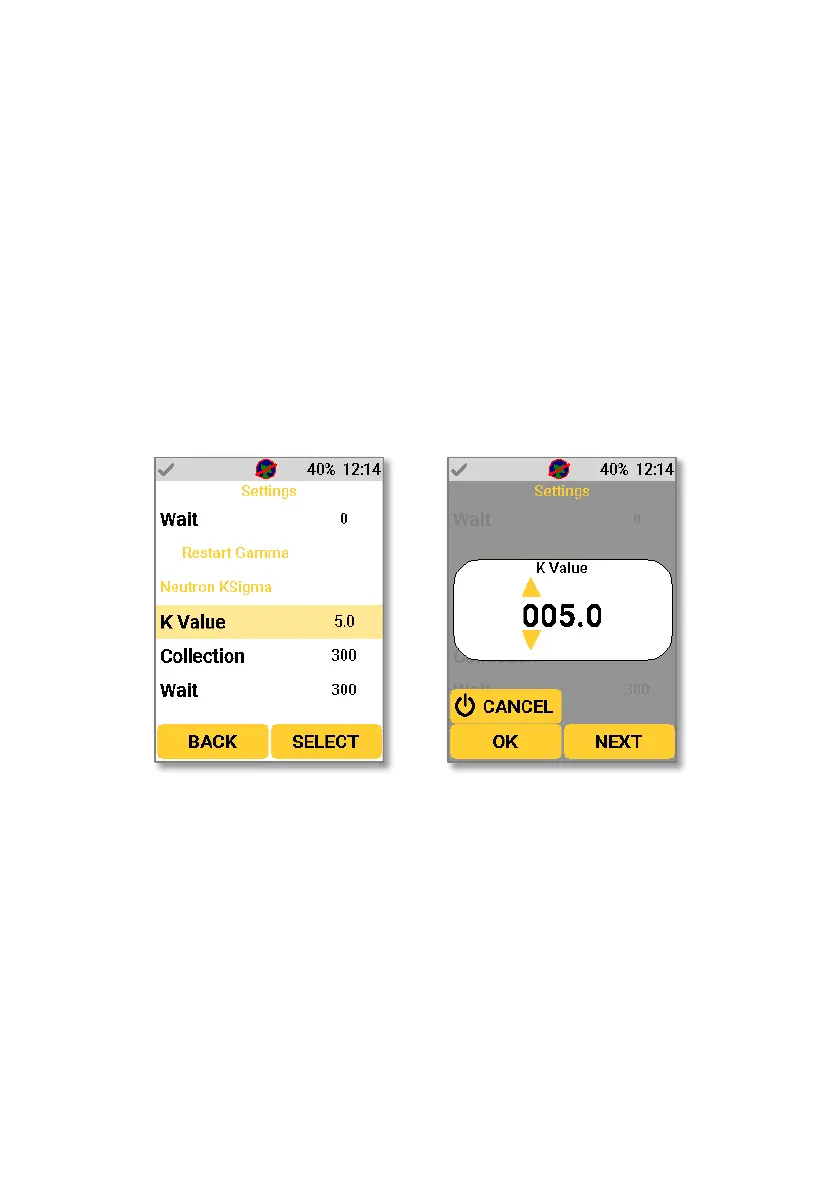
Navigating to the K Value setting under the Neutron K Sigma settings heading
allows a user to change the K value. The value can be changed using the up and
Collection and wait time can also be changed by navigating to the setting and
using the up and down keys to increase and decrease the value.


 To Next Page